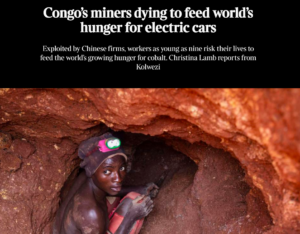
by Christina Lamb, March 21, 2019 in GWPF/SundayTimes
Exploited by Chinese firms, workers as young as nine risk their lives to feed the world’s growing hunger for cobalt.
…
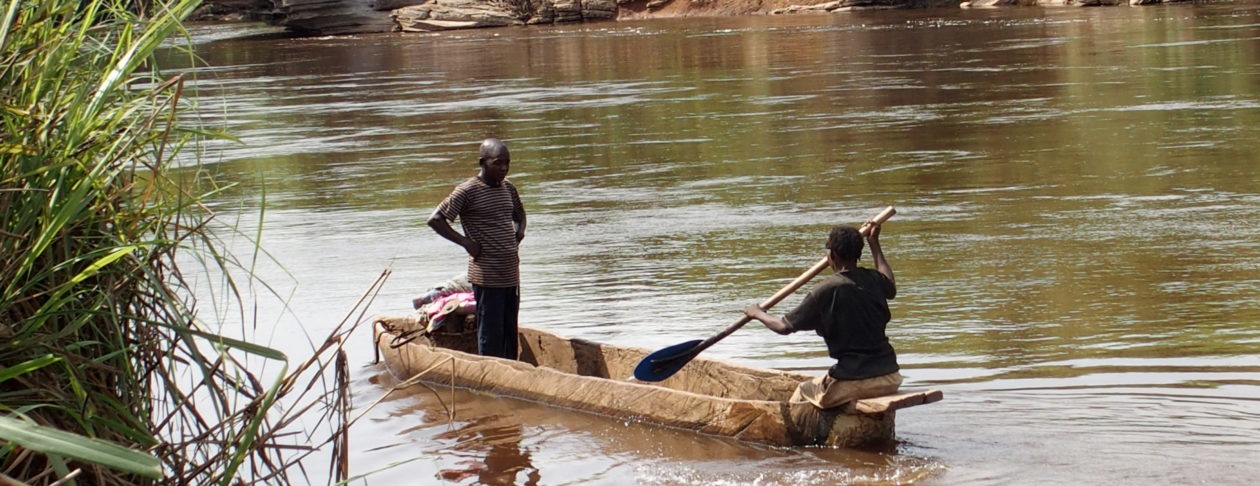
by Christina Lamb, March 21, 2019 in GWPF/SundayTimes
Exploited by Chinese firms, workers as young as nine risk their lives to feed the world’s growing hunger for cobalt.
…
by Michigan Technological University, February 22, 2019 in ScienceDaily
Until now, carbon dioxide has been dumped in oceans or buried underground. Industry has been reluctant to implement carbon dioxide scrubbers in facilities due to cost and footprint.
What if we could not only capture carbon dioxide, but convert it into something useful? S. Komar Kawatra and his students have tackled that challenge, and they’re having some success.
…
by Michigan Technological University, August 2, 2018 in ScienceDaily
Using 100-year-old minerals processing methods, chemical engineering students have found a solution to a looming 21st-century problem: how to economically recycle lithium ion batteries.
Pan, an assistant professor of chemical engineering at Michigan Technological University, earned his graduate degrees in mining engineering. It was his idea to adapt 20th century mining technology to recycle lithium ion batteries, from the small ones in cell phones to the multi-kilowatt models that power electric cars. Pan figured the same technologies used to separate metal from ore could be applied to spent batteries. So he gave his students a crash course in basic minerals processing methods and set them loose in the lab.
…
by University of the Basque Country, July 19, 2018 in ScienceDaily
A study conducted in mining areas in Asturias by the Animal Ecotoxicity and Biodiversity group led by Dr Pilar Rodriguez, through collaboration between the Department of Zoology and Animal Cellular Biology and that of Genetics, Physical Anthropology and Animal Physiology of the UPV/EHU’s Faculty of Science and Technology, and the Limnology Laboratory at the University of Vigo has enabled progress to be made in this field and has proposed the ecological threshold concentration for 7 metals (cadmium, chromium, copper, mercury, nickel, lead and zinc) and two metalloids (arsenic and selenium). The study included a number of non-contaminated localities belonging to the reference network of the Nalón river basin as well as other highly contaminated ones. This is a basin with a long history of mining activities due to the high levels of metals naturally occurring in its rocks.
by Paul Driessen, February 26, 2018 in WUWT
America has had its share of oil-centered energy problems and disruptions. Now it faces potential renewable energy and high technology crises, because of its heavy reliance on imports of the rare earth and other strategic minerals that are the essential building blocks for wind turbines, solar panels, computers, smart phones, medical diagnostic devices, night vision goggles, GPS and communication systems, long-life batteries and countless other applications.
(…)
by Connaissances des Energies, 28 juillet 2017
La Banque mondiale a présenté le 18 juillet une étude soulignant les énormes besoins de minerais et de métaux associés à la transition « bas carbone » dans le monde. Un aspect souvent ignoré de cette transition.
Voir également ici