Archives de catégorie : energy and fields

Reports Of Oil’s Demise Have Been Greatly Exaggerated

by S. Graham, May 9, 2018 in ClimateChangeDispatch


World fund managers predict a fall in the value of oil companies. According to a survey published last month in the United Kingdom, climate change risks will force a lower valuation of oil company stock prices within the next five years.

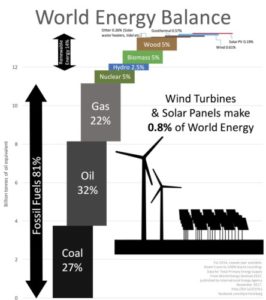
But despite many predictions of demise over the last 50 years, global consumption of hydrocarbon energy continues to grow

(…)

We’ve heard this many times before. In his address to the nation on April 18, 1977, President Jimmy Carter stated, “…we could use up all the proven reserves of oil in the world by the end of the next decade.”
Offshore Energy Outlook

by International Energy Agency, May 4, 2018


Energy produced offshore is a major component of global oil and natural gas supply and could provide an increasingly important source of renewable electricity. Resources are enormous, but offshore projects have to prove their worth in a changing market and policy context, amid a variety of pressures on the world’s oceans.

More than a quarter of today’s oil and gas supply is produced offshore, mostly in the Middle East, the North Sea, Brazil, the Gulf of Mexico and the Caspian Sea. While offshore oil production has been relatively stable since 2000, natural gas output from offshore fields has risen by more than 50% over the same period. Offshore electricity generation, mainly from wind, has increased rapidly in recent years, notably in the relatively shallow coastal waters of Europe’s North Sea.

(…)

Full report (.pdf, 80 pages)

Citi: U.S. To Become World’s Top Oil Exporter

by Tim Daiss, May 2, 2018 in OilPrice.com


As global oil markets shift their attention from U.S. shale oil production back to a resurgent Saudi Arabia and Russia and geopolitical concerns bearing down on oil prices, Citigroup said last Wednesday that the U.S. is poised to surpass Saudi Arabia next year as the world’s largest exporter of crude and oil products.

The U.S. exported a record 8.3 million barrels per day (bpd) last week of crude oil and petroleum products, the government also said Wednesday. Top crude oil exporter Saudi Arabia’s, for its part, exported 9.3 million bpd in January, while Russia exported 7.4 million bpd, the bank added.

However, it should also be noted that the Citi projection is for both crude and finished (refined) petroleum products, not only crude oil. Saudi Arabia remains the world’s largest exporter of crude, though since January amid the OPEC/non-OPEC production cut agreement that figure has fallen. On April 10, the Saudi oil minister said that the kingdom planned to keep its crude oil shipments in May below 7 million bpd for the 12th consecutive month (…)

See alos here

Congo-Brazzaville and OPEC – A marriage of mutual need

by Andrea Ayemoba, May 05, 2018 in AfricaBusiness


The Republic of the Congo has suffered dearly during the oil collapse; and Congolese President Denis Nguesso has pledged that the country would no longer be sitting on the side lines, suffering the effects of global decision-making in the oil industry without a voice. In an official communiqué announcing the bid for OPEC membership, he stated that he wished to “place our country in the rank of the world’s leaders.”

At nearly 2 billion barrels of crude oil of proven reserves in a vastly underexplored territory, Congo represents a sleeping giant amidst African oil producers. An improved business climate has brought profound benefits to the country’s oil industry. New developments by French oil company Total in Congolese territory are set to expand the country’s oil output from 280,000 barrels per day to 350,000 in 2018.

Permian Basin Is Growing Into the Largest Oil Patch in the World

by J. Summers and S. Tobben, April 24, 2018 in BloombergMarkets


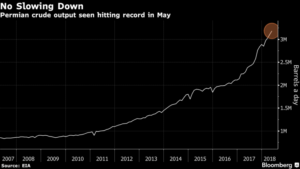
The Permian shale play is all about setting records. Now, the region may even become the world’s largest oil patch over the next decade.

Output in the basin is forecast to reach 3.18 million barrels a day in May, according to the Energy Information Administration. That’s the highest since the agency began compiling records in 2007. By 2023, the basin may produce 4 million barrels a day, according to the International Energy Agency. The Ghawar field in Saudi Arabia is currently the world’s biggest oil field, with capacity of 5.8 million barrels a day, according to a 2017 EIA report.

MSM: Eleven Minute Friendly Interview with Climate Skeptic Ian Plimer

by Eric Worrall, April 16, 2018 in WUWT


Sky News, one of Australia’s most popular news services, just gave climate skeptic and geologist Ian Plimer an honest opportunity to explain what is wrong with Australia’s climate obsessed energy policies.

Geologist Ian Plimer told The Outsiders that Energy Minister Josh Frydenberg had caught himself ‘between a rock and a hard place’ when it comes to the government’s energy policies. Mr Plimer said it wasn’t possible for the energy market to provide cheap and reliable energy, but also reduce emissions.

Aussie PM: Coal to Hydrogen Plant Part of the Seamless Transition to Clean Energy

by Eric Worrall, April 13, 2018 in WUWT


h/t Geoff Sherrington – Coal is being rehabilitated as an essential component of the clean energy future.

Read more: http://www.abc.net.au/news/2018-04-12/coal-to-hydrogen-trial-for-latrobe-valley/9643570

Coal to hydrogen is not a new idea, the Water-gas shift reaction was discovered in 1780 by Italian Chemist Felice Fontana.

There are still some kinks to be worked out. The process to generate hydrogen from coal produces a monstrous amount of CO2 – far more CO2 per unit of useful energy than simply burning the coal would produce. But with hydrogen production, unlike hydrocarbon combustion, all the CO2 is produced in one place. This creates an opportunity for carbon sequestration, when technologies to sequester carbon on such an impressive scale are developed.

Coal dead? Peak oil demand? Five takes on fossil fuels’ future

by Joe Ryan, April 12, 2018 in Bloomberg.News


(Bloomberg) — For all the buzz around wind, solar and electric cars, energy company executives had plenty to say Tuesday about the continuing role of fossil fuels and nuclear power at the Bloomberg New Energy Finance Future of Energy Summit.

Mining mogul Bob Murray offered a passionate defense of coal, asserting that we’d all “die in the dark” without it. Ethan Zindler, a Bloomberg New Energy Finance analyst, supplied the counter argument, saying U.S. coal-plant economics simply don’t work anymore. Here’s what executives from BP Plc to Tellurian Inc. said about the future of fossil fuels in a world pushing to fight climate change.

(…)

New Zealand halts new offshore oil, gas exploration permits

by Rick Wilkinson, April 12, 2018 in Oil&GasJournal


The New Zealand government has made the surprise announcement that it will not grant any new permits for offshore oil and gas exploration.

The Labor government of Prime Minister Jacinda Ardern said the move would not be retrospective. The country’s 22 existing offshore exploration permits along with any discoveries made in them could still lead to the granting of production licenses of up to 40 years duration.

Situation énergétique de l’Arabie saoudite en 2017

by Connaissance des Energies, 24  octobre 2017


Dans cette note de synthèse en anglais, l’EIA américaine (Energy Information Administration), rappelle les grandes données énergétiques de l’Arabie saoudite qui a longtemps joué le rôle de « swing producer » sur le marché pétrolier, en faisant évoluer sa production et ses exportations selon l’offre et la demande mondiale de brut. Si le pays a perdu de son influence face à la révolution des hydrocarbures de roche-mère aux États-Unis, il constitue encore le membre central de l’OPEP, ayant joué un rôle moteur dans la décision de réduire la production des membres de cette organisation (d’autres producteurs comme la Russie s’étant associés à cet effort).

Utica report card: Ohio’s natural gas production at record levels

by Shane Hoover, April 4, 2018 in Inde.Online.com


Utica Midstream conference gives update on Utica Shale production and development.

NORTH CANTON Ohio has produced more natural gas than it uses since early 2015. Driven by prolific Utica Shale wells, the state produced a record 1.7 trillion cubic feet of natural gas last year.

Much of the regional economic development around that production has been in the form of pipelines and processing facilities.

Two interstate natural gas pipelines — Energy Transfer’s Rover project and the NEXUS Gas Transmission pipeline — cross Stark and neighboring counties.

Gas needed for low-carbon targets says National Grid

by P. Homewood, April 8, 2018 in NotaLotofPeopleKnowThat


Bit by bit, some reality appears to be intruding into the make believe world of the Climate Change Act:

No credible scenario’ exists for hitting the UK’s 2050 decarbonisation targets without continued reliance on gas, the National Grid has warned.

In a new report, entitled The Future of Gas: How gas can support a low carbon future’, the grid says that it is not feasible to switch over to electric heating on the scale required to reduce greenhouse gas emissions to 80 per cent of 1990 levels by the middle of this century.

Bahrain hits (black) gold with biggest shale discovery in world

by Catherine Philp, April 5, 2018 in TheTimes


Sheikh Mohammed bin Khalifa al-Khalifa said it was not yet known how much of the oil could be extracted. The scale of the find, however, is about to make it a big player in the global market, significantly boosting its economy and raising its profile in the region, where it plays a smaller fiddle to its giant neighbour, Saudi Arabia.

See also here

A new coal war frontier emerges as China and Japan compete for energy projects in Southeast Asia

by P. Homewood, April 3, 2018 in NotaLotofPeopleKnowThat


A joint report by Greenpeace, the Sierra Club and CoalSwarm indicates that Southeast Asia will be the new epicentre of coal production. Asia accounts for 85 per cent of new coal power development in the world’s top 20 coal producing countries, with China as the leader of the pack. However, while tighter restrictions on domestic coal plants have been imposed by the central government to curb pollution, Beijing has pushed the development of high-efficiency, low-emission coal plants across Southeast Asia as part of the “Belt and Road Initiative”.

As China is expanding its influence, Beijing’s foremost strategic competitor in Asia, Japan, is being forced to step up efforts to combat its shrinking influence in the region. The booming energy sector of Southeast Asia, especially coal, is proving to be the new front line in the geopolitical rivalry between Asia’s two industrial giants.

Oil’s Seven Sisters Enter a ‘Golden Age’, Goldman Sachs Says

by Kelly Gilblom, March 26, 2018 in BloombergMarkets


  • Big Oil’s weight in equity indices to rise from 50-year low
  • Cost cuts, recovering oil prices put companies in a sweet spot

The world’s largest oil companies have survived a life-changing crisis, and are now poised to reap the rewards, Goldman Sachs Group Inc. said.


Big Oil is in a sweet spot with rising oil prices and low operating costs, leaving them with the biggest cash-flow growth in two decades and boosting earnings, Goldman said in a report Monday. That will increase their attraction for investors after years of elevated spending followed by crude’s slump sent their weighting in global equity indexes to a 50-year low, according to the bank (…)

American Energy Is Being Piped And Shipped All Over The World — Here’s The Data

by M. Bastach, March 19, 2018 in TheDailyCaller


U.S. exported more natural gas in 2017 than it imported for the first time in 60 years, according to the Energy Department.

Natural gas production has boomed in recent years, particularly in Pennsylvania and other parts of Appalachia, thanks to hydraulic fracturing or fracking and horizontal drilling. The boom has offset Canadian imports and allowed U.S. companies to ship more fuel abroad.

Le pétrole américain à l’assaut du marché

by L’essentiel, 18 mars 2018


Grâce à une production de pétrole en plein boom, les États-Unis exportent désormais sans complexe leur or noir dans le monde, entraînant une refonte des infrastructures sur leur territoire et rebattant les cartes sur le marché mondial. En pompant actuellement plus de 10 millions de barils par jour, le pays est devenu le deuxième producteur de brut au monde, derrière la Russie et devant l’Arabie saoudite. Un essor lié aux nouvelles techniques permettant d’extraire à moindre coût du pétrole de schiste

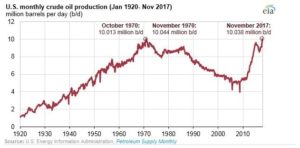
U.S. monthly crude oil production exceeds 10 million barrels per day, highest since 1970

by PennEnergy Editorial Staff, February 2, 2018


U.S. crude oil production reached 10.038 million barrels per day (b/d) in November 2017, according to EIA’s latest Petroleum Supply Monthly. November’s production is the first time since 1970 that monthly U.S. production levels surpassed 10 million b/d and the second-highest U.S. monthly oil production value ever, just below the November 1970 production value of 10.044 million b/d.

Within the Lower 48 states, November 2017 production reached a record high in Texas at 3.89 million b/d, followed by North Dakota at 1.18 million b/d. Production in the Federal Gulf of Mexico reached 1.67 million b/d, up 14% from the October 2017 level as the region recovered from Hurricane Nate.


BP Energy Outlook

by BP Global, March 2018


The Energy Outlook explores the forces shaping the global energy transition out to 2040 and the key uncertainties surrounding that transition. It shows how rising prosperity drives an increase in global energy demand and how that demand will be met over the coming decades through a diverse range of supplies including oil, gas, coal and renewables.

Looking forward to 2040

Extending the Energy Outlook by five years to 2040, compared with previous editions, highlights several key trends.

For example, in the ET scenario, there are nearly 190 million electric cars by 2035, higher than the base case in last year’s Outlook of 100 million. The stock of electric cars is projected to increase by a further 130 million in the subsequent five years, reaching around 320 million by 2040.

Another trend that comes into sharper focus by moving out to 2040 is the shift from China to India as the primary driver of global energy demand. The progressively smaller increments in China’s energy demand – as its economic growth slows and energy intensity declines – contrasts with the continuing growth in India, such that between 2035 and 2040, India’s demand growth is more than 2.5 times that of China, representing more than a third of the global increase.

Africa’s contribution to global energy consumption also becomes more material towards the end of the Outlook, with Africa accounting for around 20% of the global increase during 2035-2040; greater than that of China.

spacer.jpg