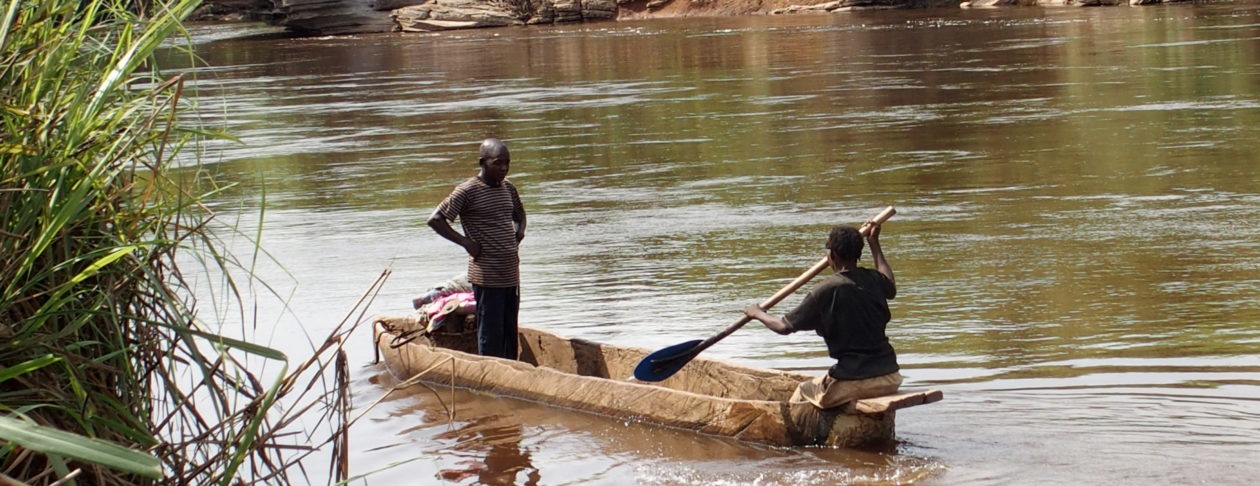
New Scientist: “We could get most metals for clean energy without opening new mines”

by  E. Worrall, Aug 25, 2025 in WUWT


Read more: https://www.newscientist.com/article/2493449-we-could-get-most-metals-for-clean-energy-without-opening-new-mines/

This seems a strange claim, or at least an odd take on the issue. Most mining engineers I’ve met could recite from memory exactly what is in the waste product of the last mine they worked on. And reprocessing waste from past mining operations is big business, in cases where the waste is valuable.

Those minerals will be extracted when the time is right. But until the value of extraction makes it profitable, a significant strategic need arises, or technological advances bring down the cost, why would anyone bother?

As for the claim such extraction could cover the entire needs of battery, solar panel, wind turbine manufacture, most of the estimates for the required minerals I’ve seen are so gigantic, lets just say expert or not, I’d like to see Elizabeth Holley’s calculations.

Graph of the Week – Temperature of ocean air-sheltered stations

by A. Watts, Aug 26, 2025 in WUWT


I somehow missed this, but I find it very interesting. From the 2018 paper: “Temperature trends with reduced impact of ocean air temperature” by Frank Lansner*Jens Olaf Pepke Pedersen

Abstract

Temperature data 1900–2010 from meteorological stations across the world have been analyzed and it has been found that all land areas generally have two different valid temperature trends. Coastal stations and hill stations facing ocean winds are normally more warm-trended than the valley stations that are sheltered from dominant oceans winds.

Thus, we found that in any area with variation in the topography, we can divide the stations into the more warm trended ocean air-affected stations, and the more cold-trended ocean air-sheltered stations. We find that the distinction between ocean air-affected and ocean air-sheltered stations can be used to identify the influence of the oceans on land surface. We can then use this knowledge as a tool to better study climate variability on the land surface without the moderating effects of the ocean.

We find a lack of warming in the ocean air sheltered temperature data – with less impact of ocean temperature trends – after 1950. The lack of warming in the ocean air sheltered temperature trends after 1950 should be considered when evaluating the climatic effects of changes in the Earth’s atmospheric trace amounts of greenhouse gasses as well as variations in solar conditions.

Another New Study Suggests Most – 80% – Of The Modern CO2 Increase Has Been Natural

by K. Richard, Aug 29, 2025 in NoTricksZone 


An independent researcher (Robbins, 2025) has reviewed recent research that suggests at least “80% or more of the [modern CO2] increase is of natural origin.”

This is because “changes in atmospheric temperature are an ‘effect’ of changes in SSTs and not a ’cause’ as some might advocate.”

Similar conclusions are found in a paper published in the same peer-reviewed journal last year (Ato, 2024).

“SST [sea surface temperature] has been the determinant of the annual changes in atmospheric CO2 concentrations and […] anthropogenic emissions have been irrelevant in this process…”

Media Falsely Claim Antarctica On Brink Of Climate Doom, Ignore Contrary Data

by A. Watts, Aug 29, 2025 in ClimateChangeDispatch 


Why abrupt Antarctic ‘climate shifts’ aren’t new or necessarily catastrophic.


Emperor Penguins
A recent CBS News article, “Abrupt Antarctic climate shifts could lead to ‘catastrophic consequences for generations,’ experts warn,” claims that Antarctica is on the brink of irreversible collapse due to climate change, warning that sea levels could rise by meters and that “catastrophic consequences for generations” are looming. [emphasis, links added]

This is false or, at best, deeply misleading.

The actual data and history of Antarctic ice show that “abrupt changes” are neither unprecedented nor a reason to panic. Natural variability and cyclical shifts are being ignored in favor of sensational headlines pushing the increasingly untenable climate crisis narrative.

CBS was not alone in pushing the Antarctic climate crisis narrative.

On August 21, 2025, the Australian Broadcasting Corporation (ABC) joined the chorus of media outlets with alarming headlines warning of a pending ice collapse, publishing a report claiming Antarctica is undergoing “rapid, self-perpetuating changes” that are “potentially irreversible.”

Each of the reports cited a new Nature review led by Professor Nerilie Abram as the source of the information for their alarming articles.

ABC’s article presents Antarctica as being in a state of runaway decline, with imminent threats to emperor penguins and global sea levels, parroting language from the Abram paper as if it were an observed fact, rather than the speculative synthesis of research papers that the Nature study cites.

CBS, ABC, and other media outlets are covering this story as if a tipping point is upon us—but a closer look at the evidence reveals otherwise.