Archives de catégorie : better to know…?

A breakthrough discovery in carbon capture conversion for ethylene production

by University of Illinois Chicago, Sep 9, 2022 in ScienceDaily


A team of researchers led by Meenesh Singh at University of Illinois Chicago has discovered a way to convert 100% of carbon dioxide captured from industrial exhaust into ethylene, a key building block for plastic products.

Their findings are published in Cell Reports Physical Science.

While researchers have been exploring the possibility of converting carbon dioxide to ethylene for more than a decade, the UIC team’s approach is the first to achieve nearly 100% utilization of carbon dioxide to produce hydrocarbons. Their system uses electrolysis to transform captured carbon dioxide gas into high purity ethylene, with other carbon-based fuels and oxygen as byproducts.

The process can convert up to 6 metric tons of carbon dioxide into 1 metric ton of ethylene, recycling almost all carbon dioxide captured. Because the system runs on electricity, the use of renewable energy can make the process carbon negative.

Reasons to avoid false balance and fake debates

by W. Baerbel and J. Cook, Sep 9, 2022 in SkepticalScience


False balance media reporting

One of the most insidious, albeit often inadvertent forms of climate misinformation is false-balance media  coverage, where contrarian voices are given equal coverage with climatescientists. This stems from the journalistic norm assuming there are always two sides to an issue, thus giving mainstream and contrarian voices equal representation. As a result, a few dissenting scientists are given similar attention to the 97% of scientists who are convinced that humans are causing global warming.

debate

Analysis of media coverage from 1988 to 2002 showed that newspapers often presented false balance media coverage of climate change [18]. While the situation has improved in prestige-press coverage [19], the tabloid press has shown no signs of improvement [20]. Similarly, 70% of U.S. TV coverage of climate change presents a false balance [21]. In short, much of what people learn about climate change from the media involves well-established scientific truth presented alongside groundless assertions.

To debate or not to debate

Debate is crucially important to climate science and in the case of human-caused climate change has already occurred over decades. The process of scientific debate is open to anyone—although it does require that participants subject their ideas to the scrutiny of the peer-review process, which is fundamental for the advancement of scientific knowledge [31]. However, contrarians refuse to participate in scientific debates: they do not present their views at scientific conferences, and have a negligible presence in the peer-reviewed literature. Instead, they demand special treatment by bypassing the usual scientific process and presenting unvetted ideas to the public.

How should one respond if invited to publicly debate mainstream climate science? Requests to “debate” climate science or the timing of climate impacts are for propaganda purposes and should be avoided.  Agreeing to participate in such debates run the risk of misinforming the public by conveying the false impression that the scientific community is undecided on basic facts like human-caused global warming.

In contrast, debates over solutions to climate change are worthwhile. One response to an invitation to debate is to inform the organisers of the danger of misinforming the public by debating established science, and that a more appropriate and constructive debate topic is climate solutions. If the organisers persist in hosting a problematic debate, a further option is to issue a public statement explaining that you had advised the organisers not to go ahead due to the problematic nature of the event, but they went ahead regardless.

Meet Climate Skeptic Jacob Rees-Mogg, New UK Energy Secretary

by A. Macaskill and P. Sandle, Sep 8, 2022 in ClimateChangeDispatch


Britain appointed lawmaker Jacob Rees-Mogg, who has expressed skepticism about the need to fight ‘climate change’ as the new business secretary, raising concerns that he could delay the target of reducing net zero emissions by 2050.

Rees-Mogg, nicknamed “the honorable gentleman from the 18th century” because of his poshness and trademark double-breasted suit, was on Tuesday put in charge of the Department for Business, Energy and Industrial Strategy, which is responsible for the government’s strategy on ‘climate change’. [bold, links added]

In the past, Rees-Mogg has expressed concerns about “climate alarmism“, said humanity should adapt to, rather than mitigate, ‘climate change’, and warned that the drive to getting to net zero emissions is responsible for high energy prices.

After his appointment, Rees Mogg said his priority would be to provide help for people dealing with sharply higher energy bills and that the government will soon bring forward a package to help the public.

New Prime Minister Liz Truss has backed the legally binding target of reducing net zero ‘greenhouse gas’ emissions by the middle of this century, but has supported scrapping green levies and bringing back fracking if there is local support.

One contentious issue facing Rees-Mogg is providing a clear and settled policy environment for business after successive Conservative governments have produced energy and industrial strategies that were abandoned just a few years later.

Greenpeace Cofounder Says Climate Change Based On False Narratives

by L. Yun-Jeong, Sep 9,  2022 in ClimateChangeDispatch


Patrick Moore [pictured], one of the founders of Greenpeace, said in an email obtained by The Epoch Times that his reasons for leaving Greenpeace were very clear: “Greenpeace was ‘hijacked’ by the political left when they realized there was money and power in the environmental movement.

[Left-leaning] political activists in North America and Europe changed Greenpeace from a science-based organization to a political fundraising organization,” Moore said. [bold, links added]

Moore left Greenpeace in 1986, 15 years after he co-founded the organization.

“The ‘environmental’ movement has become more of a political movement than an environmental movement,” he said. “They are primarily focused on creating narratives, stories, that are designed to instill fear and guilt into the public so the public will send them money.

He said they mainly operate behind closed doors with other political operatives at the U.N., World Economic Forum, and so on, all of which are primarily political in nature.

The Intergovernmental Panel on Climate Change [IPCC] is “not a science organization,” he said. “It is a political organization composed of the World Meteorological Organization and the United Nations Environment Program.”

“The IPCC hires ‘scientists’ to provide them with ‘information’ that supports the ‘climate emergency’ narrative.”

Their campaigns against fossil fuels, nuclear energy, CO2, plastic, etc., are misguided and designed to make people think the world will come to an end unless we cripple our civilization and destroy our economy. They are now a negative influence on the future of both the environment and human civilization.”

“Today, the left has adopted many policies that would be very destructive to civilization as they are not technically achievable. Only look at the looming energy crisis in Europe and the UK, which Putin is taking advantage of. But it is of their own making in refusing to develop their own natural gas resources, opposing nuclear energy, and adopting an impossible position on fossil fuels in general,” Moore wrote.

The Left ‘Hijacked’ Greenpeace

When German Environmentalists and Putin’s Government Had a Burning Love Affair

by D. Godefridi, Sept 8, 2022 in GatestoneInstitue


  • In 2011, the German Baltic Sea Nature Conservation Foundation was established as a result of an agreement between three of Germany’s leading environmental organizations – WWF, BUND and NABU – and the company Nord Stream, which is a subsidiary of the government of Vladimir Putin.
  • These environmental organizations were, moreover, at the same time fiercely opposed to German civil nuclear power, to the exploitation of shale gas in Europe and to the import of American gas via the construction of liquefied petroleum gas terminals in Germany.
  • Those were three issues where the views of the environmental organizations were totally congruent with those of the Russian Federation. This meant betting everything on “red” — as in a casino — but in this instance, on Russian gas.
  • Right after these contractual commitments by Nord Stream AG, the environmental organizations withdrew the lawsuit they had initiated against Nord Stream…
  • The German press reported last month that, inspired by the success of the first foundation, the same State of Mecklenberg-Western Pomerania was setting up a new foundation as recently as January 2021, the Mecklenberg-Western Pomerania Foundation for Climate and Environmental Protection, this time endowed with 192 million euros from the Russian government.
Those were… issues where the views of the environmental organizations were totally congruent with those of the Russian Federation. This meant betting everything on ‘red’ — as in a casino – but in this instance, on Russian gas. Pictured: The corporate headquarters of Gazprom Germania, the German unit of Russian natural gas company Gazprom, photographed on March 30, 2022 in Berlin, Germany. (Photo by Sean Gallup/Getty Images)

Ultra-depleted hydrogen isotopes in hydrated glass record Late Cretaceous glaciation in Antarctica

by D.A. Nelson et al. , Sept 7, 2022 in NatureCommunications


Abstract

The Early Jurassic Butcher Ridge Igneous Complex (BRIC) in the Transantarctic Mountains contains abundant and variably hydrated silicic glass which has the potential to preserve a rich paleoclimate record. Here we present Fourier Transform Infrared Spectroscopic data that indicates BRIC glasses contain up to ~8 wt.% molecular water (H2Om), and low (<0.8 wt.%) hydroxyl (OH) component, interpreted as evidence for secondary hydration by meteoric water. BRIC glasses contain the most depleted hydrogen isotopes yet measured in terrestrial rocks, down to δD = −325 ‰. In situ 40Ar/39Ar geochronology of hydrated glasses with ultra-depleted δD values yield ages from 105 Ma to 72 Ma with a peak at c. 91.4 Ma. Combined, these data suggest hydration of BRIC glasses by polar glacial ice and melt water during the Late Cretaceous, contradicting paleoclimate reconstructions of this period that suggest Antarctica was ice-free and part of a global hot greenhouse.

Polar Opposite: Polar Bears Require Thin Ice Or Open Water To Survive

by K. Richard, Sept 5, 2022 in NoTricksZone


Abundant polar bear remains dating to 8000 to 9000 years ago have been found on Zhokhov Island, which is today surrounded by year-round sea ice (even in summer). This Arctic latitude (76°N) is too cold and thus too ice-covered for polar bears to inhabit today.

During the Early Holocene CO2 concentrations ranged between 255 to 265 ppm, and yet the Arctic was 5-7°C warmer than it is today and many regions that are now sea ice-covered were sea ice-free.

For example, Zhokhov Island is tundra and treeless today. It’s surrounded by permanent sea ice, making it inaccessible to wildlife.

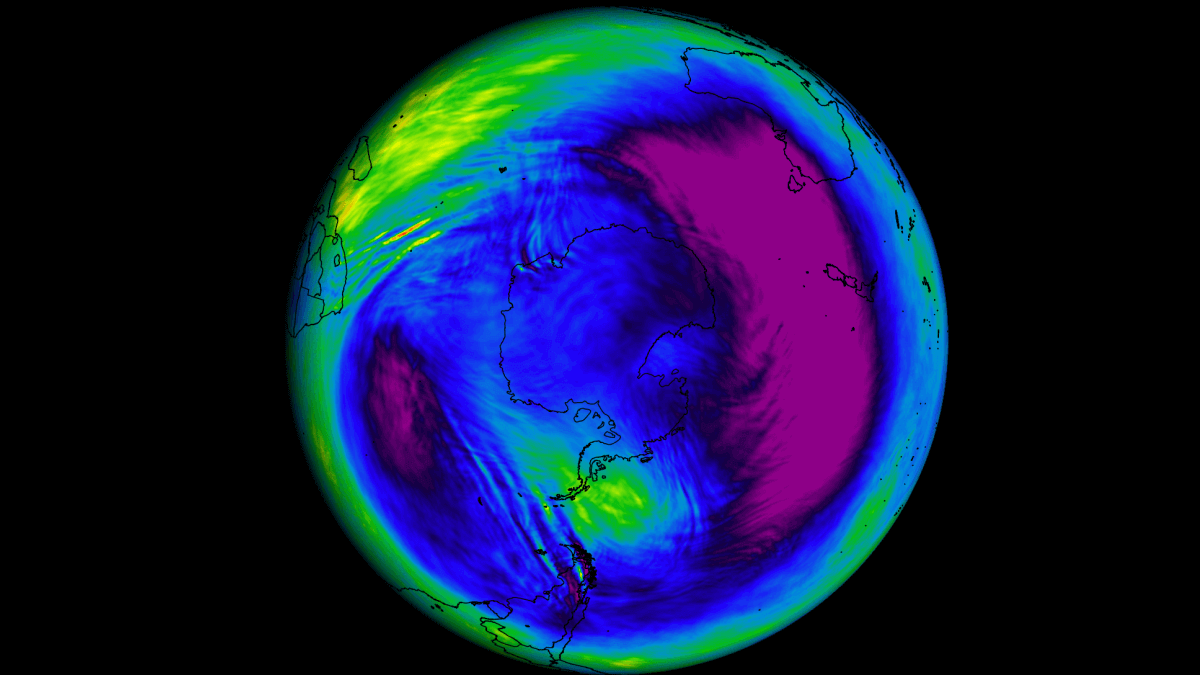
A substantial stratospheric cooling event is now being observed over the Southern Hemisphere following a massive injection of water vapor

by A. Flis, Aug 29, 2022 in SevereWeatherEurope


Strong cold anomalies are being detected in the stratosphere over Southern Hemisphere. The anomalous cooling results from the water vapor coming from the January Hunga Tonga eruption. Cooling on this scale has not been seen in modern satellite records, so this is a significant event.

We will look at what is happening with temperatures in the southern stratosphere, how it all actually happened, and how it might impact our side of the planet in the upcoming Winter 2022/2023.

global-stratospheric-cooling-water-vapor-polar-vortex-winter-warming-event-ssw-pressure-temperature

“The Weaponization of Science: Politics, Vilification, and the Climate Debate”

by W. Soon, April 11, 2022 in CeresScience


On April 11, 2022, CERES team-leader, Dr. Willie Soon’s gave a presentation in Washington D.C., “The Weaponization of Science: Politics, Vilification, and the Climate Debate”. The slides for the talk can be downloaded from https://tinyurl.com/49sbxhru.


Here are 7 short clips taken from the talk describing each of the main topics he covered. The clips are as follows:

  1. Is Dr. Willie Soon in the pay of the fossil fuel industry? (9:28 minutes)

  2. Why Greenpeace is looking for a piece of your green (6:10 minutes)

  3. Why “97% consensus on climate change” claims are wrong (3:29 minutes)

  4. Are the UN’s IPCC climate reports scientifically objective? (6:52 minutes)

  5. The “hockey stick” debate: Was there a Medieval Warm Period? (9:21 minutes)

  6. How much of a role does the Sun play in climate change? (3:33 minutes)

  7. Are “fact checks” checking facts or checking narratives? (2:47 minutes)

We think that these clips answer many of the commonly asked questions about both (1) the politicization of climate science and (2) the causes of climate change. Please feel free to subscribe to our new YouTube channel, share any of the above videos you think are interesting, or even share this post linking to all of them.


For convenience, we have embedded all 7 clips below:

The Fall of ‘Nature’

by Bo Winegard, Aug 28, 2022 in Quilette


A once-respected journal has announced that it will be subordinating science to ideology.

And science, we should insist, better than any other discipline, can hold up to its students and followers an ideal of patient devotion to the search for objective truth, with vision unclouded by personal or political motive.
~Sir Henry Hallett Dale

Although the modern prestige bestowed upon science is laudable, it is not without peril. For as the ideological value of science increases, so too does the threat to its objectivity. Slogans and hashtags can quickly politicize science, and scientists can be tempted to subordinate the pursuit of the truth to moral or political ends as they become aware of their own prodigious social importance. Inconvenient data can be suppressed or hidden and inconvenient research can be quashed. This is especially true when one political tribe or faction enjoys disproportionate influence in academia—its members can disfigure science (often unconsciously) to support their own ideological preferences. This is how science becomes more like propaganda than empiricism, and academia becomes more like a partisan media organization than an impartial institution.

An editorial in Nature Human Behavior provides the most recent indication of just how bad things are becoming. It begins, like so many essays of its kind, by announcing that, “Although academic freedom is fundamental, it is not unbounded.” When the invocation of a fundamental freedom in one clause is immediately undermined in the next, we should be skeptical of whatever follows. But in this case, the authors are taking issue with a view very few people actually hold. At minimum, most academics will readily accept that scientific curiosity should be constrained by ethical concerns about research participants.

Climate Change Saves More Lives Than You’d Think

by Bjorn Lomborg, Sept16, 2021 in WSJ


Global warming does cause more heat deaths, but the editors’ statistic is deceptive. They say global heat deaths have gone up by 54% among old people in the past 20 years, but they fail to mention that the number of old people has risen by almost as much. Demographics drove most of the rise, not climate change.

They also leave out that climate change has saved more lives from temperature-related deaths than it has taken. Heat deaths make up about 1% of global fatalities a year—almost 600,000 deaths—but cold kills eight times as many people, totaling 4.5 million deaths annually. As temperatures have risen since 2000, heat deaths have increased 0.21%, while cold deaths have dropped 0.51%. Today about 116,000 more people die from heat each year, but 283,000 fewer die from cold. Global warming now prevents more than 166,000 temperature-related fatalities annually.

U.S. Petroleum Reserves Hit Lowest Level In Decades Ahead Of Winter Months

by B. Ziesloft, Aug 19, 2022 in DailyWire


Strategic Petroleum Reserve levels have reached their lowest levels in four decades as autumn and winter weather conditions approach, according to data from the Energy Information Administration.

President Joe Biden has responded to rising gas prices by releasing one million barrels of oil per day from the Strategic Petroleum Reserves — a stock of emergency crude oil created to “reduce the impact of disruptions in supplies of petroleum products.” Though reserves in January 2021 were as high as 638 million barrels, reserves have fallen to 461 million barrels as of August 2022 — a level not seen since March.

The national average price of gasoline was $2.38 per gallon when President Joe Biden assumed office, according to the Energy Information Administration, and increased to $3.53 per gallon by the start of the Russian invasion of Ukraine. Prices surpassed $5.00 per gallon in early June before subsiding to $3.92 per gallon as of Friday, according to AAA.

Biden nixed an expansion of the Keystone XL Pipeline upon his entrance into office. Yet the commander-in-chief has repeatedly cast the actions of Russian President Vladimir Putin as the main factor behind soaring energy costs.

“Putin’s Price Hike hit hard in May here and around the world: high gas prices at the pump, energy, and food prices accounted for around half of the monthly price increases, and gas pump prices are up by $2 a gallon in many places since Russian troops began to threaten Ukraine,” Biden said in a June statement. “Even as we continue our work to defend freedom in Ukraine, we must do more — and quickly — to get prices down here in the United States.”

 …

1,200 Scientists, Scholars Declare: ‘There Is No Climate Emergency’

by F. Bergman, Aug 19, 2022 in Slay


A group of almost 1200 of the world’s leading scientists and scholars has signed a document to declare that “there is no climate emergency.”

The group, led by a Nobel Prize laureate, signed the declaration that states climate science is based more on personal beliefs and political agendas than rigorous scientific facts.

The World Climate Declaration warns that climate science “should be less political, while climate policies should be more scientific.”

“Scientists should openly address uncertainties and exaggerations in their predictions of global warming, while politicians should dispassionately count the real costs as well as the imagined benefits of their policy measures,” the declaration reads.

According to a report by WND, the declaration was organized by Climate Intelligence.

New Studies Claim The More CO2 In The Venus Atmosphere The Colder It Gets

by K. Richard, Aug 19, 2022 in NoTricksZone


Early Venus is suggested to have been much colder – and thus habitable – due to higher concentrations of CO2…because CO2 drives cooling in most of the Venus atmosphere (stratosphere, mesosphere, thermosphere).

Scientists have for decades agreed it is “well recognized” that CO2 molecules radiatively cool the atmospheres of planets like Earth, Mars, and Venus (Sharma and Wintersteiner, 1990) in the 15 μm band starting from 12 km above the surface on up.

The Science Was Just as “Settled” 110 Years Ago as It Is Today… Except for the Bits in the Middle

by D. Middleton, Aug 18, 2022 in WUWT


Nothing funnier than smarmy academics…

For 110 years, climate change has been in the news. Are we finally ready to listen?
Published: August 15, 2022 2.47am EDT

On August 14 1912, a small New Zealand newspaper published a short article announcing global coal usage was affecting our planet’s temperature.

This piece from 110 years ago is now famous, shared across the internet this time every year as one of the first pieces of climate science in the media (even though it was actually a reprint of a piece published in a New South Wales mining journal a month earlier).

So how did it come about? And why has it taken so long for the warnings in the article to be heard – and acted on?

[…]


….

Europe wildfires: Are they linked to climate change?–NO!!!

by P. Homewood, Aug 15, 2022 in NotaLotofPeopleKnowThat


The BBC would like you to think so, with statements like these:

So far this year, the amount of land burnt by fires across the European Union is more than three times greater than what you would expect by the middle of July.

Almost 346,000 hectares (1,370 sq miles) of land have been recorded as burnt (as of 16 July), according to the European Forest Fire Information System (EFFIS).

Much of Western Europe has been hit by a record-breaking heatwave, which substantially increases the risk of fires….

“Heatwaves and droughts are exacerbated by climate change and are absolutely the defining factor in years with massive wildfire outbreaks, like the present one,” Dr Jones says….

“But we definitely see trends in fire weather risk because of climate change.

“The risk is higher in the Mediterranean region than the rest of Europe.”

Studies show increasing fire risk for central and southern regions of Europe over the past couple of decades.

Yet tucked away in the same article is this graph which proves all of these have no basis in fact:

Activist Scientists Have Now Officially Changed A -0.5°C Global Cooling Trend Into A Warming Trend

by K. Richard, Aug 15, 2022 in NotricksZone


Back in the days when data manipulation was still strictly forbidden, scientists reported the globe cooled significantly for decades even as CO₂ concentrations increased.

The global cooling amplitude was -0.5°C from 1960-1965, and 1976 was reported to be the coldest year of any year measured since 1958 (Angell and Korshover, 1978).

Today these recorded 1960-1965 and 1958-1963 cooling trends have been fully erased and replaced with a slight warming or pause.

ENSO Impact on the Declining CO2 Sink Rate

by Roy Spencer, Aug 15, 2022 in WUWT


From Dr. Roy Spencer’s Global Warming Blog

Roy W. Spencer, Ph. D.

SUMMARY: A simple time-dependent CO2 budget model shows that yearly anthropogenic emissions compared to Mauna Loa CO2 measurements gives a declining CO2 sink rate, which if continued would increase atmospheric CO2 concentrations and presumably anthropogenic climate change. But accounting for ENSO (El Nino/La Nina) activity during 1959-2021 removes the decline. This is contrary to multiple previous studies that claimed to account for ENSO. A preprint of my paper (not yet peer reviewed) describing the details is at ENSO Impact on the Declining CO2 Sink Rate | Earth and Space Science Open Archive (essoar.org).

UPDATE: The CO2 model, with inputs and outputs, is in an Excel spreadsheet here: CO2-budget-model-with-EIA-growth-cases.

I decided that the CO2 model I developed a few years ago, and recently reported on here, was worthy of publication, so I started going through the published literature on the subject. This is a necessary first step if you want to publish a paper and not be embarrassed by reinventing the wheel or claiming something others have already “disproved”.

The first thing I found was that my idea that Nature each year removes a set fraction of the difference between the observed CO2 concentration and some baseline value is not new. That idea was first published in 2013 (see my preprint link above for details), and it’s called the “CO2 sink rate”.

The second thing I found was that the sink rate has (reportedly) been declining, by as much as 0.54% (relative) per year, even after accounting for ENSO activity. But I only get -0.33% per year (1959-2021) before accounting for ENSO activity, and — importantly — 0.0% per year after accounting for ENSO.

This last finding will surely be controversial, because it could mean CO2 in the atmosphere will not rise as much as global carbon cycle modelers say it will. So, I am posting the model and the datasets used along with the paper preprint at ENSO Impact on the Declining CO2 Sink Rate | Earth and Space Science Open Archive (essoar.org). The analysis is quite simple and I believe defensible. The 2019 paper that got -0.54% per year decline in the sink rate uses complex statistical gymnastics, with a professional statistician as a primary author. My analysis is much simpler, easier to understand, and (I believe) at least as defensible.

The paper will be submitted to Geophysical Research Letters for peer review in the next couple days. In the meantime, I will be inviting the researchers who live and breathe this stuff to poke holes in my analysis.

11 SCIENTIFIC PREDICTIONS FOR THE UPCOMING GRAND SOLAR MINIMUM (SPOILER: WRAP UP, IT’S GETTING COLD)

by Cap Allon, Aug 13, 2022 in Electroverse


There is ever-mounting evidence warning the next epoch will be one of sharp terrestrial cooling due to a relative flat-lining of solar output.

The exact time-frame and depth of this next chill of solar minimum is still anyone’s guess, and the parameters involved (i.e., galactic cosmic rays, geomagnetic activity, solar wind flux etc.) remain poorly understood.

However, there are some great minds on the job, and below I’ve collated 11 best-guesses based on published scientific papers from respected researchers in the field. The list begins with eminent Russian astrophysicist K. Abdussamatov–though it is in no particular order.

ABDUSSAMATOV, 2016:

“The quasi-centennial epoch of the new Little Ice Age has started at the end 2015 after the maximum phase of solar cycle 24. The start of a solar grand minimum is anticipated in solar cycle 27 ± 1 in 2043 ± 11 and the beginning of phase of deep cooling in the new Little Ice Age in 2060 ± 11.

Friday Funny – Clownfish Climate Science

by A. Watts, Aug 12, 2022 in WUWT


Star marine ecologist committed misconduct, university says

Finding against Danielle Dixson vindicates whistleblowers who questioned high-profile work on ocean acidification [due to rising atmospheric CO₂ levels]

A major controversy in marine biology took a new twist last week when the University of Delaware (UD) found one of its star scientists guilty of research misconduct. The university has confirmed to Science that it has accepted an investigative panel’s conclusion that marine ecologist Danielle Dixson committed fabrication and falsification in work on fish behavior and coral reefs. The university is seeking the retraction of three of Dixson’s papers and “has notified the appropriate federal agencies,” a spokesperson says.

Among the papers is a study about coral reef recovery that Dixson published in Science in 2014, and for which the journal issued an Editorial Expression of Concern in February. Science—whose News and Editorial teams operate independently of each other—retracted that paper today.

The investigative panel’s draft report, which Science’s News team has seen in heavily redacted form, paints a damning picture of Dixson’s scientific work, which included many studies that appeared to show Earth’s rising carbon dioxide (CO₂) levels can have dramatic effects on fish behavior and ecology. “The Committee was repeatedly struck by a serial pattern of sloppiness, poor recordkeeping, copying and pasting within spreadsheets, errors within many papers under investigation, and deviation from established animal ethics protocols,” wrote the panel, made up of three UD researchers.

Dixson did not respond to requests for comment. She “adamantly denies any and all allegations of wrongdoing, and will vigorously appeal any finding of research misconduct,” Dixson’s lawyer, Kristina Larsen, wrote in an email to Science. Larsen describes Dixson as a “brilliant, hardworking female scientist” who was “targeted” by a group of scientists who “chose to ‘convict’ Dr. Dixson in the court of public opinion” by sharing their accusations with a Science reporter last year.

Complete Story:

https://www.science.org/content/article/star-marine-ecologist-committed-misconduct-university-says#.YvKM57NC73Y.twitter

Apocalyptic Versus Post-Apocalyptic Climate Politics

by J. Curry, Aug 11, 2022 in WUWT


From Climate Etc.

The Inflation Reduction Act that has passed in the US Senate contains a healthy dose of funding for energy and climate initiatives.  There is much discussion as to why this bill looks like it will pass, when previous climate bills (carbon tax, carbon cap and trade) failed.

The Senate bill includes billions of dollars in tax credits and subsidies for clean energy and electric vehicles. In addition to renewable-energy funding, there is also commitment to federal oil and gas expansion, albeit with fines for excessive methane leakage. The bill includes climate resiliency funding for tribal governments and Native Hawaiians and other disadvantaged areas disproportionately impacted by pollution and climate warming. Funds are also allocated to tackle drought remediation in the West.

I’ve received requests to write on this topic, here are some bits and pieces that I’ve pulled together.  My main points:

  • Post-apocalyptic climate politics have a much better chance of succeeding than fear-driven apocalyptic climate politics
  • Energy policy should be detached from climate policy to make a robust transition to a 21st century energy system that emphasizes abundant, cheap, reliable and secure power with minimal impact on the environment (including land use).

Apocalyptic climate politics

The miserable truth is that our leaders don’t want us to have cheap energy–Dan Hannan

by P. Homewood, Aug 10, 2022 in NotaLotofPeopleKnowThat


No, the energy crisis is not some unforeseeable consequence of the Ukrainian war. It is the result of years of wishful thinking, preening and short-termism. We sit on 300 years’ supply of coal. We have rich pockets of gas trapped in rocks beneath Central Scotland, Yorkshire, Lancashire and Sussex. We have as good a claim as any country to have invented civil nuclear power. Yet, incredibly, we face blackouts and energy rationing.

The calamity into which we are heading this winter represents a failure of policy under successive governments going back decades. The fact that much of Europe is in the same boat – and that poor Germany is barely in the boat at all, but is clinging by its fingertips to the gunwales – is no consolation.

Like their counterparts in other Western countries, our leaders are now scrambling to make up for past errors. More nuclear power-stations are mooted. The ban on shale gas extraction is reviewed. Sudden attention is paid to potential new sources of clean fuel, from hydrogen to fusion. All good stuff. All too late.

You can’t build a nuclear power plant in less than five years. Even fracking takes around ten months to come online – and that assumes that you have first cleared all the planning hurdles. Hydrogen has vast potential, and what Britain is doing with fusion, not least at the Atomic Energy Authority’s facility in Culham, is mind-blowing. We may well be less than two decades away from solving all our energy problems. But none of that will see us through next winter, when average household fuel bills are set to rise to over £4000.

How did we allow ourselves to become so vulnerable? It was hardly as if disruption in global energy markets was unthinkable. Most of the world’s hydrocarbons are buried under countries with nasty governments. For every Alberta, there are a dozen Irans; for every Norway, a dozen Nigerias. There is even a theory, first advanced by Juan Pablo Pérez Alfonzo, the Venezuelan energy minister who founded OPEC, that the very fact of having oil turns a country into a dysfunctional dictatorship.

We have seen wars, blockades and revolutions across petro-dollar economies. We knew that a break in supply was always a possibility. And it was hardly as if Vladimir Putin was disguising the nature of his regime, for heaven’s sake.

No, we are in this mess because, for most of the twenty-first century, we have ignored economic reality in pursuit of theatrical decarbonisation. Actually, no, that understates our foolishness. Decarbonisation will happen eventually, as alternative energy sources become cheaper than fossil fuels. It is proper for governments to seek to speed that process up. But this goes well beyond emitting less CO2. Our intellectual and cultural leaders – TV producers, novelists, bishops, the lot – see fuel consumption itself as a problem. What they want is not green growth, but less growth.

Models, Climate Scientists Wrong Again…New Study Finds Jet Stream Strengthening, Not Weakening

by P. Gosselin,  Aug 9, 2022 in NoTricksZone


Alarmist climate research centers like the Potsdam Institute and the unquestioning media have been claiming for years that the Jet Stream is weakening, hence this would lead to greater weather extremes across the northern hemisphere due to blocking. Responsible for this of course is man-made global warming.

Hat-tip: The Klimaschau

But a recent paper by Samantha Hallam et al published in the journal Climate Dynamics looks at the seasonal to decadal variations in Northern Hemisphere jet stream latitude and speed over land for the period 1871–2011. The authors were unable to find any weakening of the sort climate alarmists have been warning about.

Quite to the contrary, the authors in fact found that the winter jet stream over the North Atlantic and Eurasia has increased in average speed by 8% to 132 mph. The authors found the 141-year trends in jet latitude and speed show differences on a regional basis and that jet speed shows significant increases evident in winter (up to 4.7 ms −1 ), spring and autumn over the North Atlantic, Eurasia and North America. Over the North Pacific, no increase was observed.

Moreover, the Jet Stream was found to have shifted northward by some 330 kilometers. Overall, the paper’s findings contradict the claims of a weakening Jet Stream regularly made by the climate alarmists and their media minions.

Applying climate alarmist science, we’d have to conclude now, due to the strengthening Jet Stream, less weather extremes should be expected. This would be good news of course. But don’t expect the fear-porn media to look at this.

Scientists: The Global Warming Since 1985 Cannot Be Attributed To CO2 Forcing

by K. Richard, Aug 8, 2022 in NoTricksZone


Cloud modulation of shortwave radiation and greenhouse effect forcing has largely been the determining factor in the global warming of the last 45 years. Not CO2.

CO2 forcing and its effect on surface temperatures is detailed in analyses of changes in clear-sky radiation only because all-sky radiation effects that include clouds (and the real-world atmosphere has clouds) overshadow the CO2 impact (Feldman et al., 2015, Harries et al., 2001).

Late 20th Century Climate Forcing

Per satellite observations, from 1985 to 1998 the “background clear-sky OLR [outgoing longwave radiation] was essentially unchanged” (Wang et al., 2002). In other words, any variations in OLR attributed to changes in greenhouse gas concentrations were not detectable.

In contrast, cloud vertical distributions explained 40% of increased tropical outgoing longwave radiation (OLR) and 60% could be explained by the emissivity of clouds, which means OLR changes were “most likely due entirely to changes in tropical cloud characteristics” and “cannot be attributed to increases in greenhouse gas concentrations.”

Furthermore, there was a decrease in reflected shortwave radiation (RSR) of -2.4 W/m² per decade observed from 1985 to 1999, which means there was a +3.6 W/m² increase in solar radiation absorbed by the Earth system during these 14 years. This can easily explain the warming during this period.

..

“New Little Ice Age Instead of Global Warming?” — Dr Theodor Landscheidt

by Cap Allon, Aug 7, 2022 in Elecroverse

[Originally published Sept 7, 2020 on electroverse.net]

Among the long list or scientific papers suggesting that a solar-driven spell of global cooling is on the cards, Dr Theodor Landscheidt’s ‘New Little ICE Age Instead of Global Warming?‘ probably has the claim of priority.

Published in 2003, just a year before his death, Landscheidt’s research is standing the test of time, and is still largely on course to be proved correct.

The paper’s abstract begins:

‘Analysis of the sun’s varying activity in the last two millennia indicates that contrary to the IPCC’s speculation about man-made global warming as high as 5.8C within the next hundred years, a long period of cool climate with its coldest phase around 2030 is to be expected.’

Crucially, in the growing list of research concluding that a solar-driven multidecadal spell of global cooling is on the cards (research from multiple studies of quite different characteristics), the year 2030 ALWAYS features prominently. Unlike the IPCC, which tosses its thermageddon doomsday date back and forth like a hot potato, researchers who track the multimillennial plays of the cosmos (namely those of the Sun) routinely land on the year 2030 as being the date of ‘climate deterioration’: this in itself should serve as compelling evidence.

Dr Landscheidt continues:

‘It is shown that minima in the 80 to 90-year Gleissberg cycle of solar activity, coinciding with periods of cool climate on Earth, are consistently linked to an 83-year cycle in the change of the rotary force driving the sun’s oscillatory motion … As the future course of this cycle and its amplitudes can be computed, it can be seen that the Gleissberg minimum around 2030 and another one around 2200 will be of the Maunder minimum type accompanied by severe cooling on Earth. This forecast should prove skillful as other long-range forecasts of climate phenomena, based on cycles in the sun’s orbital motion, have turned out correct as for instance the prediction of the last three El Niño years before the respective event.’