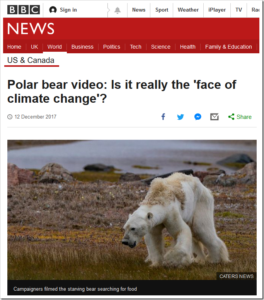
Tales of doom and gloom about polar bears reflect what some people think might happen in the future, not what is happening right now. Currently, polar bears are doing just fine despite the low summer sea ice coverage they’ve experienced since 2007 (Crockford 2017a; York et al. 2016). In other words, there has been no global population decline as predicted: officially, the numbers were 22,000-31,000 (or 26,500 average) in 2015 (Wiig et al. 2015) but about 28,500 when estimates published since then are included (Aars et al. 2017; Dyck et al. 2017; Matishov et al. 2014; SWG 2016), up from about 22,500 in 2005).
Elsevier has retracted 13 papers—and says it will retract 13 more—after discovering they were accepted because of fake reviews.
A spokesperson for Elsevier told us that the journals are in the process of retracting all 26 papers affected by the “peer-review manipulation” and “unexplained authorship irregularities.” Most share one corresponding author, a physical science researcher based in Iran.
by David Kirtley, December 28, 2017, in SkepticalScicence
In Part 1, we learned about carbon isotopes: how 14C forms in the atmosphere, how different isotopes move through the Carbon Cycle, and how isotopic measurements reveal clues about our changing climate. In this post we will look at how measurements of changing isotopic ratios are described.
We know that prediction is difficult, especially about the future as the saying goes, but as an entertainment in the festive season we are asking for your 2018 global temperature forecast.
Every year at this time the UK Met Office issues its forecast of the global annual temperature for the following year. This time it says that 2018 will be another very warm year globally, but it is unlikely to be a new record due to the cooling effect of about 0.1 °C from a moderate La Niña in the Pacific.
by Joshua Nevett, December 23, 2017 in DailyStar, UK
A GLOBAL cool down lasting 120 years will trigger “more intense” winters that threaten months of freezing temperatures and snow “within a few years”, climate scientists have warned.
Hopefully, the first two posts in this series, “Do humans harm the environment” and “Population Growth and the Food Supply” have convinced the reader that man-made climate change and global warming are not an existential threat to humanity or the planet. This leaves us in a discussion of the cost of global warming, which is something we can calculate. To do the calculation, we need to estimate the monetary damages caused by global warming, when they will be incurred, and the discount rate of money over that period of time. We will not attempt the calculation here, it is too complex, but we can discuss the parameters and some of the calculations done by others.
We’re told that climate change caused or intensified California’s wildfires — and that such fires are getting worse. As usual for such scary stories, these claims are only weakly supported by science — except for the ones that are outright fabrications. See what scientists say and decide for yourself.
A partisan divide has emerged in the European Parliament over proposals to beef up the governance of the Energy Union, with conservative and centre-right lawmakers rejecting what they described as an “outdated”, “inflexible” approach supported by the Greens and left-wing parties.
Essay by Dr. Susan Crockford (republished from her website https://polarbearscience.com )on Retraction request to Bioscience: FOIA emails document another harsh criticism of Amstrup’s 2007 polar bear model
Today I sent a letter to the editors of the journal Bioscience requesting retraction of the shoddy and malicious paper by Harvey et al. (Internet blogs, polar bears, and climate-change denial by proxy) published online last week.
The letter reveals information about the workings of the polar bear expert inner circle not known before now, so grab your popcorn.
La Banque mondiale a présenté le 18 juillet une étude soulignant les énormes besoins de minerais et de métaux associés à la transition « bas carbone » dans le monde. Un aspect souvent ignoré de cette transition.
by Steve Penn, November 22, 2017 in ClimateChangeDispatch
(…) It seemed obvious to me that there was a climate change problem. I heard about it—and read about it—every day in the news. Eventually, I started to study the issue, thinking that I needed to understand it better to write informed articles on the subject (…)
For two weeks the whole world has been fretting about the petition “World Scientists’ Warning to Humanity: A Second Notice” with thousands of scientists stating that: (…)
There is only one slight problem: everybody can sign the petition, you, me, everybody. Where is the evidence? Well, simply go to their page and look for yourself:
Germany’s utopian dream of transforming itself into the world’s green powerhouse is collapsing as its political and media establishment is mugged by reality. The country’s climate obsession has turned into one of the country’s biggest political and economic handicaps, making Germany almost ungovernable.
The British Isles were once neither British nor isles
Things aren’t always what they seem on the surface. Looking at the area between mainland Europe and the eastern coast of Great Britain, you probably wouldn’t guess it had been anything other than a great expanse of ocean water. But roughly 12,000 years ago, as the last major ice age was reaching its end, the area was very different. Instead of the North Sea, the area was a series of gently sloping hills, marshland, heavily wooded valleys, and swampy lagoons: Doggerland.
President, Europäisches Institut für Klima und Energie (EIKE)
US Climate and Energy Policy after 10 Months Trump
Zero Hour for Climate Alarmists?
Marc Morano
Editor in Chief www.climatedepot.com and Director of Communication CFACT
The German Energiewende – Germany’s Green Path, between Illusion and Reality,
by Tony Heller, November 1, 2017 in The Deplorable Clim Science Blog
In January 1972, the National Science Foundation held a meeting at Brown University to discuss “climatic change” – then meant global cooling, which they said was of natural origin.
Les scientifiques en déduisent que le réchauffement global actuel pourrait potentiellement être “sans précédent” sur les 100 derniers millions d’années. L’étude de ces géochimistes, publiée dans Nature Communications, constitue une sorte de pavé dans la mare des paléoclimatologues qui utilisent depuis les années 1950 ce “paléothermomètre” aidant à bâtir les modèles actuels sur le réchauffement climatique
Via the AGU: WASHINGTON D.C. — Minerals containing water are widespread on Ceres, suggesting the dwarf planet may have had a global ocean in the past. What became of that ocean? Could Ceres still have liquid today? Two new studies from NASA’s Dawn mission shed light on these questions.
As promised, I attended Al Gore’s climate change lecture at Rice University last night. Rice University is one of the most beautiful university campuses I’ve ever seen, so it was a delight to see it again. The architecture is outstanding, and the buildings are placed in a garden-like setting. It was lovely to walk from the parking lot to the fieldhouse. The speech was held in a packed Tudor Fieldhouse which seats 5,750. By the time the Rice University Provost was introducing Al Gore, there were no empty seats that I could see, see Figure 1.
Temperature and Water Level (MSL) are two hot topic measurements being widely bandied about and vast sums of money are being invested in research to determine whether, on a global scale, these physical quantities — Global Average Temperature and Global Mean Sea Level — are changing, and if changing, at what magnitude and at what rate. The Global Averages of these ever-changing, continuous variables are being said to be calculated to extremely precise levels — hundredths of a degree for temperature and millimeters for Global Sea Level — and minute changes on those scales are claimed to be significant and important.
La géologie, une science plus que passionnante … et diverse