Archives de catégorie : better to know…?

3 More New Studies Show Modern Arctic Sea Ice Extent Is Greater Than Nearly Any Time In The Last 10,000 Years

by K. Richard, Oct 29, 2029 in NoTricksZone


For years scientists have been using biomarker evidence (IP25, PIP25) to reconstruct the Arctic’s sea ice history. The evidence shows modern (20th-21st century) Arctic sea ice is at its greatest extent since the Holocene began.

Scientists (Wu et al., 2020) have determined that from about 14,000 to 8,000 years ago, when CO2 lingered near 250 ppm, the Beaufort Sea (Arctic) was “nearly ice free throughout the year” (<0.2 PIP25) and ~4°C warmer than today in winter.

With CO2 at ~400 ppm, this region is 70-100% ice-covered (>0.8 PIP25) for all but 1-2 summer months in the modern (1988-2007) era.

….

Roger Revelle – the backstory of the father of Atmospheric CO2 monitoring

by A. May, Oct 321, 2020 in WUWT


Roger Revelle was an outstanding and famous oceanographer. He met Al Gore, in the late 1960s, when Gore was a student in one of his classes at Harvard University. Revelle was unsure about the eventual impact of human carbon dioxide emissions on climate, but he did show that all carbon dioxide emitted by man would not be absorbed by the oceans. For an interesting discussion of Revelle’s work in this area see this post on “The Discovery of Global Warming,” by Spencer Weart (Weart, 2007). The original paper, on CO2 absorption by the oceans, published in 1957 by Roger Revelle and Hans Suess, is entitled: “Carbon Dioxide Exchange Between Atmosphere and Ocean and the Question of an Increase of Atmospheric CO2, during the Past Decades” (Revelle & Suess, 1957). This meant that human emissions of carbon dioxide would accumulate in the atmosphere and that the CO2 atmospheric concentration would increase, probably causing Earth’s surface to warm at some unknown rate. This is not an alarming conclusion, as Revelle well knew, but Al Gore turned it into one.

One of Revelle’s good friends was Dr. S. Fred Singer. Singer was a professor of environmental science at the University of Virginia and both Revelle and Singer had been science advisors in the U.S. Department of the Interior. They first met in 1957 and were more than professional colleagues, they were personal friends (Singer, 2003). Unfortunately, Revelle passed away in July 1991 and Singer passed away in April 2020, so we will refer to them and their friendship in the past tense. Both were leading Earth scientists and at the top of their fields, it was natural they would become friends. They also shared an interest in climate change and chose to write an article together near the end of Revelle’s life.


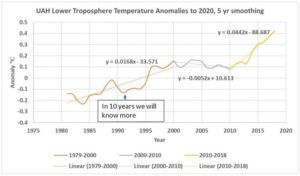
Indeed, ten years later, CO2 emissions were still increasing, but the world had started to cool as shown in Figure 1. This casts considerable doubt on the idea that human emissions somehow control global warming, since some other factor, presumably natural, is strong enough to reverse the overall warming trend for ten years. Revelle was correct to encourage the government to wait for ten more years. Just a year before their paper was published the IPCC reported that warming to date fell within the range of “natural variability” and that the detection of a human influence on climate was “not likely for a decade or more.” (IPCC, 1990, p. XII).

Figure 1. In 1990 and 1991, respectively, the IPCC and Roger Revelle and colleagues said it was too early to do anything about possible man-made climate change, they thought we would know more in 10 years. The plot is smoothed with a 5-year running average to reduce the effect of El Nino and La Nina events. This makes the longer term trends easier to see.

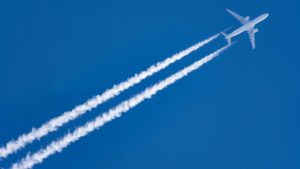
Les chercheurs prenant le plus l’avion sont… les experts du climat

by Le Point, Oct 29,  2020


Selon une étude britannique, les climatologues voyagent en moyenne davantage en avion que les scientifiques spécialisés dans d’autres domaines.

Les arroseurs arrosés. Les climatologues alertent régulièrement et, à raison, sur les effets sur le climat des déplacements en avion, fortement émetteurs de gaz à effet de serre. Mais une étude publiée en ce mois d’octobre dans la revue Global Environmental Change vient mettre le doigt sur certains de leurs comportements. Selon cette étude britannique coordonnée par l’université de Cardiff, et relayée par Nature et Courrier International, les experts en réchauffement climatique sont les scientifiques qui voyagent le plus souvent en avion, en comparaison avec leurs collègues d’autres disciplines. Au total, plus de 1 400 chercheurs, provenant de 59 pays différents et de domaines scientifiques divers, ont été interrogés.

En moyenne, les experts du climat, qui représentaient environ 17 % des personnes sollicitées, prennent l’avion à raison de cinq fois par an. En comparaison, les chercheurs spécialisés dans d’autres disciplines disent effectuer quatre trajets par an en avion. Les vols effectués par les climatologues sont davantage domestiques qu’internationaux. Toutefois, ils avancent souvent des raisons professionnelles pour ces trajets, ce qui n’est pas forcément le cas de leurs autres collègues scientifiques. Les professeurs spécialisés dans le dérèglement climatique voyagent en avion environ neuf fois par an en moyenne, contre huit fois pour leurs collègues d’autres spécialités.

First-of-its-kind surface water Atlas brings together 35 years of satellite data

by EU Science Hub, Oct 2020


The Atlas provides a better understanding of the consequences climate change and human actions have for the planet’s surface water resources.

It is impossible to overstate the critical importance of water in our daily lives. Surface water bodies – including lakes, ponds and rivers – are particularly important as sources of water for domestic, industrial and agricultural use.

As the Earth’s surface water is intensely dynamic, our knowledge about where waterbodies can be found has not always been accurate. Waterbodies move, whole lakes dry up and new rivers and lakes form, which makes mapping these moving targets difficult.

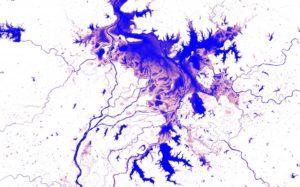
Building on a project that combined thousands of years of computer time with millions of satellite images, the JRC’s Atlas of Global Surface Water Dynamics describes the important role that surface water plays for our planet’s climate and biodiversity, as well as virtually every aspect of our daily lives.

The Atlas documents the science behind a set of truly unique maps, which include time, and illustrates the changes in surface water resources over the past 35 years.

The scientists believe that the Atlas can improve our understanding of the consequences of climate change and human action on surface water resources, and that clearer understanding can help decision-makers to plan environmental actions and design effective policies aimed at the sustainable management of surface water resources.

Mapping the history of water

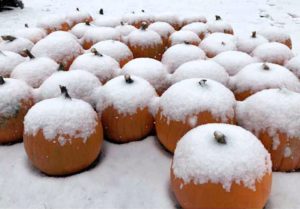
Global Warming Wallops 20 Million Americans With Snow, Freezing Rain

by B. Lyman, Oct 27, 2020 in ClimateChangeDispatch


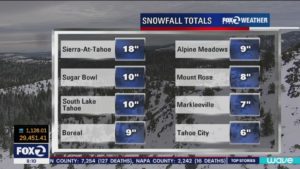
More than 20 million Americans are under some sort of winter weather watch, warning, or advisory from the Southwest through the Midwest as of Monday.

The Weather Channel has dubbed the storm “Winter Storm Billy” and said the storm will bring snow throughout parts of the Southern Rockies, the Central Plains, and Missouri.

From Arizona to Wisconsin, residents could see snowfall Monday, while those further south, like in Texas and Oklahoma, will see freezing rain and sleet, according to CNN.

Ice in Texas and Oklahoma is expected to accumulate roughly half an inch, which could cause dangerous travel conditions and knock power out, per the same article. Oklahoma City is under an Ice Storm Warning.

Temperatures in North Texas are roughly 25 degrees Fahrenheit below average. Texans living in the Texas Panhandle area could see one to two inches of snow during the area’s first Winter Storm Warning of the season, according to CBS Dallas-Ft. Worth.

While temperatures in Arizona won’t be as cold as some other states, some areas in the state could see a low of 46 degrees on Tuesday — the first temperature in the 40s since March, according to AZ Central.

Some areas of Colorado and New Mexico are expected to see two feet of snow, which comes as a bit of relief as wildfires continue to rage in Colorado’s Boulder and Larimer Counties, according to The Denver Channel. In Aguilar, Colorado, there were already 14 inches recorded from snowfall Sunday into Monday, per the same report.

NSIDC: 2020 POLAR ICE DOING JUST FINE

by Cap Allon, Oct 24, 2020 in Electroverse


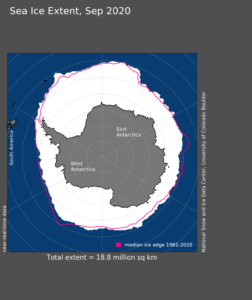
According to the latest October report from the National Snow and Ice Data Center (NSIDC), the ice locked at Earth’s poles is, overall, GROWING.

By volume, Antarctica contains 90% of Earth’s ice, and volume is a far better metric to use when judging the state of an ice sheet than sea ice extent. Extent is prone to wild and unpredictable fluctuations due to natural changes in ocean currents and wind patterns, etc–though these fluctuations are of a much lesser degree in Antarctica than in its northern cousin, the Arctic.

According to the latest NSIDC report, Antarctic sea ice extent reached a whopping 18.95 million square kilometers (7.32 million square miles) on September 28. Mid to late Sept would usually give us the year’s maximum extent, but given the favorable conditions in October, the maximum may well be higher. “As is typical this time of year, there are wide swings caused by winds and storms along the extensive ice edge,” writes the NSIDC.

Ice extent around Antarctica is now “well above the 1981 to 2020 median extent,” the NSIDC informs us. “Ice extent is above the median extent along a broad area off the Wilkes Land coast and western Ross Sea, near the median extent from the Amundsen Sea clockwise to the Weddell Sea and above the median north of Dronning Maud Land, Enderby Land, and the Cosmonaut Sea. The only major area of below the median extent is in the Indian Ocean sector near the Amery Ice Shelf and eastward.”

Continuer la lecture de NSIDC: 2020 POLAR ICE DOING JUST FINE

Dubai builds first coal power plant despite pledging lowest carbon footprint in the world by 2050

by Independent, Oct 22, 2020


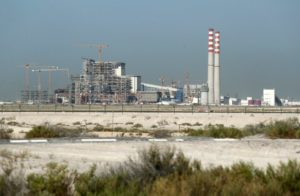
A new wonder is rising in the southern desert of Dubai against the backdrop of Persian Gulf beaches, but it’s not another skyscraper to grace the futuristic sheikhdom. Instead, it’s one of mankind’s oldest power sources gaining its own space on the oil-rich Arabian Peninsula — a coal-fired power plant

The construction of the $3.4 billion Hassyan plant in Dubai appears puzzling, as the United Arab Emirates hosts the headquarters of the International Renewable Energy Agency. It’s also building the peninsula’s first nuclear power plant and endlessly promotes its vast solar-power plant named after Dubai’s ruler. Dubai has also set the lofty goal of having the world’s lowest carbon footprint in the world by 2050 — something that would be impacted by burning coal.

The coal plant’s arrival comes as Gulf Arab nations remain among the world’s hungriest for energy and amid political concerns over the use of natural gas imported from abroad, concerns underscored by a yearslong dispute with gas-producer Qatar, which is boycotted by four Arab nations, including the UAE.

“Dubai was really saying we’re far too exposed on gas imports, those could be interrupted by all kinds of things, the cost is very high and so we have to do something else to diversify our fuel supply and bring down the total cost,” said Robin Mills, the CEO of Qamar Energy, a Dubai-based consulting company. “They got a very competitive offer on the coal plant … and so the decision was made.”

NORTHERN HEMISPHERE SNOW MASS ABOVE AVERAGE + GREENLAND ICE SHEET’S ASTONISHING GAINS CONTINUE

by Cap Allon, Oct 21, 2020 in Electroverse


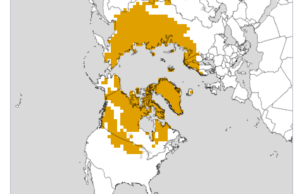
Following on from one of its snowiest winters on record in 2019-20 comes the first 2020-21 data-points from the Finnish Meteorological Institute (FMI). What they clearly reveal is that the Northern Hemisphere is at it again, continuing the trend of growth observed in recent years.

Despite decades of doom-and-gloom prophecies and fear-mongering claptrap, the Northern Hemisphere continues to GAIN “snow mass” at a rate comfortably above the 1982-2012 average:


….

See also here (Minnesota just suffered its Largest Early-Season Snowstorm in Recorded History)

Climate experts fly more often than other scientists

by B. Webster, Oct 20, 2020 in TheTimes


Scientists who specialise in climate change fly more than other researchers, according to a study by Cardiff University that has prompted calls for them “to look in the mirror” before demanding that others cut emissions.

Climate scientists take about five flights a year on average for work while other researchers take four. Climate professors catch nine flights a year compared with eight for all professors.

Climate scientists take about five flights a year on average for work
TARO HAMA-E-KAMAKURA/GETTY IMAGES

Creepy Climate Conversations

by Donna Laframboise, Oct 21, 2020 in BigPicturesNews


Tony Thomas has a disturbing piece over at Quandrant.org, concerning an Australian organization allegedly run by child activists. It’s now urging kids to initiate creepy conversations with adults as a means of spreading climate propaganda.

Matters may not develop as expected, though. Because any adult who was around for the global cooling scare, who was told acid rain would wipe out the worlds forests, and that the hole in the ozone layer would induce widespread skin cancer has, in fact, heard it all before.

It’s interesting that the SchoolStrike4Climate.com website can’t stay on topic. Its front page tells us Australia was stolen from First Nation communities, and that “there can be no climate justice without first nations justice.” If you click the large button labelled: Black Lives Matter Resources, you’re taken to a 7-page Google document that similarly declares: “There is no climate justice without racial justice…”

These statements, call to mind 17-year-old Greta Thunberg’s assertion that “We can not have climate justice without gender equity.”

Climate justice. First Nations justice. Racial justice. Gender equity. What does this collection of causes tell us? That these young people aren’t rebels at all. Nor are they independent thinkers.

Rather than being sincere and passionate about a single issue they themselves have carefully investigated, these youngsters are merely hopping aboard the bandwagon known as fashionable left wing politics.

If you truly believed your future was imperiled, wouldn’t you keep on topic? Wouldn’t your anxiety focus your attention? Wouldn’t you pursue a single, realistic, achievable goal?

Instead, these high school students are being encouraged to believe that, by skipping school, they’ll convince the rest of us to do their bidding – not just about the climate, but with respect to other complicated, longstanding social issues. Everything will be transformed. Fixed to their satisfaction. All at the same time, no less.

Only a naive young person could imagine this to be remotely possible.


Is Mauna Loa Really The Best Location To Measure ‘Global’ CO2 Levels?

by K. Richard, Oct 19, 2020 in NoTricksZone


Highly anomalous terrain (an active volcano), 40 years of cooling temperatures, and a CO2 record that dramatically contrasts with fluctuating values from forests and meadows reaching 600-900 ppm all beg the question: Is Mauna Loa’s CO2 record globally representative?

Mauna Loa is the Earth’s largest land volcano. It has erupted over 3 dozen times since 1843, making this terrestrial landscape extremely unusual relative to the rest of the globe’s terrain. (Forests, in contrast, cover over 30% of the Earth’s  land surface.)

Mauna Loa has been thought to be the world’s best location to monitor global CO2 levels since 1958.

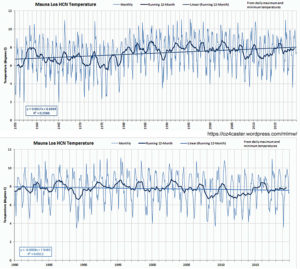
While Mauna Loa CO2 levels show a rise of 338 ppm to 415 ppm since 1980, Mauna Loa temperatures (HCN) show a cooling trend during this same time period. The only warming period in the last 65 years occurred between about 1975 and 1985.

Image Source: oz4caster

Forest CO2 fluctuations

As mentioned above, forests are orders of magnitude more terrestrially representative than the highly anomalous site of the Earth’s largest volcano.

In forests or tree-covered areas, CO2 rises from around 300 ppm in the warmth of the afternoon (~3 p.m.) to over 600 ppm before sunrise (~4 a.m.), when it is cooler (Fennici, 1986, Hamacher et al., 1994). This massive fluctuation occurs daily and CO2 values average out to be far higher than the Mauna Loa record suggests.

The Great Energy Non-Transition

by B. Everett, Oct 15, 2020 in CO2Coalition


One of the troubling characteristics of today’s civic discourse is the tendency to confuse predictions with reality.  Nowhere is this problem more severe than in the debate over climate and its associated issues.

The last hundred years have seen increasing emissions of carbon dioxide – a benign gas.  In reality, this slight increase in atmospheric COconcentrations (from 0.03% in the nineteenth century to 0.04% today) has brought nothing but beneficial effects, including increased crop yields and greater drought resistance.  Nonetheless, climate alarmists argue that rising temperatures are bringing catastrophic storms, flooding, disease, inundation, extinction and general misery.  Unlike the benefits of CO2 which are clear and measurable, climate catastrophe remains nothing more than a prediction generated by computer models which have never produced meaningful forecasts of climate impacts.

A frequent corollary of climate alarmism is that the world has undertaken a radical transformation of the global energy system away from fossil fuels toward zero-carbon, renewable energy.  A Google search of the term “energy transition” yields over 5 million hits, many accompanied by terms such as “unstoppable” and “irreversible”.  But is this transition actually taking place? Three arguments are generally offered – none of them valid.

First, “energy transition” supporters point to the high growth rates for renewable energy sources with wind increasing at over 20% annually since 2000 and solar at over 40% per year, compared to less than 2% for fossil fuels.  Sounds great, but the absolute numbers tell a different story.  In 2019, despite forty years and trillions of dollars of subsidies, wind energy contributes about 2% of total global energy use and solar just over 1%.  Fossil fuels accounted for 84%, down just two percentage points over the last 20 years.

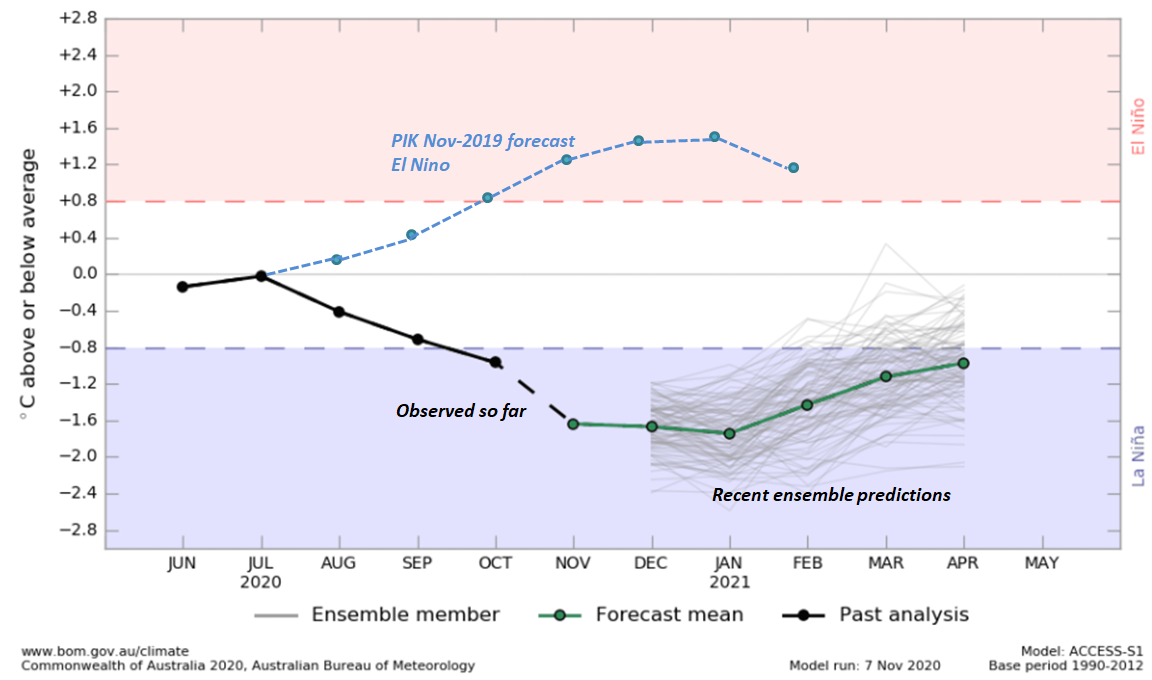
LA NINA HAS ARRIVED: NEAR-TERM COOLING

by Cap Allon, Oct 11, 2020 in Electroverse


The following article is written by Bob Hoye of www.pivotaladvice.com.

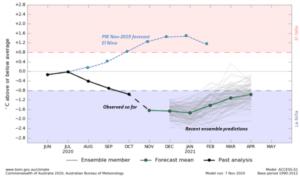
Last week, the Global Warming policy Forum headlined “La Nina Is Here”. Why the headline? Because the warming El Nino is over and the change to the La Nina represents cooling. Like seasonal and actual climate change, it is a regular event. Which in physics means logical and predictable. And some cooling is showing up in various charts. Well, in those not altered by promoters of AGW.

A Geological Perspective of Polar Bears

by D. Middelton, Oct 11, 2020 in WUWT


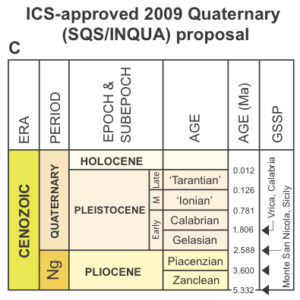
Estimates have ranged from 70,000 to 5,000,000 years ago. The oldest confirmed polar bear fossil dates to 110,000 to 130,000 years ago… Meaning that polar bears survived the Eemian interglacial stage.

The peak warmth of the Eemian interglacial stage marks the boundary between the Late Pleistocene Tarantian Age and the Middle Pleistocene Ionian Age.

New book: Climate Change: The Facts 2020

by A. Watts, Oct 8, 2020 in WUWT


The Institute of Public Affairs today announced the release of a significant new book of research Climate Change: The Facts 2020 published by the Institute of Public Affairs and Australian Scholarly Publishing.

On 24 September 2019, the 17-year-old activist Greta Thunberg addressed the United Nations Climate Action Summit saying, “People are suffering. People are dying. Entire ecosystems are collapsing. We are in the beginning of a mass extinction.” A day earlier, however, the climate policy foundation Climate Intelligence (CLINTEL) sent the UN their World Climate Declaration, signed by 800 prominent scientists including Nobel Laureate Professor Ivar Giaever and Greenpeace co-founder Dr. Patrick Moore, stating that there is no climate emergency: “You’re tired of alarmism and failed predictions of climate models that can’t predict the past, let alone the future. You distrust the business leaders, politicians and scientists of the climate industrial complex – you just want The Facts.”

This book contains original research and new theories of climate and will arm you with these facts. Leading scientists are contributors, including former Senior Scientist for Climate Studies at NASA’s Marshall Space Center Dr. Roy Spencer, and lead author of the Intergovernmental Panel on Climate Change’s Third Assessment Report Professor Emeritus of Meteorology Richard Lindzen of Massachusetts Institute of Technology, and many more.

Climate Change: The Facts 2020 is the definitive guide to the latest international research and analysis on climate change science and policy.  Twenty experts in their field from across five countries have written original contributions on the key issues of scientific, political, and public debate about climate change.

​Some of the issues addressed in chapters in Climate Change: The Facts 2020 include:

  • the extent and variability of sea level change
  • the historical record of temperature and ice coverage in the Antarctic
  • the impact of climate change on polar bear populations
  • the manipulation of temperature data by the Bureau of Meteorology
  • whether the Australian bushfires 2019-20 were in fact ‘unprecedented’; and

the prevalence of ‘noble cause’ corruption in climate science.

Corona-induced CO2 emission reductions are not yet detectable in the atmosphere

by Karlsruher Institut für Technology, Sep 21, 2020 in EurekAlert


Based on current data measured in the energy, industry, and mobility sectors, restrictions of social life during the corona pandemic can be predicted to lead to a reduction of worldwide carbon dioxide emissions by up to eight percent in 2020. According to the Intergovernmental Panel on Climate Change (IPCC), cumulative reductions of about this magnitude would be required every year to reach the goals of the Paris Agreement by 2030. Recent measurements by researchers of Karlsruhe Institute of Technology (KIT) revealed that concentration of carbon dioxide (CO2) in the atmosphere has not yet changed due to the estimated emission reductions. The results are reported in Remote Sensing (DOI: 10.3390/rs12152387).


See also here =  Can We Measure a COVID-19-Related Slowdown in Atmospheric CO2 Growth? Sensitivity of Total Carbon Column Observations

A HISTORY OF CLIMATE FRAUD (I)

by Cap Allon, oct 5, 2020 in Electroverse


Much of the below analysis is courtesy of Kenneth Richard.

The combined Hadley Centre and Climatic Research Unit (HadCRUT) data set –which is featured in IPCC reports– underwent a revision from version 3 to version 4 in March of 2012, about a year before the next IPCC report was due.

At the time (early 2012), the HadCRUT3 was showing a slight global cooling trend between 1998 and 2012, visible in the graph below which uses HadCRUT3 and HadCRUT4 raw data. In conjunction with changing versions, the slight cooling trend had convenientlychanged to a slight warming trend:


As recently as 1990, it was widely accepted that the global temperature trend showed a “0.5°C rise between 1880 and 1950”, as reported by NASA (Hansen and Lebedeff, 1987). This rise (as well as the 0.6C rise between 1880 and 1940) can clearly be seen in the NASA GISS graph from 1987:

Tens Of Thousands Of Automotive Jobs On The Brink, Climate Policy Hammers Once Mighty German Auto Industry


by AR Göhring at EIKE, Oct 3, 2020 in NoTricksZone


Not only at Daimler, Volkswagen and others, but elsewhere the working people have to fear for their jobs after Brussels and Berlin have declared war on Germany’s most important industry. Now the automotive supply chain is also being hard hit.

Berlin, Brussels tighten the screws

The value-adding industry has already been badly shaken by the exaggerated, simply senseless corona measures of the Merkel IV government. Now the Brussels EU government (including former German minister Ursula von der Leyen) are tightening the screws even more as they love to ban internal combustion engines completely. The EU has just tightened the rules for limiting CO2 emissions. Not only the well-known car manufacturers are under pressure, but also their suppliers, hardly known by name, such as Mahle from Stuttgart.

Mass job losses

The globally producing parts manufacturer still has around 12,000 employees in Germany (72,000 globally). In the country, 2,000 workers are expected to lose their jobs, globally 7,600, and this despite a partial switch to e-car parts. It’s not enough, says a works council member, because there is no concept for the domestic combustion engine factories to convert over to electrical parts.

Restoring Scientific Debate on Climate

by Jim Steele, Oct 3, 2020 in WUWT


The political genius of Abraham Lincoln’s efforts to unify the country during America’s most divisive time has been attributed to assembling a “team of rivals”. Likewise, scientific research is published so rivals and supporters of a hypothesis can independently and critically examine it. The great benefits of a team of rivals is also the basis for convening red team/blue team debates.

In 2017, Dr Steve Koonin, a physicist who served as Obama’s Undersecretary for Science in the US Department of Energy, urged convening red-team blue-team debates for climate science in his article A ‘Red Team’ Exercise Would Strengthen Climate Science.  “The national-security community pioneered the “Red Team” methodology to test assumptions and analyses, identify risks, and reduce—or at least understand—uncertainties. The process is now considered a best practice in high-consequence situations”.

Unfortunately, the public climate science debate has been framed as “deniers” versus “alarmists”, or “honest saintly scientists” versus “corrupt perpetrators of a hoax”.  The media pushes exaggerated claims of a crisis while some scientists misleadingly shield their hypotheses claiming the “science is settled”.  But science is a process and never settled. However, all sides do agree carbon dioxide is a greenhouse gas and concentrations have increased. All sides agree the climate is changing. That science is indeed settled. But complex climate dynamics are not driven solely by CO2 and many unsettled questions remain.  Scientists still debate whether climate has a higher or lower sensitivity to rising CO2. Answering that question depends on the unsettled science regards competing contributions from natural variability and landscape changes. And because rising CO2 and warmth benefits photosynthesizing plants, scientists debate the beneficial contributions of rising CO2.

Climate models could not replicate recent warming when only natural climate change was considered. But models could simulate recent warming since 1970s after adding CO2. That was the only evidence that supported the notion that increasing CO2 caused observed warming. However, there’s a flaw in such reasoning. Models limited to just natural climate dynamics failed to explain recent changes simply because our understanding is still incomplete. For example the Pacific Decadal Oscillation, a major driver of natural climate change was only recently characterized in 1997, but has been shown to account for 100 years of changing climate along the coasts of the north eastern Pacific.


Urban Heat Island profile Image from Lawrence Berkeley Labs

OUT-OF-SEASON SNOW BLANKETS BOTH HEMISPHERES

by Cap Allon, Sep 29, 2020 in Electroverse


A merdional (wavy) jet stream flow is diverting brutal polar air to the mid-latitudes in BOTH hemispheres. Every continent on the planet is currently receiving out-of-season snow and anomalous cold, with a few of the worst hit nations being New Zealand, Australia, the United States, and France.


NEW ZEALAND

A spring weather bomb has battered New Zealand, closing roads, dumping snow on beaches and causing dozens of flight cancellations.

The NZ Met service has described the low-pressure system moving up the country from Antarctica as “very unusual in how widespread and severe the weather is” — they have called it a significant weather event.

The National Institute for Water and Atmospheric Research said parts of the South Island shivered through record-breaking lows of -20C (-4F) on Monday and Tuesday.

Flights were cancelled up and down the South Island due to heavy snow.

Disruptive flurries were even reported a sea-level: very unusual for spring:

11 SCIENTIFIC PREDICTIONS FOR THE UPCOMING GRAND SOLAR MINIMUM

by Cap Allon, Sep 18, 2020 in Electroverse


 There is ever-mounting evidence warning the next epoch will be one of sharp terrestrial cooling due to a relative flat-lining of solar output.

The exact time-frame and depth of this next chill of solar minimum is still anyone’s guess, and the parameters involved (i.e., galactic cosmic rays, geomagnetic activity, solar wind flux etc.) remain poorly understood. However, there are some great minds on the job, and below I’ve collated 11 best-guesses based on published scientific papers from respected researchers in the field. The list begins with eminent Russian astrophysicist K. Abdussamatov–though it is in no particular order.

BEACHED PILOT WHALES ARE A SIGN OF THE MAGNETIC POLE SHIFT AND WANING MAGNETOSPHERE

by Cap Allon, Sep 26, 2020 in Electroverse


Since 1850 Earth’s magnetic field has been weakening. At the turn of the millennium it then began reducing exponentially, at more than 10% per decade — this drop off is extreme and concerning, and here’s why.

Earth’s magnetic field protects us from space radiation. Our shields going down is very bad news for all life on our planet, and could possibly even lead to the next mass extinction.

“As the magnetic field weakens, the poles shift,” says David Mauriello of the ORP and MRN. For the past 100-or-so years, both north and south poles have been rapidly headed towards the equator (shown below), and their pace is increasing, warns Mauriello. The south pole is now off the Antarctic continent and making a beeline for Indonesia, and the north pole is shifting across the Arctic circle towards Siberia, it too headed for Indonesia–where the pair are likely to meet within the next few decades, perhaps around 2050.

This “meeting” will lead to one of two eventualities: 1) a full flip will take place (aka a “reversal” where the magnetic poles switch places), or 2) a “snap-back” will occur where the poles quickly return to their original starting points (aka an “excursion”).

In Parts Of Japan, Mean Maximum Temperatures May Be More Impacted By Remote Ocean Cycles Than By CO2

by P. Gosselin, Sep 26, 2020 in NoTricksZone


Today, according to government scientists, CO2 is supposed to be the dominant climate driver, overwhelming all the other power natural forces such as solar variability and oceanic cycles.

Map (right): JMA

Yet when we compare (untampered) datasets, we often find surprising parallels and underlying correlations with these now ignored natural factors, which tell us CO2 isn’t what the activists want us to believe it is and that things are really much messier than the simplistic CO2-temperature correlation.

Today we look at a plot of the annual mean daily maximum temperature from Uwajima, Japan, together with the plot of the Atlantic Multidecadal Oscillation (AMO) going back almost 100 years.

Data: data.jma.go.jp/ / psl.noaa.gov/

Of course, nothing in a complex system like climate is going to show a perfect correlation, yet the above general fit is quite remarkable, which thus suggests regions are climatically interconnected in many yet to be understood ways. Such things aren’t accidental.

In summary: climate science is far from being understood, let alone settled. Anyone suggesting otherwise is likely just trying to sell you a bridge in Brooklyn – or they simply don’t know much about the subject and only parroting media sound bites.

CLINTEL puts hard climate questions to Bill Gates

by D. Wojick, Sep 23, 2020 in CFACT


Bill Gates is throwing several billion dollars at climate change. Mind you he is not throwing it away, because it is mostly venture capital for new energy technologies, which could pay off handsomely without climate change.

Gates can do what he likes with his riches, but he is a leading figure and lately he has become a serious climate change scaremonger. This has prompted CLINTEL to put some hard questions to him, in the form of a registered letter.

On the scaremongering side, last month Gates published an article claiming that climate change will be far worse than the present Covid outbreak. He imagines many millions dying from climate change. The press spread his doomsday words far and wide.

Here are some doomful excerpts:

I am talking about COVID-19. But in just a few decades, the same description will fit another global crisis: climate change. As awful as this pandemic is, climate change could be worse.

I realize that it’s hard to think about a problem like climate change right now. When disaster strikes, it is human nature to worry only about meeting our most immediate needs, especially when the disaster is as bad as COVID-19. But the fact that dramatically higher temperatures seem far off in the future does not make them any less of a problem—and the only way to avoid the worst possible climate outcomes is to accelerate our efforts now. Even as the world works to stop the novel coronavirus and begin recovering from it, we also need to act now to avoid a climate disaster by building and deploying innovations that will let us eliminate our greenhouse gas emissions.”

The unfortunate ‘climate anomaly’ of the First World War revealed

by P. Homewood, Sep 4, 2020 in NotaLotofPeopleKnowThat


A new research paper states this anomalous weather coincided with battles where: “The mud and water‐filled trenches and bomb craters swallowed everything, from tanks, to horses and troops, becoming what eyewitnesses described as the ‘liquid grave’ of the armies.”

Prof Alexander F More, who led the research for Harvard, explained: “Atmospheric circulation changed and there was much more rain, much colder weather all over Europe for six years.” “It was a once in a 100-year anomaly.”

This anomaly wreaked havoc on battlefields beginning with the First Battle of Champagne in 1914 , where British, French, and German troops suffered flooded trenches and frostbite while mud “slowed down the movement of troops and artillery”.

The Somme and Verdun in 1916, and the Third Battle of Ypres-Passchendaele in 1917, were slogged out in quagmires caused by the freak downpours which increased casualties.

Royal Artillery signaller John Palmer described his trauma at seeing men “sinking into the slime, dying in the slime” on the Western Front.

WOW!! And no mention of CO2!