Archives de catégorie : better to know…?

The Battery Storage Delusion.. what 35 million tons of industrial effort buys you

by Dr L. Schernikau, Aug 21, 2025 in WUWT


Details inc Blog at www.unpopular-truth.com

As someone who has spent most my professional life in the global energy and commodities space both as an economist and as a trader, I have grown increasingly concerned about the way grid-scale battery storage is portrayed in public discourse. If you have paid any attention to the headlines, you would have heard that battery technology is “on the verge of solving” the intermittency problem of wind and solar energy. According to this narrative, all we need to do is build more battery storage, and the path to “net zero” will unfold automatically… magically.

If only it were that simple…

In my latest blog post Pros and Cons of Utility-Scale Battery Storage I unpack the many assumptions behind this belief. The facts I present may be unpopular, but they are grounded in physics, not politics.

Here a couple of key points that I feel might spark some interest.

35 million tons of raw materials for a couple of hours…

To build a 50 GWh utility-scale lithium-ion battery system (approx. annual output of a Gigafactory), which has the ability to store electricity, for a city like New York, for only a few hours, you need ~ 35 million tons of raw materials (~ 700,000 t per GWh). That roughly covers the mining, upgrading, transport, and processing of ores like lithium, cobalt, nickel, graphite, iron ore, bauxite, and others.

Think about it like this…a 1-ton utility-scale battery has a storage capacity of around 100 kWh and requires ~ 70 tons of mined, processed, and manufactured raw materials to be manufactured. This is the energy equivalent of about ~40 kg of coal or ~20 litres of oil.

Let that sink in: 70 tons of mining and industrial processing to store what coal already provides in a (40kg) bag, small enough to be carried by hand.

The DOE climate report: a scientific milestone that Europe does not want to see

by Clintel Foundation, Aug 13, 2025


In July, the U.S. Department of Energy (DOE) published a groundbreaking document: A Critical Review of Impacts of Greenhouse Gas Emissions on the U.S. Climate. At the request of Energy Secretary Chris Wright, five leading scientists provided a clear and well-founded overview of climate science, finally paying explicit attention to uncertainties, alternative insights, and factual observations. The authors are not bloggers or activists, but internationally recognized researchers with decades of expertise in climate science, meteorology, economics, and physics. [See the box at the bottom of this article for their credentials].

Sober, well-founded, and without alarmism

Energy Secretary Chris Wright gave the researchers complete freedom in writing this report: “I exerted no control over their conclusions.” The report stands out for its clarity, objectivity, and scientific integrity.

Some key points of the report are:

  • CO₂ should no longer be seen as ‘pollution’: the report advocates a scientific review of this US position (since 2009), including recognition of the positive effect of CO₂ on crop growth.
  • Global greening: satellite images show greening of the Earth due to higher CO₂ levels.
  • Models vs. observations: the discrepancies between model results and actual observations are shown. There is also more emphasis on natural climate variability.
  • Weather extremes: there is no alarming increase in extreme weather conditions in the US.
  • Economic consequences: interventions on CO₂ emissions have little climate impact in the short term, but can entail high economic costs.

Reactions from Europe

The report has certainly been noticed within the US. Among others, researcher Roger Pielke Jr. devoted a widely read article to it on his Substack channels. Pielke describes the DOE report as a serious scientific text that has carefully processed sources.

This report should also have shaken Europe awake, but what happened? Complete silence. No news bulletins, no parliamentary questions, no editorial commentary. While alarmist reports are spreading like wildfire across Europe, this report is being ignored. This is not only remarkable, it is downright shocking. It casts a shadow over the intellectual honesty of the European climate debate.

Two articles on the Dutch blog Klimaatgek.nl endorse this. On August 8, DoE report and media silence (in the Netherlands) was published, noting that the report was widely discussed in US circles, but remained unseen in the Netherlands, despite its importance for the automotive, energy, and agricultural sectors, among others. Earlier, on July 30, Klimaatgek headlined: Breakthrough: revision of CO₂ vision in the US. The report is called a potential turning point in the American climate vision, something that Europe cannot ignore.

Why this is so essential for Europe

Europe is guided by a single narrative: the climate crisis is urgent and catastrophic. Those who think differently are ignored or denounced. This report does the opposite: it acknowledges human influence, puts it in context, highlights uncertainties, identifies the benefits of CO2, and advocates for balanced policy considerations. As mentioned, the European silence is distressing. It is not only journalistically inappropriate; it is a democratic and scientific shortcoming. The consequences are:

  • A limited public debate – the public only hears one side.
  • Democratic deficit – policy-making based on incomplete information.
  • Scientific impoverishment – essential uncertainties and alternatives disappear from view.

Time to wake up

The DOE report deserves open debate, not silence. Europe should be proud of space for scientific diversity. Anyone who truly trusts science cannot ignore this report. Clintel remains committed to increasing the visibility of this and similar contributions – not to prove itself right, but to make the conversation complete. Only with all the facts, uncertainties, and perspectives can sensible choices be made.

The Weather Stations We Never Had

by Dr M. Wielicki, Aug 11, 2025 in Clintel


A central pillar of the climate-crisis narrative is simple enough to fit on a bumper sticker… today is the hottest in human history. That line only works if you accept, without question, that we have reliable, global temperature data before satellites. We do not. What we have is a patchwork of land stations concentrated in a few developed regions, a lot of ocean guesses from ship tracks, and then, later, generous statistical infilling.

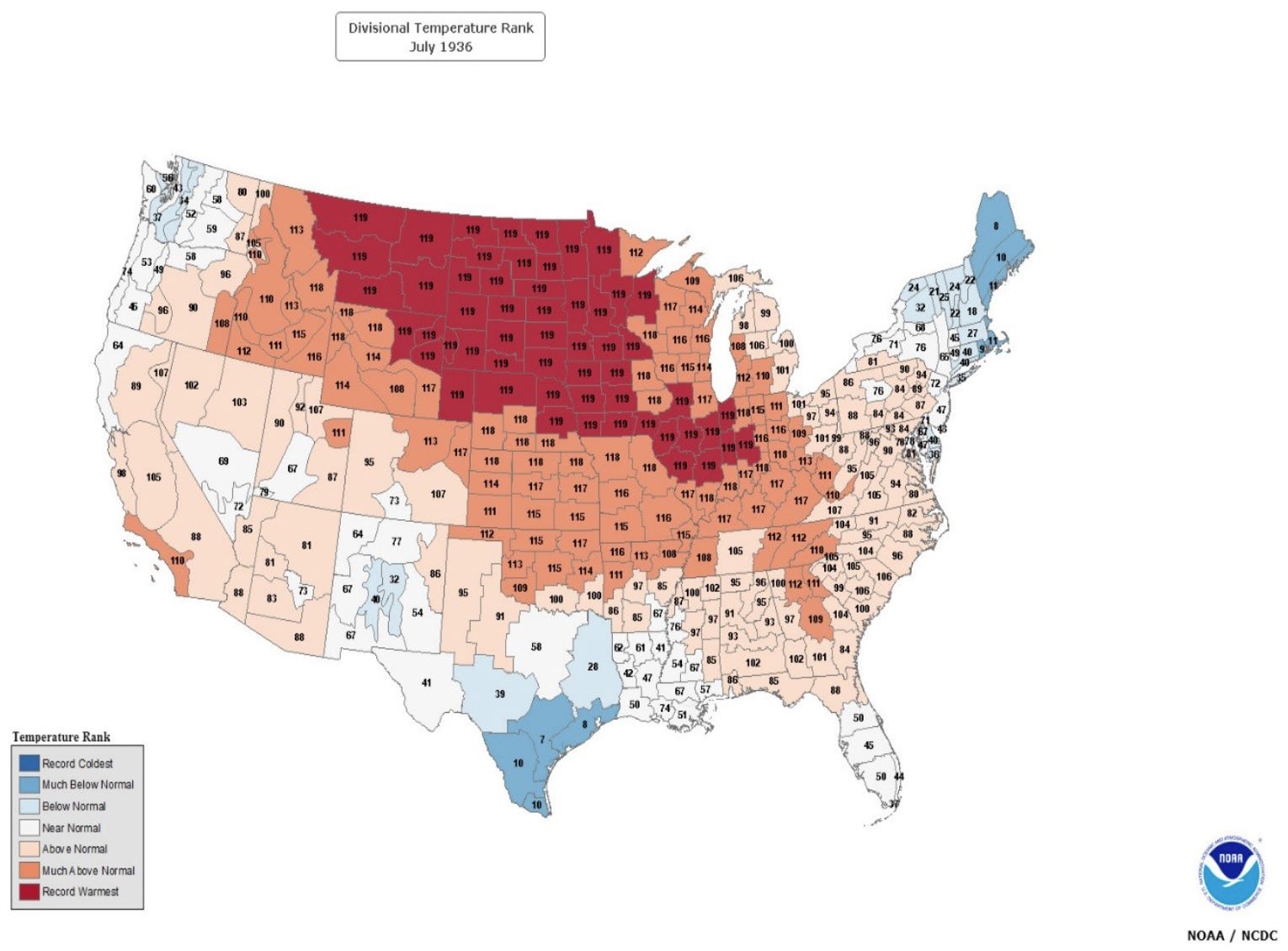
Everyone agrees the 1930s were brutally hot across the United States… the Dust Bowl was a humanitarian and ecological disaster. Crops failed, soils blew away, and heat waves killed thousands. NOAA’s own retrospectives still call out 1936 as a benchmark summer, and July 1936 remains a singular month in the U.S. record.

https://www.weather.gov/arx/heat_jul36?utm

The global map we never measured

Before 1950, most thermometers were in the United States, Europe, and parts of the British Commonwealth. Large parts of Africa, South America, the Arctic, and the Southern Ocean had little to no routine coverage. Even the NOAA-led overview of GHCN-Daily notes how the core database is a collage of many sources with varying periods of record… that is the raw material modern analyses inherit.

Now the uncomfortable part. When there are no thermometers, you either leave grid boxes blank, or you paint numbers in from far away. HadCRUT historically left many boxes blank, explicitly avoiding interpolation, which means the “global” mean depends on where you have observations. NASA’s GISTEMP goes the other direction and spreads anomalies up to twelve hundred kilometers from a station, filling the gaps with 1200 km smoothing. Those are not trivial choices, they are the ballgame.

If you overlay the 1930s anomaly map with the station density maps, you see something obvious… warm where the thermometers were numerous, cool or neutral where coverage was threadbare. A compilation of historical station distribution between 1921 and 1950 makes the same basic point… the network was sparse and badly unbalanced.

Die Welt’ Journalist Axel Bojanowski: Apocalypticism Is “A Code Of Belonging” Among Journalists

by P. Gosselin, Aug 13, 2025 in NoTricksZone 


The world is better than what the media think.

‘Die Welt’ science journalist Axel Bojanowski was recently interviewed by the online “BauerWilli” (BW) and discussed his recently released book

33 Amazing Glimmers of Hope – Why the world is better than we think,”


Bojanowski argues there is an overly negative and apocalyptic style of reporting in the media, particularly concerning climate and environmental issues.

Cult-like behavior

According to Bojanowski, predicting the end of the world has become a sign of belonging among journalists. He sees this as a counter-movement to the post-war prosperity.

New Study: No Decline In Arctic Sea Ice Extent – ‘No Long-Term Trend’ – Since 2007

by K. Richard, Aug 11, 2025 in NoTricksZone 


In 2007 Al Gore won a Nobel Peace prize for predicting summer (September) Arctic sea ice would “vanish” in the next 5 to 7 years, or by 2014.

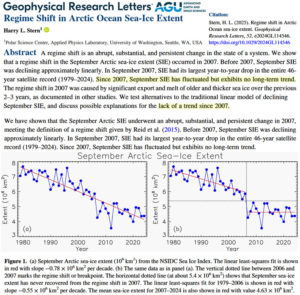
Since 2007 Arctic sea ice extent (SIE) losses have ceased. Instead, the SIE trend has been stable for nearly two decades (Stern, 2025).

“Before 2007, September SIE was declining approximately linearly. In September 2007, SIE had its largest year‐to‐year drop in the entire 46‐year satellite record (1979–2024). Since 2007, September SIE has fluctuated but exhibits no long‐term trend.”


The German “Summer From Hell” That Never Came…Earlier Wild Forecasts Backfire

by P. Gosselin, July 29, 2025 in NoTricksZone 


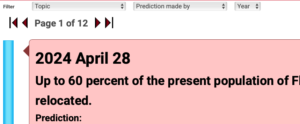
Already as early as May 2025 predictions of a hellish record-breaking hot summer with possibly thousands of heat deaths were forecast – much of it based on the unusually dry and warm spring that had gripped much of Central Europe at the time. 

Hat-tip: Frank Bosse at Klimanachrichten

The online Frankfurter Rundschau printed a weather column by meteorologist Dominick Jung just over 2 weeks ago, on July 13, warning of a “looming, huge heat dome” for the rest of the summer over Central Europe.

German TWC meteorologist Jan Schenk had already made a prediction in Focus magazine on June 10, 2025: “According to this, we can expect extreme heat and drought in Germany, especially in July and August.”

Then came reality.

Just recently, even the climate-alarmism purveyor Der Spiegel had to concede that “it feels more like autumn.”

Plenty of rain has been falling, along with snow high in the Alps.

So what was behind all the ridiculous hellish-summer forecasts? Veteran Swiss meteorologist Jörg Kachelmann in an interview with the online Bild called all the constant exaggerations and distortion: “Symbols of an education problem with us.”

At the end of June, 2025, after having made ridiculous made predictions a year earlier in 2024, biologist Mark Benecke lectured again on climate and weather to an auditorium, showing such weather model maps:

A case for ‘Climate Humility’: Analyzing the DOE’s ‘A Critical Review of Impacts of Greenhouse Gas Emissions on the U.S. Climate’

by A. Watts, July 31, 2025 in WUWT


Honestly, I never thought I’d see the day. To quote Mr. FOIA from ClimateGate, “A miracle has occurred.

Yesterday’s release of the DOE’s A Critical Review of Impacts of Greenhouse Gas Emissions on the U.S. Climate is a watershed moment in the ongoing debate over climate policy in America. Why? Because for the first time, a major U.S. government agency—on official letterhead and with a blue-ribbon cast of authors (John Christy, Judith Curry, Steven Koonin, Ross McKitrick, and Roy Spencer)—has published an open challenge to the central claims, data handling, and even the motivations behind mainstream climate science and policy.

This isn’t just another technical report. It is a systematic rebuke of accepted climate “wisdom,” and it does so with unusual clarity, scientific rigor, and (at times) a sense of humor often absent in climate documents. Most importantly, it directly confronts the exaggerated and politicized rhetoric that has dominated headlines for decades.

The Executive Summary from the DOE web page:

This report:

  • Reviews scientific certainties and uncertainties in how anthropogenic emissions of CO2 and other GHGs have affected, or will affect, the Nation’s climate, extreme weather events, and metrics of societal well-being.
  • Assesses the near-term impacts of elevated concentrations of CO2, including enhanced plant growth and reduced ocean alkalinity.
  • Evaluates data and projections regarding long-term impacts of elevated concentrations of CO2, including estimates of future warming.
  • Finds that claims of increased frequency or intensity of hurricanes, tornadoes, floods, and droughts are not supported by U.S. historical data.
  • Asserts that CO2-induced warming appears to be less damaging economically than commonly believed, and that aggressive mitigation policies could prove more detrimental than beneficial.
  • Finds that U.S. policy actions are expected to have undetectably small direct impacts on the global climate and any effects will emerge only with long delays.

What Makes This Report Unique?

Old carbon routed from land to the atmosphere by global river systems

by J.F. Dean et al., June 4, 2025 in Nature


Abstract

Rivers and streams are an important pathway in the global carbon cycle, releasing carbon dioxide (CO2) and methane (CH4) from their water surfaces to the atmosphere1,2. Until now, CO2 and CH4 emitted from rivers were thought to be predominantly derived from recent (sub-decadal) biomass production and, thus, part of ecosystem respiration3,4,5,6. Here we combine new and published measurements to create a global database of the radiocarbon content of river dissolved inorganic carbon (DIC), CO2 and CH4. Isotopic mass balance of our database suggests that 59 ± 17% of global river CO2 emissions are derived from old carbon (millennial or older), the release of which is linked to river catchment lithology and biome. This previously unrecognized release of old, pre-industrial-aged carbon to the atmosphere from long-term soil, sediment and geologic carbon stores through lateral hydrological routing equates to 1.2 ± 0.3 Pg C year−1, similar in magnitude to terrestrial net ecosystem exchange. A consequence of this flux is a greater than expected net loss of carbon from aged organic matter stores on land. This requires a reassessment of the fate of anthropogenic carbon in terrestrial systems and in global carbon cycle budgets and models.

Study finds Southern Ocean’s surface is becoming saltier and losing sea ice, not experiencing an ‘ocean current reversal’

by ScienceFeedback, July, 2025


KEY TAKEAWAY

Recent articles and social media posts inaccurately summarized findings from a June 2025 PNAS paper by claiming that a ‘major current in the Southern Ocean has reversed’. In reality, the PNAS paper does not mention any ‘ocean current reversal’. Instead, the paper mentions a ‘reversal’ of a decades-long trend: the Southern Ocean’s surface is now becoming saltier, instead of ‘fresher’. A saltier ocean surface can speed up the melting of Antarctic sea ice – floating ice which surrounds Antarctica – by drawing heat in the ocean upward toward the ice. This trend surprised scientists in the study, given that prior observations show the Southern Ocean’s surface becoming fresher (less salty) since the 1980s.

Figure 1 – Plot showing that sea ice began retreating around 2015 when the Southern Ocean’s surface became saltier, as shown by the red line representing sea surface salinity (SSS) anomalies obtained via satellite. Source: Silvano et al. (2025)[1]

Most Americans Still Aren’t Buying Climate Hysteria

by D. Harsanyl, July 16, 2025 in ClimateChangeDispatch 


Climate alarmism hasn’t worked. Here’s why the public tuned it out.

The public awareness campaign to convince Americans that climate change is an existential threat has been an epic failure. [emphasis, links added]

In a recent segment, “Are Americans Afraid of Climate Change?” CNN’s Harry Enten incredulously noted that despite all “the bad weather” we’ve been seeing, only “40% of Americans are greatly worried about climate change. The same as in 2000!”

Why are climate activists losing?

Sooner or later, fearmongering becomes noise. Reality crashes against predictions.

Public schools, institutions of higher learning, governments, international organizations, the whole culture, and scientific institutions have spent billions and untold hours trying to normalize the idea that modernity and capitalistic gluttony have driven temperatures to dangerous extremes.

When I was growing up, it was cooling. Now, it’s warming. And with each surge of alarmism, the message depreciates.

New Study: Africa’s Atlantic Coast Sea Levels Were Still 1 Meter Higher Than Today 2000 Years Ago

by K. Richard, July 14 2025, in NoTricksZone 


The narrative that says relative sea level changes are driven by variations in atmospheric CO2 concentrations has taken another hit.

Before relative sea level (RSL) declined to its present position over the last millennium, Africa’s Atlantic coast RSL ranged anywhere from 0.8 to 4 meters higher than today between 5000 and 1700 years ago (Vacchi et al., 2025).

This Mid- to Late-Holocene RSL highstand was “mainly controlled by the deglaciation history” − meltwater contributions from Earth’s ice sheets and glaciers. Because the climate was so much warmer than today at that time, there was significantly less water locked up on land as ice.

The Antarctic Thermal Optimum “simulated melt of the western Antarctic ice sheet until 2.0 ka BP.” Consequently, sea levels were still ≥ 1 meter higher than present during the Roman Warm Period

“Between -15°N and -0°…data indicate RSL reached its maximal elevation above the present sea level in the late Holocene (~2.0 to ~1.7 ka BP).”

Climate change causes WHAT!!? Pink lakes, divorcing albatrosses, shrinking goats and lots else

by C. Rotter, Jul 5, 2025 in WUWT


One of my favorite statistics about climate change
…is that apparently, 60% of Americans reckon that climate change has become like a religion, quote, “used to control people.”

  • Climate change elephant — You’ll be surprised to know that climate change is a significant threat to elephants.
  • Climate change kangaroo — Climate change is impacting kangaroos in various ways, including changing their habitat, food availability, and overall health. They didn’t mention whether the kangaroo’s mental health is affected, but I’m pretty sure it is.
  • Climate change chameleon — Yes. Chameleons. Global warming poses significant threats.
  • Climate change giraffe — Raid your house in Kenya for extinction because of poaching and climate change.
  • Climate change albatross — Climate crisis pushes albatross divorce rates higher. Albatrosses form monogamous relationships. But apparently… and this is in the Royal Society for goodness’ sake. You know—Isaac Newton.

I can barely believe this. Right?
Apparently, albatrosses are splitting up more often.

  • Climate change gorilla — Yep. Climate change is making endangered mountain gorillas more thirsty.

Gardi Sugdub’s ‘Climate Exodus’ Myth: Overcrowding, Not Rising Seas, Drives Relocation

by H. Sterling Burnett, June 27, 2025 in WUWT


Yahoo News recently posted an article from the environmental website The Cool Down claiming that the native residents of the very small Panamanian island, Gardí Sugdub (also known as Cartí Sugdupu), are being forced to flee due to fast rising sea levels swamping the land as a result of climate change. This is false. Sea levels at Gardi Sugdub aren’t rising unusually fast, and the best evidence is that most of the island’s residents are voluntarily abandoning it with government help due to overcrowding and insufficient services and infrastructure on the small island.

Grace Howarth, the author of the article, “Residents forced to flee from ‘disappearing island’ due to heartbreaking crisis: ‘There were no more friends, no more kids playing,’” writes describing the situation there:

Rising sea levels are splitting communities apart in Gardí Sugdub and leaving people behind, possibly in danger.

. . .

One year ago, around 1,200 Indigenous Guna people were transported to the mainland by the Panama government for their safety as ocean waters encroached upon their community.

Climate Realism debunked an earlier article from the BBC making the same claims in February of this year; nothing has changed in the four months since then.

Basic Physics All at Sea in Sky News Climate Scare Nonsense Story

by C. Morrison, May 31, 2025 in WUWT


Possibly one of the dumbest and most scientifically illiterate climate scare stories ever written has been published by the fast-fading UK Sky News. Climate reporter Victoria Seabrook notes that the sea ice on the Arctic “continent” is melting at 12% every decade but she backs it up by publishing a graph clearly showing it has been stable since 2007. She goes on to claim that the Arctic melt will push up sea levels around Britain and fuel worse coastal flooding, seemingly unaware that melting ice in liquid does not raise its level (suggested educational tip, check out ice in a gin and tonic glass). Just for good measure, her silly story throws in the wobbling jet stream and a “shocking” prediction that global temperature could rise by nearly 1°C in just five years.

This story is a classic of its kind – late climate psychosis folderol to back up the collapsing Net Zero fantasy. After decades of relentless mainstream gaslighting, mass audiences are still vaguely concerned that the climate is in some kind of ‘emergency’. Net Zero is retreating around the world, partly because it is increasingly understood that human civilisation cannot abolish the use of hydrocarbons without returning to the dark ages, and partly because nobody is prepared to pay for it when given a choice. But the great climate science con that is the foundation of the collectivist Net Zero lunacy continues, and, if Seabrook’s latest work is an example, it is getting more desperate by the day.

So she publishes the graph below with the misleading 12% decline every decade heading.

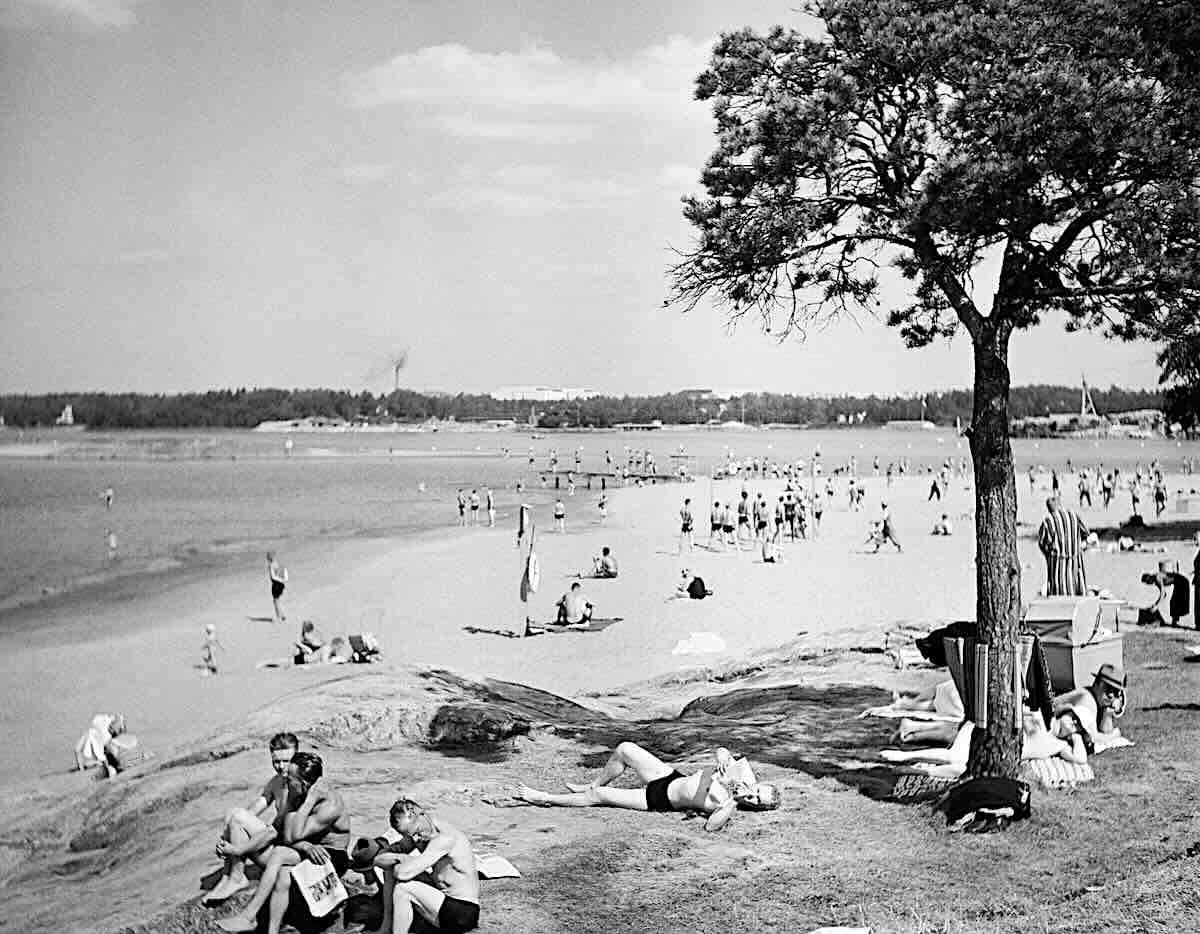
Germany’s Scorching Summer of 1911 Undermines Today’s Heat Hysteria

by P. Gosselin, June 03, 2025 in ClimateChangeDispatch


Escaping The Heat
The German blog site lokalgeschichte examines the German summer of 1911, which was exceptionally hot, dry, and sunny. It disproves the previously widespread idea that Central Europe’s heat waves are something new and caused by more CO2 in the atmosphere. [emphasis, links added]

Although temperatures in the summer of 1911 were very high in places (up to 40°C [104°F] in Chemnitz), no new records were broken. The year 1892 had similar or even higher values (41.5°C [106.7°F] in Reichenhall).

The most remarkable feature of the summer of 1911 was not the absolute maximum temperature, but the duration of the hot spell and the persistent tendency towards dry and warm high-pressure weather, which lasted from spring until well into September.

In 1911, Germany saw extreme drought, particularly in western and central Germany. In Berlin, for example, only about half of the normal precipitation fell between April and July, and only a seventh in August.

Such an event occurring today would have climate alarmists blaming CO2.

….

Nigeria’s Water Crisis: Why Poor Management, Not Climate Change, Is Drying Up Farms

by L. Lueken, May 21, 2025 in WUWT


AfricaNews (AN), in collaboration with the Associated Press, recently posted an article claiming that recent drought in Nigeria is due to climate change. This is unlikely to be the full story. Although data is sparse for the region, human activities are just as likely to be contributing to desertification as cycles of drought are.

The article, “Nigerian farmers struggle as climate change dries up water sources,” claims that climate change is the cause of recent drought in Nigeria, leading to crop declines. Surface water is becoming scarce during the dry seasons, so some farmers are forced to dig wells to irrigate their crops. AN writes that “[r]iverbeds have started to run dry,” and so the blame “is pointed firmly at climate change, with conservationists warning that food could become scarce if measures are not urgently put in place to help the farmers irrigate their land.”

While it is true that Nigeria has been suffering from extended drought, particularly in the northern part of the country, it is not clear that this is all or even mostly because of any human-caused climate change due to changing temperatures. Natural drought, combined with human error in land and water management, seems to be the more likely culprit.

According to the article, over 80 percent of Nigeria’s farmers are smallholder farmers, and they make up 90 percent of the nation’s crop production. The article points at maize (corn) as a sample crop that is suffering due to the water shortage, it “saw a decline in cultivated land from 6.2 million hectares in 2021 to 5.8 million hectares in 2022.”

Crop production data from the United Nations Food and Agriculture Organization (FAO) show that Nigeria’s corn production has been increasing over time. It actually shot upwards the most in recent decades, after remaining relatively flat through the 1980s. Between just 1990 and 2023, Nigerian corn production increased 91 percent, while yields increased 71 percent. (See figure below)

Live at 1 p.m. Eastern: SHOCK CLIMATE REPORT! Urban Heat Islands Responsible for 65% of Global Warming

by C. Rotter, May 16, 2025 in WUWT


The Heartland Institute

A new study from the University of Alabama in Huntsville addresses the question of how much the Urban Heat Island (UHI) effect is responsible for the higher temperatures at weather stations across the world. Dr. Roy Spencer and Dr. John Christy have spent several years developing a novel method that quantifies, for the first time, the average UHI warming effects related to population density. Their finding: no less than 65% of “runaway global warming” is not caused by our emissions of carbon dioxide, but by the urbanization of the world.

Dr. Spencer will join us to go over his findings. We’ll also cover the Crazy Climate News of the Week, including an absurd new bit of unscientific propaganda from the U.S. Climate Reference Network at NOAA, wonder if the sun is setting on wide-scale solar energy, and discuss how alarmists refuse to see that we live in a climactic “golden age”—and more.

Join Heartland’s Anthony Watts, Linnea Lueken, H. Sterling Burnett, Jim Lakely, and Dr. Roy Spencer LIVE at 1 p.m. ET for Episode #157 of The Climate Realism Show. We’ll be answering questions in the chat for us, and for Dr. Spencer, on the show.

James Hansen: Climate Cassandra or Science Salesman?

by C. Rotter, May 15, 2025 in WUWT


One would think that James Hansen—once lionized as the father of modern climate alarmism—might bask in the limelight after a fresh round of histrionics about Earth hurtling toward a “point of no return.” Instead, we find him on the pages of his latest blog-style polemic, “Large Cloud Feedback Confirms High Climate Sensitivity”, complaining that he’s being ostracized by the very media and institutions he helped train to bark on command every time the CO2 concentration ticks up another ppm.

“A strange phenomenon occurred… almost uniformly, these reports dismissed our conclusions as a fringe opinion… Are there important repercussions for the public… indeed, for the future of all people? The answer… is ‘yes.’”

https://www.columbia.edu/~jeh1/mailings/2025/CloudFeedback.13May2025.pdf

One might suggest that after decades of theatrics, people have simply stopped buying tickets to the same show.

But let’s not be hasty. His newest round of publications deserves scrutiny, not for its recycled gloom, but for the increasingly acrobatic logic and interpretive liberties embedded within.

The ‘Big FXcking Deal’ and the Cloud Feedback Feedback

At the heart of Hansen’s thesis is the observed decrease in Earth’s albedo—the fraction of sunlight reflected back into space. Hansen pegs this decline at 0.5% over the last two decades, translating to a 1.7 W/m² increase in absorbed solar radiation. This, he insists, proves that cloud feedback must be large and positive, confirming an equilibrium climate sensitivity of 4.5°C ± 0.5°C for doubled CO2.

“Earth’s albedo… has decreased about 0.5%… we described this change as a BFD… because it has staggering implications.”

https://www.columbia.edu/~jeh1/mailings/2025/CloudFeedback.13May2025.pdf

The Media Hype Extreme Weather—But Data Tells A Different Tale

by K&K Media, May 14 2025 in ClimateChangeDispatch


Hurricane Winds
These days, stories of extreme weather are everywhere you look. But a crucial detail often goes overlooked: We’re safer from the consequences of that weather than ever before. [emphasis, links added]

There was a time when extreme weather events that led to massive fatalities were depressingly common in the U.S.

In the last 85 years, however, there have only been three such events that took over 1,000 lives: Hurricane Katrina, Hurricane Maria, and a 1980 heatwave.

There’s a reason for that.

The most important factor in determining a natural disaster’s destructiveness isn’t its intensity, but how well people in its path are protected. And on that front, things have improved … a lot.

Better building codes have prevented about $1.6 billion in damage a year since 2000. Advances in hurricane forecasts and early-warning systems have given people more time to prepare.

Having air conditioners in nearly 90% of American homes has severely cut the risk of extreme heat.

And while you often hear that the economic damages from extreme weather are growing, you don’t often hear why.

La transition énergétique : un voeu pieux?/Energy transition : nothing else than wishful thinking?

by A. Préat, May 16, 2025 in Science, Climat, Energie 


Vaclav Smil is little known to the general public. Yet he is an internationally renowned expert on energy issues. The title of his latest book (2024) is unambiguous: 2050. Why a carbon-free world is almost impossible.

The stated aim, following the Paris Agreements (COP, 2015), is a totally carbon-free world by2050, given the potential danger posed to the planet by atmospheric CO2. As with my recent text on the Green Pact, the role of this gas is not discussed here and therefore is not thesubject of this article. Let’s look at the objective set by the EU, Net-Zero 2050 (carbon neutrality) and see whether it is achievable. The answer is clearly no for Vaclav Smil.

Let’see why…

How Wind And Solar Sent Energy Prices Sky-High in ‘Green’ Countries

by B. Lomborg, May 8, 2025 in ClimateChangeDispatch 


Ask families in Germany and the UK what happens when more and more supposedly “cheap” solar and wind power is added to the national power mix, and they can tell you by looking at their utility bills: It gets far more expensive. [emphasis, links added]

The idea that power should get cheaper as we get more green energy is only true if we exclusively use electricity when the sun is shining and the wind is blowing.

But modern societies need power around the clock. When there is no sun and wind, green energy needs plenty of backup, often powered by fossil fuels. What this means is that we pay for not one but two power systems.

And as the backup fossil fuel power sources are used less, they need to earn their capital costs back in fewer hours, leading to even more expensive power.

This means the real energy costs of solar and wind are far higher.

One study looking at China showed that the real cost of solar power on average turns out to be twice as high as coal, while a peer-reviewed study of Germany and Texas shows solar and wind are many times more expensive than fossil fuels.

Germany and the UK now have so much “low-cost” solar and wind that their electricity costs have become among the world’s most expensive.

The latest data from the International Energy Agency make it clear that there is a strong and clear correlation between more solar and wind and much higher average energy prices for households and industries.

In a country with little or no solar and wind, the average electricity cost is a bit over 11¢ per kilowatt-hour.

For every 10 percentage points of solar and wind, the cost increases by more than 4¢. The results are nearly similar for 2019, before any impacts of COVID and the Ukraine war.

Look at Germany, where 34¢ per kWh is more than twice the US cost and nearly four times the Chinese price.

Countries that use a higher percentage of solar and wind power tend to have higher energy prices per household. Mike Guillen/NY Post Design

Germany has installed so much solar and wind that, at full capacity, it could produce two times Germany’s electricity demand.

Phys.org Editorial Falsely Links Hurricanes To ‘Widespread’ School Closures

by A. Watts, May 06, 2025 in ClimateChangeDispatch 


school closed storm damage
In a recent editorial published by Phys.org, researchers claim that climate change is driving more powerful and frequent hurricanes, which in turn are causing widespread school closures, labeling it an “overlooked consequence” of our supposedly worsening climate. [emphasis, links added]

This narrative is false.

The available data shows no trend of increasing hurricane frequency or intensity due to human-induced climate change, and if the storms themselves aren’t worsening, the claim that they are causing more missed school days due to climate change collapses under its own weight.

The central claim that hurricanes are becoming more destructive and frequent due to climate change is contradicted by both long-term observational data and the official position of major scientific institutions.

According to the National Oceanic and Atmospheric Administration’s (NOAA) Geophysical Fluid Dynamics Laboratory (GFDL), there is no strong evidence of an increase in either the number or intensity of hurricanes globally due to human-caused climate change.

Antarctica’s Astonishing Rebound: Ice Sheet Grows for the First Time in Decades

by SciTec, Apr 25 2025


The Antarctic Ice Sheet (AIS) plays a major role in global sea-level rise. Since March 2002, the GRACE (Gravity Recovery and Climate Experiment) mission and its successor, GRACE-FO (GRACE Follow-On), have provided valuable data to monitor changes in ice mass across the AIS.

Previous studies have consistently shown a long-term trend of mass loss, particularly in West Antarctica and the Antarctic Peninsula, while glaciers in East Antarctica appeared relatively stable. However, a recent study led by Dr. Wang and Prof. Shen at Tongji University has found a surprising shift: between 2021 and 2023, the AIS experienced a record-breaking increase in overall mass.

Antarctic Ice Sheet’s Mass Drama,From Accelerated Loss to Surprising Gain
Antarctic Ice Sheet mass change series (April 2002–December 2023) derived from GRACE/GRACE-FO satellite gravimetry. Ellipses highlight period-specific mass change rates, while the grey shadow indicates the data gap between missions. Credit: Science China Press

Notably, four major glaciers in the Wilkes Land–Queen Mary Land region of East Antarctica reversed their previous pattern of accelerated mass loss from 2011 to 2020 and instead showed significant mass gain during the 2021 to 2023 period.

Record-breaking mass gain over the Antarctic Ice Sheet

From 2002 to 2010, the AIS has experienced a mass loss with a change rate of –73.79±56.27 Gt/yr, which nearly doubled to –142.06±56.12 Gt/yr for the period 2011–2020. This accelerated mass loss was primarily related to intensified mass depletion in West Antarctica and the WL-QML region of East Antarctica. However, a significant reversal occurred thereafter, driven by anomalous precipitation accumulation, the AIS gained mass at a rate of 107.79±74.90 Gt/yr between 2021 and 2023.

The Hidden Cost Of Net Zero

by P. Homewood, May 8, 2025 in WUWT


UK Electricity Consumption

https://www.gov.uk/government/statistics/electricity-section-5-energy-trends

The REF’s new report on green energy subsidies noted that renewables subsidies are now costing £25.8 bn per year – or over £900 per household annually – about one third of which, £280, will hit the average domestic electricity bill directly.

For a long time, part of the gaslighting around the cost of Net Zero has been focus people’s attention over the impact on their energy bills.

However, as John Constable pointed out, only about a third of the cost hits the public directly via their electricity bills, because only a third of electricity is consumed by domestic users.

The other two thirds is used by industry and commerce, transport and the public sector.

But that does not mean that the public at large don’t end up footing the entire bill one way or another.

Higher electricity costs for industry and commerce mean higher prices in the shops. And higher electricity costs in the public sector mean higher taxes or poorer public services.

At the worst, businesses may shut or move their production abroad, leaving us all worse off.

Miliband and co would love you to think you are only paying a hundred quid or so for Net Zero. People would be horrified to learn that the price is nearer a thousand quid a year.

And that cost is of course just for starters. When we all have to buy expensive EVs and heat pumps we don’t want, we will be much worse off.