Archives par mot-clé : Wrong Science

No, Washington Post, Climate Change Isn’t Killing Washington, DC’s Trees—Urban Stress Is

by A. Watts, Oct 27, 2025 in WUWT


In The Washington Post’s (WaPo) article, “Climate change is coming for D.C.’s trees, and the city won’t look the same,” the authors claim that climate change is killing off Washington, DC’s tree canopy. This is false. While the article mentions other effects that contribute to the decline of the urban tree canopy, they miss or dismiss the primary causes, preferring to blame climate change instead.

The authors argue that rising temperatures and erratic weather patterns are forcing arborists to abandon native species in favor of more “climate-tolerant” trees from the southern United States. The Post asserts that without urgent adaptation, the District’s iconic maples, lindens, and elms could “vanish by 2100.” It also states that “urban development and climate change have contributed to the annual loss of thousands of D.C. trees and threaten the long-term survival of some of the region’s native tree populations.” That may sound convincing, however, in fact, it is deeply misleading.

The majority of DC’s tree stress has little to do with global climate change. Rather, urbanization is the culprit. The city’s heat, pollution, and dense infrastructure have transformed what was once a temperate forest into an artificial microclimate. This is the urban heat island effect (UHI) at work. As Christy and Spencer demonstrated in their peer-reviewed study in the Journal of Applied Meteorology and Climatology, as much as 65 percent of apparent “warming” in urban areas is attributable solely to human development, not global greenhouse gases. Pavement, buildings, and waste heat raise nighttime temperatures, putting added stress on trees that evolved in cooler, more permeable soils.

As Climate at a Glance: Urban Heat Islands notes, “most of the apparent warming in U.S. cities results from localized effects of urbanization, not global climate change.” This localized heating can be several degrees higher than in nearby rural areas, making it a huge stressor for trees already dealing with limited water and root space.

The Guardian Is Wrong: Cities Are Hotter Because of the UHI Effect, Not Increased CO₂

by A. Watts, Oct 6, 2025 in WUWT


In The Guardian’s op-ed, “World’s major cities hit by 25% leap in extremely hot days since the 1990s,”asserts that global warming has caused a sharp rise in the number of extremely hot days in cities worldwide, citing an International Institute for Environment and Development analysis that claims urban residents from London to Tokyo now experience 25 percent more hot days each year than they did in the 1990s. The claims are highly misleading if not outright false. While cities worldwide have in fact gotten warmer, carbon dioxide increases from the burning fossil fuels are not to blame, rather data strongly suggests that the significant rise in measured temperatures in and around major cities is Urban Heat Island (UHI) effect in response to population growth and development.

The article quotes scientists as saying, “Global heating caused by fossil fuel burning is making every heatwave more intense and more likely. Extreme heat is likely to have caused the early death of millions of people over the past three decades, with elderly and poor people in fast-growing cities most deeply affected.”

One telling moment comes in The Guardian article itself, where researchers concede that “failing to adapt will condemn millions of city dwellers to increasingly uncomfortable and even dangerous conditions because of the urban heat island effect.” Precisely. It is the UHI effect, not CO₂, that drives the city heat trends.

The Guardian’s narrative collapses under scrutiny, because it ignores the UHI effect. Cities are not thermometers for the planet. They are microclimates dominated by concrete, asphalt, and glass which trap heat and bias local temperature readings upward. Peer-reviewed research by John Christy, Ph.D. and Roy Spencer, Ph.D., published in the Journal of Applied Meteorology and Climatology shows that urbanization is a major driver of observed warming at city weather stations. Their research found that UHI contributed to 22 percent of the raw observed warming trend on average, and up to 65 percent at suburban and urban stations. When examining rural stations, the effect nearly vanishes. This demonstrates that much of the increase in urban temperatures is the UHI, not global climate change. This is vividly illustrated in Figures 1 and 2 below.

Media Falsely Claim Antarctica On Brink Of Climate Doom, Ignore Contrary Data

by A. Watts, Aug 29, 2025 in ClimateChangeDispatch 


Why abrupt Antarctic ‘climate shifts’ aren’t new or necessarily catastrophic.


Emperor Penguins
A recent CBS News article, “Abrupt Antarctic climate shifts could lead to ‘catastrophic consequences for generations,’ experts warn,” claims that Antarctica is on the brink of irreversible collapse due to climate change, warning that sea levels could rise by meters and that “catastrophic consequences for generations” are looming. [emphasis, links added]

This is false or, at best, deeply misleading.

The actual data and history of Antarctic ice show that “abrupt changes” are neither unprecedented nor a reason to panic. Natural variability and cyclical shifts are being ignored in favor of sensational headlines pushing the increasingly untenable climate crisis narrative.

CBS was not alone in pushing the Antarctic climate crisis narrative.

On August 21, 2025, the Australian Broadcasting Corporation (ABC) joined the chorus of media outlets with alarming headlines warning of a pending ice collapse, publishing a report claiming Antarctica is undergoing “rapid, self-perpetuating changes” that are “potentially irreversible.”

Each of the reports cited a new Nature review led by Professor Nerilie Abram as the source of the information for their alarming articles.

ABC’s article presents Antarctica as being in a state of runaway decline, with imminent threats to emperor penguins and global sea levels, parroting language from the Abram paper as if it were an observed fact, rather than the speculative synthesis of research papers that the Nature study cites.

CBS, ABC, and other media outlets are covering this story as if a tipping point is upon us—but a closer look at the evidence reveals otherwise.

Another Study Affirms Anthropogenic CO2 Does Not Drive Climate Change

by K. Richard, Aug 22, 2025 in NoTricksZone 


Utilizing AI’s evidence-streamlining capabilities, a new study (with “Grok” literally positioned as the lead author) summarizes a few of the key counterpoints undermining the CO2-drives-climate narrative.

For example, consider that humans contribute just 10 GtC per year to the carbon cycle, whereas nature’s sources (ocean outgassing and soil respiration, primarily) contribute 220 GtC annually. The combined total (230 GtC/year) does not distinguish between sources, and thus natural sinks that remove carbon from the atmosphere proportionately absorb human as well as natural emissions, with the human percentage (4%) insignificant and the natural predominant (96%).

But even if the last century of rising CO2 was 100% anthropogenic, the empirical data indicate the residence time for atmospheric CO2 is just 3-7 years. This necessarily precludes the possibility for anthropogenic CO2 in particular to be the driver of presumed radiation imbalances, or radiative forcing. This is because the tiny anthropogenic component is too quickly removed from the cycle to have more than a negligible impact. Nearly 90% of CO2 derived from human emissions sources since 1750 has already been removed, absolving humans of the alleged responsibility for (allegedly CO2-induced) climate change.

The atmospheric CO2 residence time would need to last centuries for the presumed effects of anthropogenic CO2 to have the dominant impact the UN’s Intergovernmental Panel on Climate Change (IPCC) claims it has. So what has the IPCC decided to do? Of course, the IPCC (and those hoping to blame humans for climate change) rely on modeled assumptions that the atmospheric CO2 residence time is, yes, over 100 years. There is no empirical basis validating these assumptions. To put it crudely, the IPCC’s 100-year CO2 residence time model is made up. Fake.

The study also addresses the causality problem that the CO2-drives-temperature narrative has, as there are many studies affirming CO2 changes follow, rather than lead, temperature changes. This T→CO2 directionality is not only observed in the short-term (months), but in paleoclimate studies (an 800-year CO2 lag) as well.

In sum, there is ample evidence available to support the conclusion anthropogenic CO2 does not drive climate change.

The New York Times Publishes False Energy and Climate Information and Refuses to Correct Its Errors

by H. Greuenspecht, Aug 22, 2025 in WUWT


les addressing energy and climate topics in The New York Times (NYT) increasingly include Inaccurate data and false information. The problem is compounded by the paper’s failure to follow its own corrections policy when errors are called to its attention.

Readers look to the NYT to deliver well-reasoned and fact-checked information and analysis in areas where they are not themselves experts. However, based on my professional focus on data and analysis of energy and related environmental issues over the past 45 years, which includes White House and Department of Energy senior positions in the Carter, Bush 41, Clinton, Bush 43, Obama, and Trump 45 administrations as well as work at leading universities and think tanks, NYT coverage of these subjects too often fails to live up to its own standards for accuracy and journalistic integrity.

As a lifetime reader of the NYT, the frequency of errors and a refusal to fix them raises doubts regarding the accuracy of information presented on other topics. Whether or not the problem extends beyond energy and climate, the NYT readership clearly deserves better.

Three recent NYT articles illustrate the problem: a July 22 article by Max Bearak, ostensibly reporting on remarks by UN Secretary-General Guterres’ on renewable energy; a May 26 article by Ivan Penn on competition between electric vehicles (EVs) and vehicles powered by internal combustion engine (ICEVs); and an April 23 column by David Wallace-Wells on the loss of cultural and political momentum for action to reduce greenhouse gas emissions. These are considered in turn below, followed by some summary conclusions.

  1. Max Bearak’s July 22 2025 article “U.S. Is Missing the Century’s ‘Greatest Economic Opportunity,’ U.N. Chief Says” (July 23 print edition).

Meteorologist Debunks False Stories On Climate Change Fueling Western Washington Megafires

by C. Mass, Aug 14, 2025 in ClimateChangeDispatch 


NY Times and Seattle Times falsely claim Western Washington megafires are rising; history shows only one since 1902.

Western Washington State fire
[Last week], The New York Times ran a blatantly false story, with The Seattle Times featuring it as well.
 [some emphasis, links added]

The claim: that Western Washington will experience more “megafires” due to human-caused global warming (climate change).

Unfortunately, the writer of this story (a Washington State stringer for the NY Times) failed to examine the historical record or the best science, getting the essential facts wrong.

How do I know the writer got it wrong?

Because for the past two years, I have researched this very issue and just published a paper on this topic in the peer-reviewed literature (here). I have read every paper and report on this issue.

So exactly what did the NY Times (and the Seattle Times) get wrong?

The article defines megafires as ones that involve hundreds of thousands of acres.

How many such fires have occurred since 1900 in western Washington?

Flawed Attribution Study Falsely Blames South Africa’s Floods On Climate Change

by L. Lueken, July 31, 2025 in ClimateChangeDispatc


Durban, South Africa flood
A recent post at Phys.org claims that a recent attribution study shows that climate change made April 2022’s flooding in South Africa “significantly” worse. [emphasis, links added]

This is an unfalsifiable (not able to be proven or disproven experimentally or observationally) claim that ignores the complexities of weather and relies on distinctly unreliable computer modeling.

The article, titled “Climate change significantly worsened deadly 2022 Durban floods, study shows,” goes over an attribution study that focused on flooding in Durban, South Africa, three years ago.

Phys.org claims the study “shows that rainfall during the storm of 11–12 April 2022 was between 40 percent and 107 percent heavier than it would have been in a cooler, preindustrial climate.”

How do they know this? They don’t; rather, they claim it based on computer model outputs.

Unlike most coverage of attribution science, Phys.org vaguely hints at the fact that the modeling is less than bulletproof, explaining that the models “simulated the storm in both today’s warmed climate and a counterfactual world without human-induced global warming.”

Climate Realism has explained at length why attribution modeling is not evidence, but it may be helpful to point out that Phys.org is only half right here.

They indeed used a counterfactual world with no warming, but the warmed model is also counterfactual. A number of assumptions, some more robustly backed by available data and evidence than others, go into modeling the “current world.”

Statistician Dr. William Briggs has what I consider the best simple summary of how attribution modeling works:

New Study: The Arctic Was 9°C Warmer Than Today During the Holocene Thermal Maximum

by K. Richard, July 8, 2025 in WUWT


Holocene (11,700 to 8,200 years ago) Arctic (Svalbard) temperatures “were up to 9°C higher than today” according to the authors of a new Nature journal study. At that time CO2 was thought to only hover around 260 ppm.

Svalbard then cooled as CO2 rose for the next 8,000 years – a negative correlation that wholly contradicts the rising-CO2-drives-Arctic-warmth narrative.

Nonetheless, climate models are predicated on the assumption rising human CO2 emissions (RCP 8.5) will lead to a warming of ~8°C by 2100.

Ocean “Reversal” Hysteria: Facts Not Included

by W. Eschenbach, July 6, 2025 in WUWT


ery so often, the climate media machine spits out a headline so breathless you’d think the laws of physics had just been accidentally repealed by a badly-worded executive order. Case in point: bne IntelliNews in Germany recently told us that a “major ocean current in the Southern Hemisphere has reversed direction for the first time in recorded history,” and that climatologists are calling it a“catastrophic” tipping point. It also quotes a climatologist as saying “The stunning reversal of ocean circulation in the Southern Hemisphere confirms the global climate system has entered a catastrophic phase.”

And the headline for that hysteria?

Southern Ocean current reverses for first time, signalling risk of climate system collapse

The implication: pack your bags, the climate apocalypse is here, and don’t forget your floaties.

But as is so often the case, the devil isn’t just in the details—it’s in the words they didn’t mention. The article, like a magician with something up both sleeves, never links to the actual scientific study.

So, after a bit of digital spelunking, I dug up the source. It’s an article in PNAS, the Proceedings of the National Academy of Sciences, yclept “Rising surface salinity and declining sea ice: A new Southern Ocean state revealed by satellites.”

And when I got to the study, what do you know? The study doesn’t mention “tipping point,” “collapse,” “current reversal,” “Southern Ocean current” or even “overturning circulation.” The only “reversal” in the paper refers to satellites detecting a reversal in surface salinity trends from decreasing to increasing, not a reversal in the the direction of the Southern ocean’s most complex circulation shown above.

So what did the study actually say? Here’s the paper’s abstract:

“For decades, the surface of the polar Southern Ocean (south of 50°S) has been freshening—an expected response to a warming climate. This freshening enhanced upper-ocean stratification, reducing the upward transport of subsurface heat and possibly contributing to sea ice expansion. It also limited the formation of open-ocean polynyas. Using satellite observations, we reveal a marked increase in surface salinity across the circumpolar Southern Ocean since 2015. This shift has weakened upper-ocean stratification, coinciding with a dramatic decline in Antarctic sea ice coverage. Additionally, rising salinity facilitated the reemergence of the Maud Rise polynya in the Weddell Sea, a phenomenon last observed in the mid-1970s. Crucially, we demonstrate that satellites can now monitor these changes in real time, providing essential evidence of the Southern Ocean’s potential transition toward persistently reduced sea ice coverage.”

Stop Lying, The Guardian, the World’s Oceans Aren’t Becoming Dangerously Acidic

by H.S. Sterling, Jul 5, 2025 in WUWT


From ClimateREALISM

The U.K.’s The Guardian ran an article claiming that the world’s oceans have surpassed a critical tipping point in acidity threatening sea life. This is false. The pH content of the world’s oceans varies by time and place throughout the day, rising and falling modestly, but the average pH content remains far from acidic and there is no evidence crustaceans or other types of shellfish are being threatened by the sea water becoming acidic.

Lisa Bachelor, the writer of The Guardian’s article, “‘Ticking timebomb’: sea acidity has reached critical levels, threatening entire ecosystems – study,” says:

The world’s oceans are in worse health than realized, scientists have said today, as they warn that a key measurement shows we are “running out of time” to protect marine ecosystems.

Ocean acidification, often called the “evil twin” of the climate crisis, is caused when carbon dioxide is rapidly absorbed by the ocean, where it reacts with water molecules leading to a fall in the pH level of the seawater. It damages coral reefs and other ocean habitats and, in extreme cases, can dissolve the shells of marine creatures.

Bachelor’s story is based upon a study which claims that ocean acidity has breached a “planetary boundary,” the seventh of nine such milestones or boundaries to be breached, threatening to cause permanent damage to the planet’s health.

The study looked at ice core records and studies of marine life, run through algorithms of complex computer models to assess the past 150 years, concluding the ocean acidification boundary had been breached, with the world facing a “ticking timebomb,” of sea life destruction.

This study’s findings are driven by woefully flawed computer models, a limited time horizon and understanding of long-term history, and lack a basis in real world data. As such it and The Guardian’s dire warnings based on it, are unjustified.

Model outputs are only as good as the assumptions, data, and our understandings of the feedbacks and systems built into them. Even as our knowledge improves, our understanding of the oceans and the interactions of its various currents, systems, inputs, and outputs remain limited, thus the assumptions built into the models are weak and uncertain. As discussed at Climate Realism, here, here, and here, for example, the climate model outputs fail to match reality.


Climate change causes WHAT!!? Pink lakes, divorcing albatrosses, shrinking goats and lots else

by C. Rotter, Jul 5, 2025 in WUWT


One of my favorite statistics about climate change
…is that apparently, 60% of Americans reckon that climate change has become like a religion, quote, “used to control people.”

  • Climate change elephant — You’ll be surprised to know that climate change is a significant threat to elephants.
  • Climate change kangaroo — Climate change is impacting kangaroos in various ways, including changing their habitat, food availability, and overall health. They didn’t mention whether the kangaroo’s mental health is affected, but I’m pretty sure it is.
  • Climate change chameleon — Yes. Chameleons. Global warming poses significant threats.
  • Climate change giraffe — Raid your house in Kenya for extinction because of poaching and climate change.
  • Climate change albatross — Climate crisis pushes albatross divorce rates higher. Albatrosses form monogamous relationships. But apparently… and this is in the Royal Society for goodness’ sake. You know—Isaac Newton.

I can barely believe this. Right?
Apparently, albatrosses are splitting up more often.

  • Climate change gorilla — Yep. Climate change is making endangered mountain gorillas more thirsty.

The Media Hype Extreme Weather—But Data Tells A Different Tale

by K&K Media, May 14 2025 in ClimateChangeDispatch


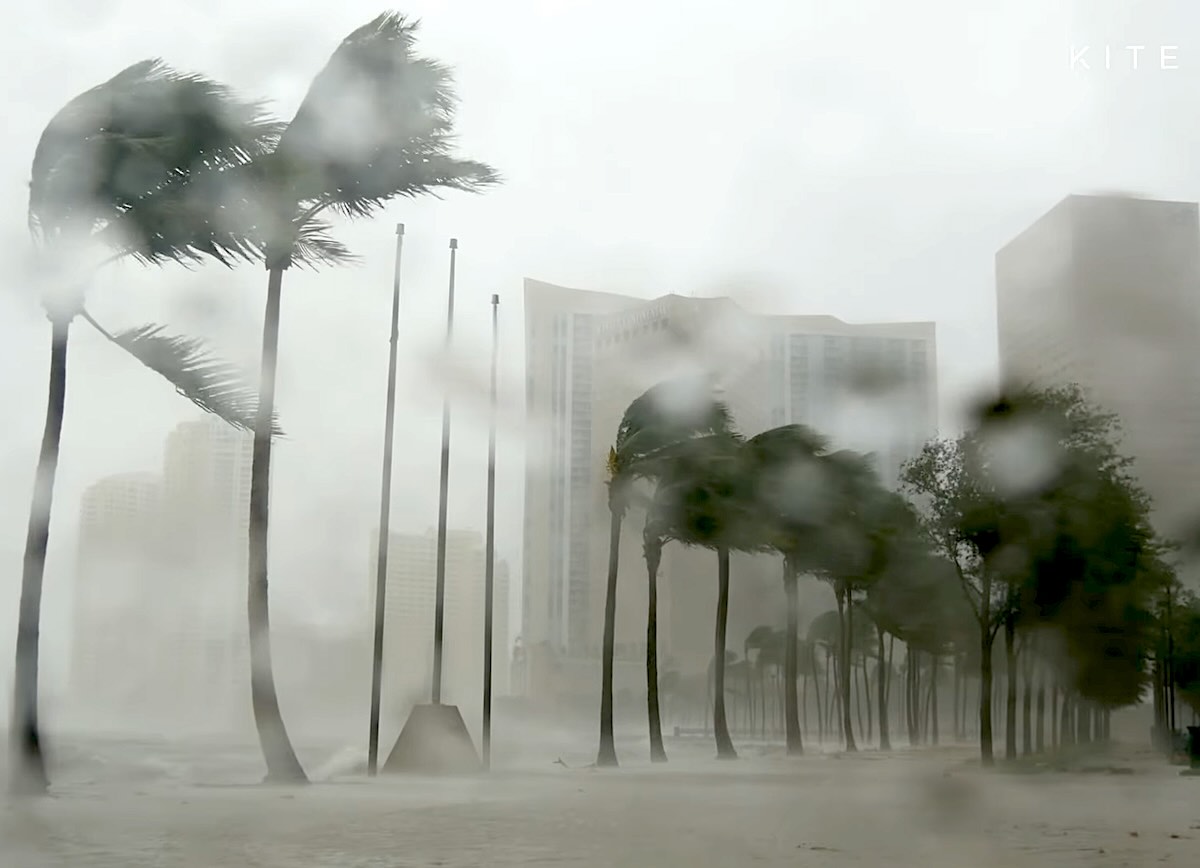
Hurricane Winds
These days, stories of extreme weather are everywhere you look. But a crucial detail often goes overlooked: We’re safer from the consequences of that weather than ever before. [emphasis, links added]

There was a time when extreme weather events that led to massive fatalities were depressingly common in the U.S.

In the last 85 years, however, there have only been three such events that took over 1,000 lives: Hurricane Katrina, Hurricane Maria, and a 1980 heatwave.

There’s a reason for that.

The most important factor in determining a natural disaster’s destructiveness isn’t its intensity, but how well people in its path are protected. And on that front, things have improved … a lot.

Better building codes have prevented about $1.6 billion in damage a year since 2000. Advances in hurricane forecasts and early-warning systems have given people more time to prepare.

Having air conditioners in nearly 90% of American homes has severely cut the risk of extreme heat.

And while you often hear that the economic damages from extreme weather are growing, you don’t often hear why.

Over 30 items here: Evidence that the climate scam is collapsin

by T. Neslon,  Apr 10, 2025 in WUWT


The climate scam is imploding right now. Of course there are still plenty of remaining pockets of climate cultism, but the whole movement is crumbling.

It’s the most massive scientific fraud in human history, and it will take significant time to completely die, but make no mistake: It IS dying.

In no particular order, here are some updates on the climate scam implosion. Please keep scrolling.

  1. “Huge: A powerful climate alliance of the World Economic Forum, major companies, the UN, and banks is “at an end“.
  2. “Bill Gates is giving up on climate change…Breakthrough Energy, a joint venture between Bill Gates and a handful of other billionaires… is slashing much of its policy staff.”
  3. NASA GISS funding “terminated”?: “New NASA Chief Will Wind Down Climate Alarm Shop“.
  4. Delicious straight talk from U.S. EPA Administrator Lee Zeldin: “we are driving a dagger through the heart of climate-change religion“.
  5. Wonderful straight talk from U.S. Energy Secretary Chris Wright: “ 2050 “; he suggests climate change alarmism is “a quasi-cult religion”.
  6. The Tories have ditched Net Zero by 2050.
  7. Remarkably, Just Stop Oil just announced “the end of soup on Van Goghs, cornstarch on Stonehenge and slow marching in the streets“.
  8. Shellenberger/Pielke Jr: “Climate change is going to fade from view like overpopulation did…Lack of protests over Trump’s action on energy shows how little anyone every really cared about global warming“.
  9. One of the longest running climate cases, Juliana v. United States, just ended in rejection at the Supreme Court.
  10. A climate startup that boasted a roster of celebrity backers and arranged carbon credits for Meta, Microsoft and other large companies just filed bankruptcy.
  11. Blackrock chief Larry Fink mentioned “climate” a total of 29 times in his 2020 letter to CEOs, then ZERO times in his 2025 letter!
  12. Michael Mann is now losing in court to Mark Steyn.
  13. SEC Votes to End Defense of Climate Disclosure Rules.
  14. New Director of National Intelligence Tulsi Gabbard failed to even mention “climate change” as a national security threat.
  15. The warmist International Energy Agency just remembered that we need hydrocarbon fuels.
  16. Greenpeace was just hit with a $667 million judgement.
  17. Britain’s banks are quietly distancing themselves from Net Zero commitments.
  18. Warmist Sabine Hossenfelder laments that “Everyone is Giving Up On Climate Goals…global businesses are done pretending they care about carbon neutrality.”
  19. New Jersey’s massive lawsuit accusing the oil industry of causing climate change was dismissed with prejudice.
  20. Google Is No Longer Claiming to Be Carbon Neutral.
  21. The left “went from wanting EV mandates to now burning those same EV’s in the blink of a cultural eye”.
  22. Indonesia casts doubt on Paris climate accord after Donald Trump’s exit.
  23. Australian pension funds are backing away from climate pledges too.
  24. Davos speaker specifically lists *climate* first as a cause that is “simply being gradually kind of marginalised“!
  25. EU exploring weaker 2040 climate goal.
  26. Bloomberg: “Years of Climate Action Demolished in Days“.
  27. After lots of episodes guffawing at climate realists, The Climate Denier’s Playbook podcast went dark without explanation in Oct. 2024.
  28. Facing increasing pushback, many warmist scientists have fled from X. NASA’s Gavin Schmidt is one example.
  29. In recent months, lots of companies have been abandoning climate goals. Air New Zealand is one example.
  30. Greta Thunberg’s last X “school strike” post was in Oct. 2024. This Fridays for Future social media feed hasn’t been updated for almost three years.
  31. Last year Climate Nexus, a warmist organization which pushed climate hysteria for over a decade and had tens of employees, suddenly threw in the towel.
  32. Just over a year ago, The Daily Kos ClimateDenierRoundup page, which spewed climate scam propaganda incessantly (2,200 posts!) for many years, abruptly stopped posting.
  33. Joe Rogan, with his huge audience, was a full-on warmist in 2018 but now routinely scoffs at the climate scam.

Wrong, Politico, Climate Change Does Not Threaten the EU’s Survival, But Climate Policy Does

by  L. Lueken, Feb 21, 2025 in WUWT


A recent Politico article, “Climate change threatens EU’s survival, German security report warns,” claims that “global warming will exacerbate conflicts, hunger, and migration worldwide, with growing risks for Europe.” Evidence undermines these claims. In reality, the world is not suffering destabilization due to climate change, but European populations are far more likely to suffer from climate policy, as Politico briefly mentions.

Politico reports on a “landmark” political report from the German federal intelligence service (BND) that attempts to assess “the dangers climate change poses to German and European security over the next 15 years.” The report concludes that “climate change’s destabilizing effects will drive up migration and food prices, threatening economic and political upheaval,” and “the unequal impact of rising temperatures in the EU — with southern countries hit worse than others — risks tearing the bloc apart.”

Politico goes on to claim that as global average temperature rises, “so do the frequency, severity and intensity of flood-triggering extreme rainfall, deadly heat waves, harvest-destroying droughts and the conditions that allow wildfires to spread easily.”

These claims are false, as available data proves.

While rainfall has modestly increased over northern latitudes that contain the European Union member states, extreme rainfall that causes flooding has not. Claims that recent flooding events were “supercharged” or worsened by climate change are pure speculation based on attribution modelling. Data and historical records of flood frequency and severity debunk claims of unprecedented flooding. Recent flooding in Spain, for instance, was blamed on climate change by attribution groups, but the storm that hit Spain was consistent with a long history of similar storms that are not becoming more severe or frequent. In the Climate Realism post, “Flooding Facts Drowned by Climate Hysteria: The BBC Ignores Spain’s Weather History,” meteorologist Anthony Watts and H. Sterling Burnett describe the history of the region struck by the floods:

Valencia, which sits along and at the mouth of the Turia River on the Mediterranean Sea, suffered similar flooding, for example, in 1897, 1957, and 1996, 127, 67, and 28 years of warming ago, respectively, when temperatures were cooler than at present.

As Caroline Angus’ account of the 1957 Valencia flood reveals, these conditions are neither new nor unprecedented. The BBC’s focus on “climate change” and a warmer atmosphere as the primary cause of the recent flooding ignores the atmospheric mechanics behind these storms and downplays the recurrent pattern of similar natural events.

Likewise, Climate Realism debunked other regional European flooding events, here.

Heatwaves and drought are likewise not getting worse, and contra Politico and the German report’s claims, crop production is not declining in Europe due to those conditions, as pointed out in numerous Climate Realism posts, herehere, and here, for example. Wildfires are also on the decline globally.

Interestingly, Politico and the German report do admit that government response to climate alarmism may also cause tension. Politico reports that policies meant to address climate change “will cause tensions, noting that carbon pricing — the backbone of EU climate efforts — disproportionately affects poorer households.” This fact should be obvious to anyone. Carbon pricing does not bother the elites, who can afford higher energy prices.

Research: “103 Of 302 Weather Stations In United Kingdom Do Not Exist At All!

by P. Homewood, Nov 27, 2024 in NoTricksZone


Paul Homewood wrote about poorly sited weather stations in Great Britain, thus making readings and climate data rather questionable.

The European Institute for Climate And Energy (EIKE) now reports of Great Britain’s phantom weather station network: one third of all its stations don’t actually exist. 

By Maurice Forgeng. Original article: Epoch Times here.

“All climate forecasts are based on more or less long-term documented measurements from weather stations. They can be used to determine past developments as well as possible trends in future local temperatures. Meteorologists also compile national and international trends based on the data from many measuring stations.”

“But what if much of this basic data is incorrect – or even made up? This is what journalist Ray Sanders claims about the measured values in the UK. According to his research, 103 of the 302 weather measuring stations in the United Kingdom do not exist at all. Nevertheless, they provide official data that is available to everyone on the website of the national weather authority.”

Sanders investigated the weather stations listed by the British Meteorological Service and found discrepancies in the data. For example, the Dungeness weather station supposedly on a nuclear power plant doesn’t exist. In fact, four out of eight stations in Kent do not exist  Also, coordinates for many stations are inaccurate.

Full report at EIKE

Weekly Climate and Energy News Roundup #621

by K. Haapala,  WUWT, Nov 25, 2024


Scope: This Week begins with Richard Lindzen’s discussion on recent political movements that falsely claim to be based on science. Vijay Jayaraj discusses a conference of important nations that the legacy media missed, or misrepresented. Delancyplace.com discusses a few issues in Fooled by Randomness by Nassim Nicholas Taleb. Roy Spencer and John Christy discuss corrections needed to the measurements by satellites when the satellites drift too far from the planned orbit. Owen Klinsky alerts the US to the Winter Reliability Assessment by North American Electric Reliability Corporation (NERC). Roger Caiazza continues to express concern over New York’s future reliance on Dispatchable Emissions-Free Resources (DEFR), that appears imaginary. A brief discussion on a Bomb Cyclone concludes this Week.

Rumors State: Some of the most misleading arguments for drastic action to “combat climate change” include phrases such as “The Science says.” Science says nothing; in physical science it is the physical evidence that reveals the validity of a claim. Writing in the American Mind, MIT Professor emeritus of Atmospheric Science Richard Lindzen reveals “How a political movement invented its own scientific basis.” He begins with:

“Modern political movements have frequently laid claim to being based in science, from immigration restriction and eugenics (in the U.S. after WWI), to antisemitism and race ideology (in Hitler’s Germany), to Communism and Lysenkoism (under Stalin). Each of these falsely invoked a scientific consensus that convinced highly educated citizens, who were nonetheless ignorant of science, to set aside the anxieties associated with their ignorance. Since all scientists supposedly agreed, there was no need for them to understand the science.

Of course, this version of “the science” is the opposite of science itself. Science is a mode of inquiry rather than a source of authority. However, the success that science achieves has earned it a measure of authority in the public’s mind. This is what politicians frequently envy and exploit.

The climate panic fits into this same pattern and, as in all the preceding cases, science is in fact irrelevant. At best, it is a distraction which has led many of us to focus on the numerous misrepresentations of science entailed in what was purely a political movement.”

Prophets Of Doom: Why A New 2024 Climate Report Is Fueled By Fear, Not Facts

by Dr M. Wielicki, Oct , 2024 in ClimateChange Dispatch 


The recent article published in BioScience, “The 2024 state of the climate report: Perilous times on planet Earth,” is a parade of exaggerated claims and half-truths, a propaganda piece designed to scare the public into adopting misguided policies while turning a blind eye to the real drivers of human progress. [emphasis, links added]

While it projects an image of scientific rigor, a closer look reveals that most of these dire warnings don’t even align with the IPCC‘s latest report, particularly when scrutinizing the IPCC AR6’s scientific foundations.

With Summer Heat Waves, The Media’s Having A Field Day Pushing Climate Change Lies

by Editorial Board, One 18, 2024  in ClimatChangeDispatch


city sun heat wave

There’s a summer heat wave going on, which gives journalists the opportunity to fill up their stories with climate change boilerplate. [emphasis, links added]

It no longer matters whether any of it is true. Just the opposite, in fact. If you point out the truth, you’re accused of being a denier.

Sure, the data doesn’t show an increase in the number or intensity of hurricanes or tornadoes or wildfires. Yet every time one or the other strikes, the press robotically connects that event to “climate change.”

Every tornado season, we hear about how climate change is making them more frequent and more deadly. Except the facts don’t support the narrative.


Source: ustornadoes.com

Meteorologist: Why Claims Of The Ocean Having A ‘Record-Breaking Hot Streak’ Are Falsetts,

by A. Watts, June 15, in ClimateChangeDispatch


A recent ScienceNews (SN) article claims that ocean temperatures are out of control in a year-long record-breaking hot streak. This is false. [emphasis, links added]

Numerous ocean temperature datasets show no such record-breaking values. The source SN cited to support its claims was thoroughly discredited when it made similar “record-breaking” claims last year.

The entire claim of the article is based on one dataset, which is seen below in the SN article:

L A Times Cherry Picks & Misrepresents NOAA Climate Data to Exaggerate March 2024 U.S. and Global Temperature Outcomes

by L. Hamlin, Apr 19, 2024 in WUWT


The L A Times article and headline shown below exaggerate the March 2024 U.S. and global temperature outcomes by cherry picking and misrepresenting data that mischaracterizes what the data actually shows.


The Times article makes the following claims regarding the U.S. for the period January through March 2024:

“In the United States, March was the 17th warmest in the 130-year data record, according to the National Oceanic and Atmospheric Administration. The average temperature in the contiguous U.S. was 45.1 degrees — 3.6 degrees above average.”

The Times article does not present readily available NOAA measured  Maximum Contiguous U.S Temperature for the month of March from 1895 through 2024 as shown below.

Meteorologist: Climate Change Not Increasing Hurricanes, Wildfires, Or Migration

by A. Watts, Apr 18, 2024 in WUWT


An article by the website ProPublica titled The Flooding Will Come “No Matter What” linked to Hurricane Katrina, storm refugees, and climate change, claiming that the storm was evidence of the beginning of a “climate migration” in America. [emphasis, links added]

The connection is false. Data refutes a climate connection to any particular hurricane or trend in migration.

The article does a lot of rambling coverage of a family that was displaced by Hurricane Katrina back in 2005, saying:

Another great American migration is now underway, this time forced by the warming that is altering how and where people can live. For now, it’s just a trickle. But in the corners of the country’s most vulnerable landscapes — on the shores of its sinking bayous and on the eroding bluffs of its coastal defenses — populations are already in disarray.

The article goes on to follow the trials and tribulations of a single family who had their home destroyed during Hurricane Katrina.

ProPublica believes this case is evidence of climate change causing a “migration,” because the family has not moved back to the same location.

The article itself cites no data or study to support its claim about Hurricane Katrina. Rather, it simply states the author’s opinions as if they were established facts.

Later the article similarly describes families displaced by the 2018 Camp Fire in Paradise, Calif., as climate refugees, writing:

As the number of displaced people continues to grow, an ever-larger portion of those affected will make their moves permanent, migrating to safer ground or supportive communities. They will do so either because a singular disaster like the 2018 wildfire in Paradise, California — or Hurricane Harvey, which struck the Texas and Louisiana coasts — is so destructive it forces them to, or because the subtler “slow onset” change in their surroundings gradually grows so intolerable, uncomfortable or inconvenient that they make the decision to leave, proactively, by choice.

First, it should be noted that weather events such as hurricanes are not proof of climate change, and ProPublica is falsely conflating short-term weather events with long-term climate change.

Further, as discussed in Climate at a Glance: Hurricanes, even the U.N. Intergovernmental Panel on Climate Change (IPCC) admits to finding no increase in the long-term frequency or severity of hurricanes.

Also, after Katrina, the United States went through its longest period in recorded history without a major hurricane strike and recently experienced its fewest total hurricanes in any eight-year period.

There has been no increase in the number or intensity of tropical cyclones since 1972 as the planet has modestly warmed. Indeed, for some basins, the data suggests tropical cyclone frequency has declined over the past century.

Data presented in more than 100 previous Climate Realism posts herehere, here, and here, for example, clearly show that hurricane trends have been relatively flat over the past 50 years of modest warming, and the trend in powerful Atlantic hurricanes is downward (see the figures below).

BBC’s Coral Propaganda

by P. Homewood, Apr 16, 2024 in NotALotOfPeopleKnowThat


The BBC is corrupt, and this report is fraudulent:

It has triggered the fourth global mass coral bleaching event, according to the US National Oceanic and Atmospheric Administration (NOAA).

Bleaching happens when coral gets stressed and turns white because the water it lives in is too hot.

Coral sustains ocean life, fishing, and creates trillions of dollars of revenue annually.

https://www.bbc.com/news/science-environment-68814016

For a start, there has been no “devastating toll”, as the BBC pretends, from the possibility that the world is slightly warmer than a few years ago. (Given margins of error, there is no certainty about this.)

But more importantly, Rannard grossly misrepresents the science. Coral does not “turn white” because the water is too hot. Nor is this is a rare occurrence, as the “fourth global mass coral bleaching event” implies.

On the contrary, bleaching is a common event, which can take place for all sorts of reasons, including when the water gets too cold.

As the leading coral reef expert Dr Peter Ridd has explained, “bleaching” is merely part of a natural process, when coral expels algae in order to switch to a different type which is more suitable adapted to new conditions.

According to Ridd, coral cover on the Great Barrier Reef last year reached record levels, despite four supposedly catastrophic bleaching events in the six years prior to 2022. Neither has there been any significant change in corals worldwide.

Rannard’s article has nothing to do with science; it is just more scaremongering propaganda.

This interview with Peter Ridd which followed his annual review on corals last year is worth watching:

Arctic “Just-So Stories”: Bad Science by Climate Alarmists

by J. Steele, Feb 14, 2024 in WUWT


The Arctic Ocean was nick-named the “upside down Ocean” by Fridtjof Nansen. Nansen was a famous Norwegian zoologists, oceanographer, and Arctic explorer as well as winner of the 1922 Nobel Peace Prize. During his failed expedition to reach the North Pole, his boat, the Fram, got frozen in Arctic sea ice but eventually was exported by Arctic currents, along with Arctic sea ice, into the Atlantic through what is now named the Fram Strait.

Nansen named the Arctic Ocean the “upside down ocean” because contrary to other oceans, the surface waters are the coldest, while between 100 and 900-meters depths the ocean is warmer due to inflows and storage of warm salty Atlantic waters. Sea ice cover prevents the ventilation of that stored heat. However, increases in open water allows more heat ventilation which has raised Arctic air temperatures 2 to 7 times faster than the global average. Open waters have been increasing due to changes in wind direction and currents. Open water is not proof of melting.

NASA estimates that globally added CO2 has increased downward infrared and added “a little over 0.8 Watts per square meter” of energy which their Just So stories claim melted sea ice. But researchers (e.g. Kim 2019) have reported that over open water more winter heat, about 2 Watts per meter squared, is being ventilated heat away more than absorbed. That suggests radiative cooling!

When polar bears die, they die of starvation: new Nature paper is propaganda, not news

by S. Crockford, Feb 13, 2024 in PolarBearScience


Is it a coincidence that a paper reporting the results of a no-news study on polar bears, but which predicts future starvation due to climate change, was published two weeks to the day ahead of a climate change marketing event made up by the activist organization Polar Bears International? I doubt it.

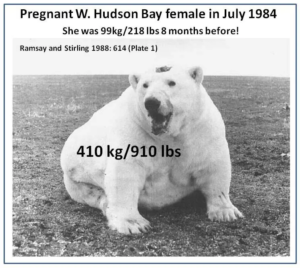
And do I think the high-profile journal Nature Communications would not only agree to publish such a useless bit of propaganda but also rig the timing to advance the climate change emergency narrative? Silly question. And the media worldwide are of course lapping it up, happy for an excuse to promote the perils of climate change, see here, here, and here using images of fat polar bears. Image above is from the BBC headline, 13 February 2024.

They believe this strategy is effective because they think the public is stupid, but they are deluding themselves. Most people are now laughing at their obvious acts of desperation.

Polar bears are highly specialize for consuming large amounts of fat that they get from Arctic seals, whales, and walrus. Only a few vocal researchers outside main-stream polar bear science insist that polar bears could ever survive year-round by eating terrestrial foods (e.g., Ilses et al. 2013; Iverson et al. 2014; Gormezano and Rockwell 2013a,b; Prop et al. 2015; Rogers et al. 2015; Tartu et al. 2016).

Calls for Met Office to retract false ‘more intense storms’ claim

by GWPF, Feb 13, 2024


London, 13 February – The UK Met Office has been accused of seriously misleading the public about climate-driven storms in the UK.

On 22nd January, the day after Storm Isha, a senior meteorologist from the Met Office stated on BBC Radio 5 Live Breakfast that “when we see these storms they are more intense and that’s down to climate change”.

However, after being challenged through a FOI request to provide evidence for the claim that storms have become more intense, the Met Office was forced to admit they have no such evidence.

In its response, the Met Office also referred to its own UK Storm activity report which clearly states that “there is no compelling trend in maximum gust speeds recorded in the UK since 1969.”

We call on the Met Office to publish a full retraction of what is evidently a false and misleading claim.

NOTES FOR EDITORS

Met Office: Recent trends and future projections of UK storm activity: “This report found that there is no compelling trend in maximum gust speeds recorded in the UK since 1969, measured as the number of days more than 20 weather stations recorded gust speeds above 40, 50 or 60 knots.”

Met Office: State of the UK Climate 2022 (page 47):  “Storm Eunice [in 2022] was the most severe storm to affect England and Wales since February 2014, but even so, these storms of the 1980s and 1990s were very much more severe.”

Paul Homewood: Met Office cannot provide evidence for “more intense storms” claim