Archives de catégorie : unclassified

Attenborough’s Arctic Sea-Ice Fearmongering Bordering On Misinformation

by C. Morrison, Sep 13, 2022 in ClimateChangeDispatch


The Arctic has been a happy hunting ground for the climate scaremonger Sir David Attenborough. Two years ago he made the fanciful claim that polar bears could die out in the 2030s.

It is now generally accepted that polar bears have been thriving and increasing in numbers, and in his latest BBC documentary Frozen Planet II, Attenborough makes no mention of his previous claim. [bold, links added]

But he does make the astonishing suggestion that all the summer sea ice in the Arctic could be gone within 12 years.

Unfortunately, such predictions are now out of date. Summer sea ice hit a low in 2012 and has been steadily recovering ever since.

According to the latest data from the US-based National Snow and Ice Data Center (NSIDC) for the end of August, “Sea ice extent is likely to remain higher than in recent years.

The evidence is shown in the graph below.

….

As can be clearly seen, the 2022 blue line is well above the 2012 low point. According to the NSIDC, the average sea ice extent for August ranked 13th lowest in the recent satellite record.

The growth of Arctic sea ice has been confirmed by a number of sources. The EU weather service Copernicus reported that the coverage of Arctic sea ice is now very close to the 1991-2020 average.

Claim: The World is On the Brink of Five Climate Tipping Points

by E. Worrall, Sep 12, 2022 in WUWT


Is anyone else fed up with us approaching but never actually crossing all those dangerous tipping points?

World on brink of five ‘disastrous’ climate tipping points, study finds

Giant ice sheets, ocean currents and permafrost regions may already have passed point of irreversible change

Damian CarringtonEnvironment editor
@dpcarringtonFri 9 Sep 2022 04.00 AEST

The climate crisis has driven the world to the brink of multiple “disastrous” tipping points, according to a major study.

It shows five dangerous tipping points may already have been passed due to the 1.1C of global heating caused by humanity to date.

These include the collapse of Greenland’s ice cap, eventually producing a huge sea level rise, the collapse of a key current in the north Atlantic, disrupting rain upon which billions of people depend for food, and an abrupt melting of carbon-rich permafrost.

At 1.5C of heating, the minimum rise now expected, four of the five tipping points move from being possible to likely, the analysis said. Also at 1.5C, an additional five tipping points become possible, including changes to vast northern forests and the loss of almost all mountain glaciers.

In total, the researchers found evidence for 16 tipping points, with the final six requiring global heating of at least 2C to be triggered, according to the scientists’ estimations. The tipping points would take effect on timescales varying from a few years to centuries.

Read more: https://www.theguardian.com/environment/2022/sep/08/world-on-brink-five-climate-tipping-points-study-finds

The abstract of the study;

Exceeding 1.5°C global warming could trigger multiple climate tipping points

David I. Armstrong McKay* https://orcid.org/0000-0002-0020-7461 d.mckay@exeter.ac.uk
Arie Staal https://orcid.org/0000-0001-5409-1436
Jesse F. Abrams https://orcid.org/0000-0003-0411-8519
Ricarda Winkelmann https://orcid.org/0000-0003-1248-3217
Boris Sakschewski https://orcid.org/0000-0002-7230-9723
Sina Loriani https://orcid.org/0000-0001-6660-960X
Ingo Fetzer https://orcid.org/0000-0001-7335-5679
Sarah E. Cornell https://orcid.org/0000-0003-4367-1296
Johan Rockström
Timothy M. Lenton* https://orcid.org/0000-0002-6725-7498 d.mckay@exeter.ac.uk

9 Sep 2022

Vol 377, Issue 6611

DOI: 10.1126/science.abn7950

Climate tipping points occur when change in a part of the climate system becomes self-perpetuating beyond a warming threshold, leading to substantial Earth system impacts. Synthesizing paleoclimate, observational, and model-based studies, we provide a revised shortlist of global “core” tipping elements and regional “impact” tipping elements and their temperature thresholds. Current global warming of ~1.1°C above preindustrial temperatures already lies within the lower end of some tipping point uncertainty ranges. Several tipping points may be triggered in the Paris Agreement range of 1.5 to <2°C global warming, with many more likely at the 2 to 3°C of warming expected on current policy trajectories. This strengthens the evidence base for urgent action to mitigate climate change and to develop improved tipping point risk assessment, early warning capability, and adaptation strategies.

Read more (paywalled): https://www.science.org/doi/10.1126/science.abn7950

Unfortunately the study is paywalled, so I can’t tell you the timeframe of these alleged tipping points. Not that the predicted dates matter that much – in my experience, tipping point predictions are usually quietly ignored or deleted when the deadline expires.

A Much Larger Greenhouse Effect – But Temperatures Dominated by Cooling

by W. Röst, Sep 9, 2022 in WUWT


Abstract

The Earth’s greenhouse effect is much larger than suggested so far. If surface radiation and the greenhouse effect set surface temperatures, our oceans would be boiling. Fortunately, they don’t. Water Earth has a strong water-vapor-based evaporative surface cooling mechanism that effectively sets and stabilizes surface temperatures at a much lower level than cooling by surface radiation emissions can do. Thanks to water vapor our temperature system is far more stable than admitted by the consensus, and thanks to water, water vapor, and clouds surface temperatures are favorable for present life.

Introduction

Early Earth consisted of hot molten lava covered by an extreme greenhouse atmosphere: hardly any surface radiation could reach space, if any. Nevertheless, its surface cooled. Upward convection brought sensible and latent heat from hot surfaces to elevations on the very edge of the atmosphere from where energy effectively could be radiated into space. Despite the near maximal greenhouse effect the surface of Early Earth cooled down and at a certain moment the first oceans developed. Those boiling oceans still resulted in a huge upward convective transport of energy, further cooling the surface. Until now, convective upward transport of energy plays the main role in surface cooling. Convection sets and regulates surface temperatures at actual level. Without evaporative-convective-cloud-cooling, our actual greenhouse atmosphere would theoretically result in a surface temperature of 202.3°C. On the real Earth the greenhouse effect warms the surface, but greenhouse warming does not set and control final surface temperatures. Earth’s H2O-based cooling system does.

Theoretical greenhouse effect


Conclusions

The Earth’s greenhouse effect is huge, much higher than normally assumed. If cooled by ‘surface radiation only’ the surface of a theoretical planet would have had a surface temperature of 202.3°C. But the Earth’s surface temperatures are not set by the strength of Earth’s greenhouse effect. Additional H2O-based cooling systems keep the surface at a much lower temperature, balancing rising surface radiation uptake. At present, that balance is reached at a yearly average of 15 degrees Celsius.

Thanks to H2O-related surface cooling the Earth’s surface temperatures are bound to a narrow range, at a temperature level well suited for life on Earth. Due to its stability, life developed over many hundreds of millions of years.

Temperature regulates the cooling system; the cooling system regulates temperature.

‘Hurricane Season Slowest Start In 30 Years’: Media Spin Begins

by A. Watts, Aug 29, 2022 in ClimateChangeDispatch


Back in May, many media outlets ran with this headline courtesy of a press release from NOAA:

NOAA predicts above-normal 2022 Atlantic Hurricane Season

Media outlets like Houston Public Media trumpeted it as if it was fact, saying: [bold, links added]

The National Oceanic and Atmospheric Administration (NOAA) released its 2022 Atlantic Hurricane Forecast, predicting an “above normal” hurricane season.

NOAA says there is a 70% chance of 14-21 storms forming, with as many as ten potentially becoming hurricanes. Three to six of these storms could become major hurricanes.

Climate Expert: What The Media Won’t Tell You About Droughts

by R. Pileke Jr, Aug 16, 2022 in ClimateChangeDispatch


Europe is in the midst of what has been called the worst drought in 500 years. According to a drought expert with the European Commission in comments last week [bold, links added]:

“We haven’t analysed fully the event (this year’s drought), because it is still ongoing, but based on my experience I think that this is perhaps even more extreme than 2018. Just to give you an idea the 2018 drought was so extreme that, looking back at least the last 500 years, there were no other events similar to the drought of 2018, but this year I think it is really worse than 2018.”

While a full analysis of the ongoing 2022 European drought remains to be completed, so too the drought itself, which is clearly exceptional if not unprecedented. In this post, I take a close look at the state of understanding of the possible role of climate change in this year’s drought.

Specifically, I report on what the most recent assessment report (AR6) of the Intergovernmental Panel on Climate Change (IPCC) and underlying literature and data say about the detection of trends in Western and Central European drought and the attribution of those trends to greenhouse gas emissions.

The figure below shows the specific region that is the focus of this post, which includes all of Germany, most of France, Hungary, Poland, Ukraine, and western Russia among other nations. …

Tim Ball: The Evidence Proves That CO2 is Not a Greenhouse Gas

by T. Ball, Sept 13, 2018 in Technocracy


The Intergovernmental Panel on Climate Change (IPCC) claim of human-caused global warming (AGW) is built on the assumption that an increase in atmospheric CO2 causes an increase in global temperature. The IPCC claim is what science calls a theory, a hypothesis, or in simple English, a speculation.  Every theory is based on a set of assumptions. The standard scientific method is to challenge the theory by trying to disprove it. Karl Popper wrote about this approach in a 1963 article, Science as Falsification. Douglas Yates said,

“No scientific theory achieves public acceptance until it has been thoroughly discredited.”

Thomas Huxley made a similar observation.

“The improver of natural knowledge absolutely refuses to acknowledge authority, as such. For him, skepticism is the highest of duties; blind faith the one unpardonable sin.”

In other words, all scientists must be skeptics, which makes a mockery out of the charge that those who questioned AGW, were global warming skeptics. Michael Shermer provides a likely explanation for the effectiveness of the charge.

“Scientists are skeptics. It’s unfortunate that the word ‘skeptic’ has taken on other connotations in the culture involving nihilism and cynicism. Really, in its pure and original meaning, it’s just thoughtful inquiry.”

The scientific method was not used with the AGW theory. In fact, the exact opposite occurred, they tried to prove the theory. It is a treadmill guaranteed to make you misread, misrepresent, misuse and selectively choose data and evidence. This is precisely what the IPCC did and continued to do.

A theory is used to produce results. The results are not wrong, they are only as right as the assumptions on which they are based. For example, Einstein used his theory of relativity to produce the most famous formula in the world; e = mc2. You cannot prove it wrong mathematically because it is the end product of the assumptions he made. To test it and disprove it, you challenge one or all of the assumptions. One of these is represented by the letter “c” in the formula, which assumes nothing can travel faster than the speed of light. Scientists challenging the theory are looking for something moving faster than the speed of light.

Doomsday Climate Predictions Meltdown: Arctic Sea Ice Extent Reaches 12-Year Mid-August High

by P. Gosselin, Aug 12, 2022 in NoTricksZone


According to Al Gore, based on statements and “science” from “leading climate experts”, the Arctic was supposed to be ice-free in the summer already years ago.

Now that the summer ice melt season in the Arctic will end soon, by the middle of next month, it’s a good time to see how Al Gore’s prediction is faring. To do this we look at the latest from data the National Snow and Ice Data Center (NSIDC):

The Great Barrier Reef Is Doing Great; People Should Know

by P. Ridd, Aug 11, 2022 in CO2Coalition


Australia’s Great Barrier Reef (GBR) is, well, great. But the popular media won’t report this good news, so I will.

The GBR is made up of approximately 3,000 reefs covering an area nearly the size of California off Australia’s eastern coast. The condition of its coral is frequently referenced as an indicator of the reef’s health, regularly in the context of the supposed damage global warming is doing to the planet.

The reef now has more coral than any time since records began in 1986, according to  the Australian Institute of Marine Science (AIMS). There is roughly 20 percent more coral on the GBR than last year, which itself equaled a previous record year. All three major regions of the reef now have excellent coral cover and AIMS states that two regions are at record breaking high levels.

As of the latest 2022 survey of the GBR, coral covered 34 percent of the seabed, double the lowest coverage recorded in 2012. There are many types of ecosystem on reefs other than coral – 34% is a remarkably high number.

This coral health exists despite four supposedly massively destructive and unprecedented bleaching events striking parts of the reef since 2016 – all allegedly due to climate change and one as recently as this year. Coral reefs typically take five to 10 years to recover from major damage, so how can GBR be enjoying such good health this soon? Is it possible that reef-science institutions exaggerated the damage in the first place to advance the global warming narrative? Perhaps.

Biden falsely links Kentucky floods to ‘climate change’ – Reality Check: Floods ‘have not increased in frequency or intensity’ – White House ignores peer-reviewed studies & IPCC & data

by M. Morano, Aug 11, 2022 in WUWT


Study in the Journal of Hydrology finds no increase in floods – ‘Compelling evidence for increased flooding at a global’ scale is lacking’

Extreme Weather expert Dr. Roger Pielke Jr. comments on new study: ‘New empirical study: Are floods increasing in North America and Europe? No (and consistent with IPCC.)’

Study published in the Journal of Hydrology, Volume 552, September 2017, Pages 704-717. The study found:

‘The number of significant trends was about the number expected due to chance alone.’

‘Changes in the frequency of major floods are dominated by multidecadal variability.’

‘The Intergovernmental Panel on Climate Change (IPCC) concluded (Hartmann et al., 2013) that globally there is no clear and widespread evidence of changes in flood magnitude or frequency in observed flood records.’

‘The results of this study, for North America and Europe, provide a firmer foundation and support the conclusion of the IPCC (Hartmann et al., 2013) that compelling evidence for increased flooding at a global scale is lacking.’

BBC Exaggerate Drought Claims

by P. Homewood, July 27, 2022 in NotaLotofPeopleKnowThat


To compare this year with 1976 is really quite mendacious, as the latter was much, much drier. And as the BBC’s own chart shows, there have been eight other years since then with similar rainfall levels to this year. Indeed, in England, as opposed to England & Wales, both 1996 and 2010 had drier starts to the year).

In other words, this year is not an exceptional event, merely something you expect to see every few years or so.

And if you go back through the full Met Office record to 1836, we can see again that there is nothing at all unusual about this year.( Indeed, all of the really dry years occurred in 1976 and before:


See also : Driest Start Since 1976? No, 2010 Was Drier

Climatologists Embarrassed: Increase In Global CO2 Levels Accompanied By Arctic Sea Ice Growth!

by P. Gosselin, July 26, 2022 in NoTricksZone


Today we look at the polar ice caps, which the global warming wingnuts claim is the canary in the coal mine and predicted earlier they’d melt and collapse. For example, Al Gore warned the Arctic ice would disappear by 2014.

While CO2 has gone up, Arctic sea ice has RISEN over past decade

But we have a big surprise. First we examine the Arctic sea ice extent so far this summer. Has it melted away like Al Gore said it would?

Antarctica continues long-term upward sea ice trend

Looking at Antarctica sea ice, we also see a zero-crisis trend when plotting the data from the Japan Meteorological Agency (JMA):

David Attenborough gets a namesake: the oldest known relative of living animals

by T. Joose,  July 25, 2022, in Science


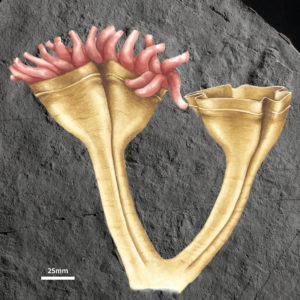
If you visited the oceans more than 500 million years ago, you’d find yourself in an alien world. Beings with quilted folds of soft tissue sat on the seabed like rugs, and life forms that looked like fronded plants but were actually animals made anchor on the ocean floor. But one organism might be somewhat familiar: a stalked, cuplike creature with waving tentacles resembling those of a jellyfish. The newly described fossil of this organism, named Auroralumina attenboroughiiafter naturalist and broadcaster David Attenborough, is between 556 million and 562 million years old and may be the oldest example of an evolutionary group still living today.

When co-author and University of Oxford paleobiologist Frances Dunn saw a cast of the fossil, she says, “It was instantly clear that this was really special and really rare.” With other fossils from the Ediacaran period, between 635 million and 541 million years ago, her first impression often is “What is this? How can I relate this to anything that’s alive today?” But with this specimen, she thought, “I know what this is.”

Classical scientific wisdom places the origin of modern animals about 539 million years ago during what’s called the Cambrian explosion. At this time, creatures with specialized tissues, organs, guts, and symmetrical left and right sides—all traits we recognize in the animals of today—began popping up.

The heatwave green hysteria is out of control

by P. Homewood, July 18, 2022 in NotaLotofPdeopleKnowThat


If you find yourself wondering over the next few days why it is so swelteringly hot, I have an answer for you. It’s because of rich people. It’s because of those wealthy elites with all their gas-guzzling vehicles and reckless holidaymaking. It’s their fault you’re sweating on the Tube.
This infantile claim really is being made, and by supposedly serious politicians. Labour’s Richard Burgon, over on his Instagram account, is wringing his no doubt sweaty hands over the filthy rich folk who apparently landed us in this weather apocalypse.
‘As we face 40C temperatures and the first ever Red Extreme Heat Warning, remember this climate crisis is driven by the wealthy’, he cries. His stern words are accompanied, naturally, by that Met Office map showing half of Britain coloured dark red – the hellish hue that has been chosen to illustrate how dire our predicament has allegedly become.
Is anyone else tiring of all this green hysteria over the heatwave? There is something medieval about it. There is something creepily pre-modern in the idea that sinful mankind has brought heat and fire and floods upon himself with his wicked, hubristic behaviour. What next – plagues of locusts as a punishment for our failure to recycle?

Updated Atmospheric CO2 Concentration Forecast Through 2050 and Beyond

by R. Spencer, July 18, 2022 in WUWT


Summary

The simple CO2 budget model I introduced in 2019 is updated with the latest Mauna Loa measurements of atmospheric CO2 and with new Energy Information Administration estimates of global CO2 emissions through 2050. The model suggests that atmospheric CO2 will barely double pre-industrial levels by 2100, with a total radiative forcing of the climate system well below the most extreme scenario (RCP8.5) used in alarmist literature (and the U.S. national climate assessment), with the closest match to RCP4.5. The model also clearly show the CO2 reducing effect of the Mt. Pinatubo eruption of 1991.

Europe at risk of civil unrest unless it returns to fossil fuels, EU warns

by Climate Depot, July 11, 2022


1) Europe at risk of civil unrest unless it returns to fossil fuels, EU warns
The Guardian 8 July 20222) Rising social unrest over energy costs & food shortages threatens global stability
David Blackmon, Forbes, 11 July 2022

3) Farmers ‘freedom convoy’ takes aim at strict Dutch Net Zero regulations

The Daily Telegraph, 9 July 20224) Dutch farmer protests against emissions cuts spread across EU
Farmers Weekly, 9 July 2022

5) Green Tories fear next party leader could ditch Net Zero strategy

The Observer, 10 July 20226) Andrew Orlowski: Boris Johnson, the Net Zero zealot

7) Lifeline for millions in Red Wall as fracking return could provide ‘cheap or free gas’
Daily Express, 8 July 20228) Europe’s rush to buy Africa’s natural gas draws cries of hypocrisy
Bloomberg, 10 July 2022

9) ‘Complete Collapse’: How ESG and green extremism destroyed Sri Lanka’s economy
The Daily Caller, 6 July 2022

10) If you want to know how Sri Lanka’s president destroyed his country read his COP26 speech
High Commission of the Democratic Socialist Republic of Sri Lanka in the United Kingdom, 1 November 2021

Europe is in danger of highly damaging “very, very strong conflict and strife” this winter over high energy prices, and should make a short-term return to fossil fuels to head off the threat of civil unrest, the vice-president of the European Commission has warned.

Frans Timmermans, the second most senior official in the EU, said the threat of unrest this winter, a deliberate outcome of Vladimir Putin’s invasion of Ukraine, must take precedence over the climate crisis.

He said: “If our society descends into very, very strong conflict and strife because there is no energy, we’re certainly not going to make our [climate] goals. We’re certainly not going to get where we need to get if the lack of energy leads to strong disruption in our societies, and we need to make sure people are not in the cold in the coming winter.

“We need to make sure we keep our industry, as much as possible, functioning because the one thing that could help Putin is divisions in our society.”

People suffering from the cold this winter because they cannot afford heating would also be disastrous for solving the climate crisis, Timmermans argued in an interview with the Guardian in Brussels.

“I’ve been in politics long enough, over 30 years, to understand that people worry most about the immediate crisis and not about the long-term crisis And if we don’t address the immediate crisis, we will certainly be off-track with the long-term crisis,” he said.

Inconvenient truth for globalists: Arctic ice at 30-year high

by A. Moore, May 25, 2022 in Wind


The World Economic Forum and the globalist movement it helps lead have used the “climate crisis” and the COVID-19 pandemic as pretexts for measures to redistribute the wealth of nations.

But this week, as WEF convenes is annual conference in Davos, Switzerland, the Arctic sea ice expanse so far this month is at a 30-year high, according to data from intergovernmental European Organization for the Exploitation of Meteorological Satellites, points out climate-change skeptic Tony Heller.

EUMETSAT, as the organization is known,  was created through an international convention signed by 30 European nations.

The extent of Arctic ice during the warmer months long has been a metric for climate-change alarmists. In 2007, Al Gore began warning the world that scientists were predicting that by 2013, the Arctic would be ice-free during the summer.

Understanding Abrupt Climate Change in the Late Quaternary

by R.S. Bradley & H.F. Diaz, Nov18,  2021 in Eos


Between about 75,000 and 10,000 years ago, there was a series of sudden and dramatic changes in rainfall patterns in tropical regions likely triggered by changes in ocean water circulation. A recent article in Reviews of Geophysics examines the evidence of these “Tropical Hydroclimatic Events” and explores the potential causes. Here, one of the authors explains more about these abrupt climate change events of the past and suggests how it can inform our understanding of potential future climate change.

What are “Tropical Hydroclimatic Events” (THEs)? When and where did they occur?

When we look back at past climate variations in continental regions of the Tropics and sub-Tropics (~30ºN-30ºS), it is abundantly clear that there were times when climate abruptly changed, causing some areas that were formerly wet to become quite dry, and areas that were formerly dry to become much wetter, disrupting plant and animal communities, as well as people living in the region. We call those changes “Tropical Hydroclimatic Events (THEs).” The changes affected vast areas (and lasted for centuries in some cases_ before the climate shifted back to the former conditions. There were at least half a dozen of these THEs between about 10,000 and 75,000 years ago.

NEW STUDY: “Part Of North Atlantic Is Cooling”…”Natural Fluctuations Have Been Primary Reason”

by P. Gosselin, Apr 30, 2022 in NoTricksZone


New studies on the Atlantic current system assess the threshold between natural fluctuations and a climate change-driven evolution

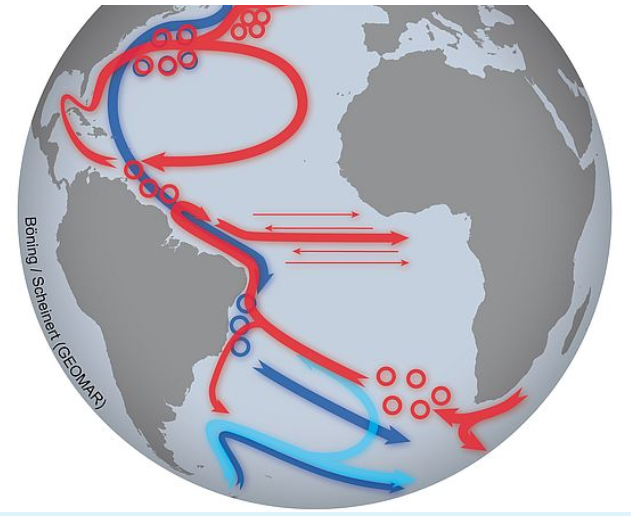
25 April, 2022/Kiel, Germany. With a new publication in the scientific journal Nature Climate Change, researchers from Kiel once again contribute to the understanding of changes in the Atlantic Meridional Overturning Circulation (AMOC) – also known as the “Gulf Stream System”. It is important both for the global climate as well as for climate events in Europe. The authors focus on the question whether human-induced climate change is already slowing down this oceanic circulation. According to the new study, natural variations are still dominant. Improved observation systems could help detect human influences on the current system at an early stage.

Is the Atlantic Meridional Overturning Circulation (AMOC) slowing down? Is this system of ocean currents, which is so important for our climate, likely to come to a halt in the future? Are the observed variations a natural phenomenon or are they already caused by human-induced climate change? Researchers from various scientific disciplines use a wide range of methods to better understand the gigantic oceanic circulation.

“The AMOC provides Europe with a mild climate and determines seasonal rainfall patterns in many countries around the Atlantic. If it weakens over the long term, this will also affect our weather and climate. Other consequences could be a faster rise in sea levels at some coasts or a reduction in the ocean’s ability to take up carbon dioxide and mitigate climate change”, Professor Dr. Mojib Latif, Head of the Research Unit: Marine Meteorology at GEOMAR Helmholtz Centre for Ocean Research Kiel, explains. “We depend on the AMOC in many ways – but so far, we can only guess how it will develop, and whether and how strongly we humans ourselves will push it towards a tipping point where an unstoppable collapse will take its course.”

Using observational data, statistical analyses and model calculations, a team led by Professor Latif has therefore examined changes in the current system over the past one hundred years in greater detail. The results have now been published in the scientific journal Nature Climate Change. According to the researchers, part of the North Atlantic is cooling – a striking contrast to the majority of ocean regions. All evaluations indicate that since the beginning of the 20th century, natural fluctuations have been the primary reason for this cooling. Nonetheless, the studies indicate that the AMOC has started to slow down in recent decades.

Tokyo Sees Coldest February In 34 Years…Mean February Temperature Trend Has Not Risen Since 1987!

by P. Gosselin, Mar 4, 2022 in NoTricksZone


The February and winter 2021/22, untampered JMA mean temperature data are in for Tokyo and its Hachijojima island

Tokyo

Here’s the latest plot of February mean temperatures for Tokyo, since 1987

Over the past 34 years, February mean temperatures in Tokyo have been steady, i.e. no warming. After the past 2 Februarys came in rather balmy, this most recent February has been the coldest since 1988!

Hachijojima

Moving away from the urban Tokyo and over to the city’s rural Pacific island of Hachijojima, some 275 km off the Japan mainland, we plot the latest February data going back to 1987


Here as well there’s been no warming in February since 1987. In contradiction to the predictions of warming, the island has in fact cooled off bit, according to the data from the Japan Meteorological Agency (JMA).

The past February has been among the coolest since 1987.


Ireland, Sweden Show No January Warming Since 1988. Antarctic Sea Ice Extent Now More Than 40 Years Stable!

by P. Gosselin, Feb 15, 2022 in NoTricksZone


The January mean temperature data from the Japan Meteorological Agency (JMA )are now available for Sweden and Ireland. Also below we look at Antarctic sea ice extent.

We begin by looking at the trends from 5 stations in Sweden, for which the JMA has enough data to allow adequate plotting. since 1988:

Evidence that Clouds Actively Regulate the Temperature

by W. Eschenbach, Oct 6, 2013 in WUWT


I have put forth the idea for some time now that one of the main climate thermoregulatory mechanisms is a temperature-controlled sharp increase in albedo in the tropical regions. I have explained that this occurs in a stepwise fashion when cumulus clouds first emerge, and that the albedo is further increased when some of the cumulus clouds evolve into thunderstorms.

I’ve demonstrated this with actual observations in a couple of ways. I first showed it by means of average photographs of the “view from the sun” here. I’ve also shown this occurring on a daily basis in the TAO data. So I thought, I should look in the CERES data for evidence of this putative phenomenon that I claim occurs, whereby the albedo is actively controlling the thermal input to the climate system.

Mostly, this thermoregulation appears to be happening over the ocean. And I generally dislike averages, I avoid them when I can.  So … I had the idea of making a scatterplot of the total amount of reflected solar energy, versus the sea surface temperature, on a gridcell-by-gridcell basis. No averaging required. I thought well, if I’m correct, I should see the increased reflection of solar energy required by my hypothesis in the scatterplots. Figure 1 shows those results for four individual months in one meteorological year. (The year-to-year variations are surprisingly small, so these months are quite representative.)

Solar Update

by D. Archibald, Feb 2, 2022 in WentwothReport


Reports from the current Northern Hemisphere winter include plenty of low temperature records broken, frozen seas off Greece, etc., suggesting that the world is cooling. A correspondent in Missouri writes:

Nearly 800 chill hours here so far … cold forecast for the next 2 weeks. Will hit 1000 easily. The average when we moved here not quite 20 years ago was 5-600 … for the entire winter. (Chill hours refer to the total amount of time a fruit tree needs to be exposed to cold winter temperatures to allow them break dormancy so they will flower and set fruit normally.)

So that is good news for Missouri — they will now be able to grow things like peaches with a high chill hour requirement for fruiting. Confirmation of colder Northern Hemisphere winters is provided by the snow mass trend by the Finnish Meteorlogical Institute:

World Atmospheric CO2, Its 14C Specific Activity, Non-fossil Component, Anthropogenic Fossil Component, and Emissions (1750–2018

by Kenneth et al. 2022, Feb 2022 in HealthPhysics


Abstract

After 1750 and the onset of the industrial revolution, the anthropogenic fossil component and the non-fossil component in the total atmospheric CO2 concentration, C(t), began to increase. Despite the lack of knowledge of these two components, claims that all or most of the increase in C(t)since 1800 has been due to the anthropogenic fossil component have continued since they began in 1960 with “Keeling Curve: Increase in CO2from burning fossil fuel.” Data and plots of annual anthropogenic fossil CO2 emissions and concentrations, C(t), published by the Energy Information Administration, are expanded in this paper. Additions include annual mean values in 1750 through 2018 of the 14C specific activity, concentrations of the two components, and their changes from values in 1750. The specific activity of 14C in the atmosphere gets reduced by a dilution effect when fossil CO2, which is devoid of 14C, enters the atmosphere. We have used the results of this effect to quantify the two components. All results covering the period from 1750 through 2018 are listed in a table and plotted in figures. These results negate claims that the increase in C(t) since 1800 has been dominated by the increase of the anthropogenic fossil component. We determined that in 2018, atmospheric anthropogenic fossil CO2 represented 23% of the total emissions since 1750 with the remaining 77% in the exchange reservoirs. Our results show that the percentage of the total CO2 due to the use of fossil fuels from 1750 to 2018 increased from 0% in 1750 to 12% in 2018, much too low to be the cause of global warming.