2019 Atlantic hurricane forecast

by J. Curry and J. Johnstone, June4, 2019 in ClimateEtc.


CFAN predicts an active North Atlantic hurricane season season.

The Atlantic hurricane has begun.  We are off to an early start with one wimpy subtropical storm that lasted less than a day, and a small system that is trying to spin up in the Bay of Campeche.

Other forecast providers have begun issuing forecasts:

  • NOAA predicts a near normal season with 4-8 hurricanes.
  • Tropical Storm Risk predicts slightly below normal activity, with 6 hurricanes and ACE of 88.
  • Colorado State University predicts near normal season:  6 hurricanes and ACE of 100

Climate Forecast Applications Network (CFAN) is going bold, see below. [link] to forecast report.

CFAN’s seasonal forecast

Table 1. Current (May) 2019 hurricane forecasts of North Atlantic ACE, North Atlantic total hurricanes, U.S. landfalling hurricanes. 

….

The epic search for oldest ice in Antarctica is starting

by Università Ca’ Foscari Venezia, June 5, 2019 in WUWT


Click here for project video.

On 1st June 2019 the European Beyond EPICA Oldest Ice Core project started with the aim of drilling for and recovering ice from up to 1.5 Million years ago in Antarctica. The previous EPICA project recovered ice from 800,000 years ago. The new project aims to go beyond that. The new core will give us information on the greenhouse gases present during the Middle Pleistocene Transition (MPT), which occurred between 900,000 and 1.2 Million years ago. During this period the climatic periodicity transitioned from 41,000 to 100,000 years between ice ages. Why this change happened is the mystery scientists want to resolve.

To do this, experts from 10 European Countries and 16 different Research Institutions have joined forces under the guidance of Carlo Barbante and his management team at the CNR and Ca’ Foscari University of Venice in Italy, funded by the European Horizon 2020-research programme.

For further information visit https://www.beyondepica.eu/

PÉTROLE BRENT : POURQUOI LES PRIX DU PÉTROLE RECHUTENT À LEUR PLUS BAS NIVEAU DEPUIS JANVIER

by BFM bourse, 3 juin 2019


Les cours du baril d’or noir ont enregistré, en mai, leur première baisse mensuelle de l’année 2019, avec un repli de 11,4% pour le baril de Brent européen et de 15,8% pour son homologue américain, le “light sweet crude” texan ou “WTI“. Ce recul s’est accentué depuis mercredi dernier, porté par la frénésie taxatoire de Donald Trump à l’encontre de la Chine et désormais également du Mexique, qui fait peser des craintes sur la demande mondiale et détourne les investisseurs des valeurs dépendantes de cette croissance mondiale, dont l’or noir fait partie.

Des coraux qui s’adaptent aux températures plus élevées

by Paul Berth, 31 mai 2019 in ScienceClimatEnergie


Selon certaines prédictions, basées sur des modèles informatiques, de nombreux récifs coralliens auront disparu des océans tropicaux au cours des 80 prochaines années[1]. La cause est bien évidemment le réchauffement climatique pouvant provoquer un blanchiment des coraux. Par exemple, en 2014–2017, a eu lieu un évènement global de blanchiment, le 3e au cours des 20 dernières années, et de nombreux coraux furent affectés sur des milliers de kilomètres carrés[2],[3]. Les médias, avides de catastrophisme, en ont beaucoup parlé avec des titres une fois de plus très alarmistes (exemple ici).

Cependant, les choses ne sont pas si simples. Des données satellitaires et des études de terrain ont montré que tous les récifs coralliens ne se comportent pas de la même manière: de nombreux récifs n’ont pas blanchi pendant le dernier épisode El Niño, une très grande partie des coraux a résisté au stress thermique, et de fortes variations locales et régionales ont été observées dans le blanchiment[4]. La relation entre température élevée de l’eau de mer et blanchiment des coraux n’est donc pas évidente. Afin d’éclaircir la situation une équipe américaine a récemment publié une analyse globale des évènements de stress thermique en considérant 3351 sites différents dans 81 pays (Sully et al. 2019, dans Nature Communications[5]). Cette analyse globale est unique et démontre que les coraux sont en train de s’adapter par sélection naturelle et sont désormais un peu plus résistants au blanchiment. Nous avons ici une belle démonstration du fait que les modèles informatiques sont parfois bien loin de la réalité de terrain et qu’il ne faut pas tirer de  conclusions toujours hâtives!

The major emitters that are meeting their Paris Agreement pledges

by Axios, June 1, 2019


Of top 10 global carbon emitters, not a single one is hitting its climate goals as outlined under the Paris Agreement, per data from the Climate Action Tracker.

Why it matters: Even if every country that’s adopted the Paris Agreement were to meet their pledges, it would not avert the worst effects of climate change.

Driving the news: June 1 marks the 2-year anniversary of President Trump’s announcement that the U.S. would withdraw from the deal. Per the Climate Action Tracker, the U.S., the second-largest world emitter of greenhouse gasses (but top historical emitter), falls under “critically insufficient,” the worst category, in meeting its Paris pledge.

The backdrop: The Paris Agreement’s main goal is to keep global temperature rise this century to “well below 2ºC,” above pre-industrial levels, and pursue efforts to limit the temperature increase to 1.5ºC.

  • Each country determined what it would be willing to do under the agreement. Such commitments are known as intended nationally determined contributions (INDCs).
  • After ratifying the agreement, the INDC would become the country’s first nationally determined contribution.

So far, 185 countries have ratified or adopted the Paris Agreement. All of the NDCs are available here.

New Proxy Data Show Northern Europe Weather Variability In Sync With Natural Factors: Solar Activity, Oceanic Cycles

by J. Goslin in P. Gosselin, June 1, 2019 in NoTricksZone


Another new paper, which of course will be ignored by the government-funded IPCC because it contradicts claims CO2 drives climate, shows that natural factors dominated the earth’s climate variability.

A team of scientists led by Jerome Goslin have published a paper titled Decadal variability of north-eastern Atlantic storminess at the mid-Holocene: New inferences from a record of wind-blown sand, western Denmark in the journal Global and Planetary Change, suggesting climate variability is driven naturally.

Image: NASA, public domain

Climate change driven by solar and oceanic cycles

Not surprisingly, as evidenced by hundreds of other publications (which are entirely ignored by the IPCC), climate variability is indeed tied to solar activity and “internal atmospheric and oceanic modes”.

Germany’s Zugspitze Sees Snow Depth Spiral Upward To Highest Level in 38 Years – In Late Spring!

by P. Gosselin, June 2, 2019 in NoTricksZone


May normally is a month that sees rapid snow melt in Alps. But this year May was an unusually cold month across Central Europe and parts of the Alps saw heavy snow accumulation.

A week ago, on May 25, BR public broadcasting reported here how May snow levels at Germany’s tallest peak, Zugspitze, reached a 20-year high at just over 6 meters of depth. The article wrote that experts thought the depth would not rise further.

But that turned out to be wrong.

Highest level since February, 1981

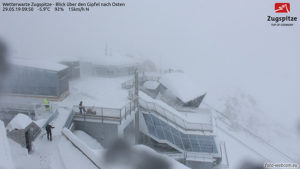
Four days later, on May 29, another 35 cm were added and pushed the depth to 6.40 meters, according to wetteronline.ch here. the website wrote: “Zugspitze: Never so much snow since 1981.” The website added that the snow depth there was “higher than it has been since February 1981.”

What follows is a webcam image of the Zugspitze peak from May 29th:


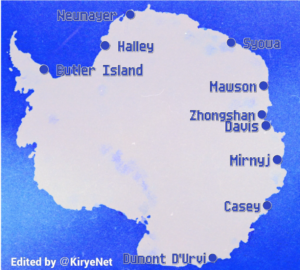
10 Of 10 Coastal Antarctic Stations Show Zero Warming Over Past Decades. Failed Scientists Need To Resign

by Kirye in P. Gosselin, May 31, 2019 in NoTricksZone


Over the past few years, climate alarmists have increasingly been resorting to weather-ambulance chasing, which has necessitated the trotting of the globe in the search of weather anomalies to behold as proof of man-made climate change.

But one place they have been avoiding like the plague is Antarctica as a number of studies have been showing the opposite of what what predicted earlier has been happening down at the South Pole, except for volcanic activity beneath parts of the Antarctic ice shelf.

Analysis of Antarctic stations show cooling

In hot pursuit of dinosaurs: Tracking extinct species on ancient Earth via biogeograph

by Charles the moderator, May 31, 2019 in WUWT


University of Tokyo

One researcher at the University of Tokyo is in hot pursuit of dinosaurs, tracking extinct species around ancient Earth. Identifying the movements of extinct species from millions of years ago can provide insights into ancient migration routes, interaction between species, and the movement of continents.

“If we find fossils on different continents from closely related species, then we can guess that at some point there must have been a connection between those continents,” said Tai Kubo, Ph.D., a postdoctoral researcher affiliated with the University Museum at the University of Tokyo.

A map of life – biogeography

Previous studies in biogeography — the geographic distribution of plants and animals — had not considered the evolutionary relationships between ancient species. The new method that Kubo designed, called biogeographical network analysis, converts evolutionary relationships into geographical relationships.

By combining data from fossils and models of the ancient Earth, researchers can map where ancient species may have migrated. This method, called biogeographical network analysis, converts evolutionary relationships between species into geographical relationships. This method was used in research by Tai Kubo, Ph.D., a postdoctoral researcher affiliated with the University Museum at the University of Tokyo. Credit Caitlin Devor, The University of Tokyo, CC-BY Usage Restrictions Image by Caitlin Devor, The University of Tokyo, CC-BY

Small increase in EU’s total greenhouse gas emissions in 2017, with transport emissions up for the fourth consecutive year

by European Environment Agency, May 29, 2019


Total greenhouse gas emissions in the European Union (EU) increased by 0.7 % in 2017, according to latest official data published today by the European Environment Agency (EEA). Less coal was used to produce heat and electricity but this was offset by higher industrial and transport emissions, the latter increasing for the fourth consecutive year.

According to the EEA’s Annual European Union greenhouse gas inventory 1990-2017 and inventory report 2019, total greenhouse gas emissions (including international aviation) rose by 0.7 % in 2017 compared with 2016. These official data confirm the preliminary estimates published by the EEA in October 2018. From 1990 to 2017, the EU reduced its net greenhouse gas emissions by 21.7 %. The EU is therefore still exceeding its 20 % reduction target set for 2020.

Cycles of Rapid Climate Warming

by Jim Steele, May 28, 2018 in WUWT


The globally averaged temperature rose 1.5°F from 1880 to today. Various narratives suggest the rise since 1950 was driven by increasing concentrations of CO2. The rising temperature before 1950 was considered natural. Since 1990, Arctic temperatures rose 2 to 3 times faster than the global average. So, are rapidly rising Arctic temperatures evidence of an impending climate crisis?

Astute students of climate history recall rapid Arctic warming has happened often and naturally. During the last Ice Age when CO2 concentrations were just half of today’s, 25 abrupt warming events happened. Arctic temperatures rose 9°F, and sometimes as much as 14°F in just 40 years. These rapid warming episodes are now called Dansgaard–Oeschger events (D-O events) in honor of the researchers who first detected them in Greenland’s ice cores. These D-O episodes affected global climate, changed ocean currents along California’s coast and altered the range of European forests.

What caused such abrupt warming? Basic physics dismisses changes in greenhouse gases or solar insolation because neither radiative effect induces such rapid warming. The most reasonable explanation suggests episodes of ventilating heat, that had accumulated in the Arctic Ocean, rapidly warmed the air.

China Threaten To Ban Export Of Rare Earths

by P. Homewood, May 29, 2019 in NotaLotofPeopleKnowThat


China has hinted that a trade war with the U.S. could lead to real war with a coded warning as it threatens to stop exporting essential ‘rare earth’ minerals.

A commentary in People’s Daily, the mouthpiece of China‘s ruling Communist Party, today said ‘Don’t say we didn’t warn you!’ – which is a diplomatic term usually reserved by Beijing to signal the start of an armed warfare.

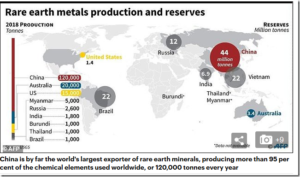
China yesterday said it is ‘seriously considering’ restricting exports to the United States of rare earths, 17 chemical elements used in hospital scanners, nuclear power stations and LED lights.

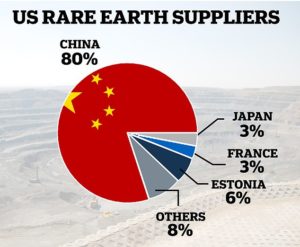
China accounted for 80 per cent of rare earth imports between 2014 and 2017 to the United States.


Roy Spencer: Why so many tornadoes this year? It’s not what AOC, Bernie Sanders (or maybe even you) think

by Charles the moderator, May 29, 2019 in WUWT


By Roy Spencer | Fox News

Progressive politicians like Al Gore, Sen. Bernie Sanders, I-Vt., and Rep. Alexandria Ocasio-Cortez, D.N.Y., don’t hesitate to blame any kind of severe weather – even if it is decreasing over time – on global warming.

With the devastating Dayton, Ohio tornadoes fresh on our minds, it is useful to examine exactly why (modest) global warming has produced fewer – not more – of such events.

The simple answer is that tornado formation requires unusually cool air.

Very few thunderstorms produce tornadoes. In the hot and humid tropics, they are virtually unheard of. The reason why is that (unlike hurricanes) tornadoes require strong wind shear, which means wind speed increasing and changing direction with height in the lower atmosphere.

These conditions exist only when a cool air mass collides with a warm air mass. And the perfect conditions for this have existed this year as winter has refused to lose its grip on the western United States. So far for the month of May 2019, the average temperature across the U.S. is close to 2 degrees Fahrenheit below normal.

Les pays du G20 ont augmenté leur consommation énergétique et leurs émissions de CO2 en 2018

by Eva Gomez, 28 mai 2018 in EnvironnementMagazine


Ce mardi 28 mai, le bureau d’études Enerdata publie son bilan énergétique mondial pour l’année 2018. Celui-ci fait part d’une hausse et de nouveaux records de consommation d’énergie et d’émissions de CO2.

En 2018, les pays du G20 ont vu leur consommation d’énergie augmenter de 2,1% et leurs émissions de CO21 de 1,7%, conclut Enerdata ce mardi 28 mai. Dans son nouveau bilan énergétique mondial, le bureau d’étude souligne que la croissance économique reste stable (+3,8%) dans les pays du G20, qui affichent néanmoins un niveau record de consommation énergétique. Dans l’Union européenne, les consommations d’énergie ont un peu diminué, mais cette baisse est compensée par une hausse de celles des Etats-Unis et des pays non membres de l’OCDE. « La consommation énergétique des USA a fortement augmenté, ce qui peut s’expliquer par les conditions climatiques extrêmes auxquelles ils ont été soumis, dont l’hiver très froid qui a demandé beaucoup de chauffage », explique le président d’Enerdata, Pascal Charriau. Par ailleurs, il semblerait que « le développement économique se fasse de façon énergivore : même si on observe un léger gain d’intensité énergétique, l’efficacité énergétique n’est pas améliorée », souligne-t-il.

Patrick Moore auditionné par la Chambre des représentant des Etats Unis à propos du rapport de l’IPBES

by Usbek, 29 mai 2019 in ClimatEnvironnementEnergie


Le  22 mai 2019 la Chambre des représentants des Etats Unis a organisé une audition sur le récent rapport d’évaluationglobale de l’IPBES (Plateforme intergouvernementale scientifique et politique sur la biodiversité et les services éco systémiques ).

Patrick Moore a été invité a donner son témoignage; nous en donnons ci-dessous une traduction (les liens et renvois en bas de page sont du traducteur).


Je vous remercie de m’avoir donné l’occasion de témoigner à l’audience d’aujourd’hui.

En 1971, alors que j’étais doctorant en écologie, je me suis joint à un groupe d’activistes dans un sous-sol d’église à Vancouver, au Canada, et j’ai traversé le Pacifique à bord d’un petit bateau pour protester contre les essais américains de bombes à hydrogène en Alaska. Nous sommes devenus Greenpeace. Après 15 ans au sein du comité directeur, j’ai dû quitter Greenpeace, qui commençait à adopter des politiques que je ne pouvais accepter d’un point de vue scientifique.

Je me suis donné comme mission de toujours appliquer de sains principes scientifiques lors de l’examen des problèmes environnementaux critiques auxquels nous sommes confrontés aujourd’hui.

Ce n’est qu’au début des années 1900, marquées par la disparition définitive de la tourte voyageuse en 1914, que le grand public a commencé à s’intéresser de près à la question de l’extinction des espèces. Cette prise de conscience a été inspirée par l’activisme précoce de Théodore Roosevelt, John Muir et Gifford Pinchot.

Washington Post Gets Excited By Tiny Increase In Green Vote At Euro Elections

by P. Homewood, May 28, 2019 in NotaLotofPeopleKnowThat


You would think the Washington Post should be able to distinguish between a handful of protesting school kids and millions of grown up voters!

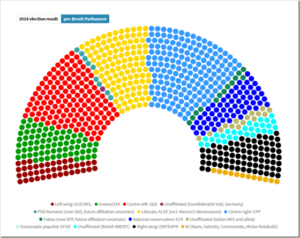
In recent months, massive demonstrations over climate change have rocked European capitals, dwarfing the mobilizations of the continent’s far right. Fridays for Future — a movement inspired by Swedish teenage activist Greta Thunberg — has seen countless European teenagers walk out of school to protest climate inaction. It underscores a growing consensus among the next generation of voters that governments must do more to mitigate environmental disaster, and an impatience with political parties that refuse to recognize the urgency of the situation.

Climate change, said an editorial in France’s Liberation newspaper, “has become the principal criteria of judging political action in the European Union.”

https://www.washingtonpost.com/world/2019/05/28/climate-change-threatens-wests-far-right/

Climate science violates the basic precepts of science

by Sanjeev Sabhlok,  May 9, 2019 in TheTimesofIndia


There are two key pillars of science. First, it doesn’t matter how many “scientists” believe something. All of them could be proven wrong by a single new scientific theory or experiment. Science is always tentatively proven, and it is incumbent on everyone who calls himself a scientist to ask questions even about things that are “settled”. The great physicist Richard Feynman rightly said, “Science is the belief in the ignorance of experts”. Scientists must continually question everything and everybody.

Second, science must necessarily make accurate predictions. The global positioning system (GPS) in our mobile phones works only because Einstein’s theories of relativity are accurate to the last possible decimal. Science must not just predict the future: it must predict backwards. Our scientific understanding of cosmic microwave background radiation allows us to literally see the universe as it existed a few thousand years after the Big Bang.

With climate change, things are dramatically unclear and unsettled. Even converting the basic logic of the greenhouse effect into actual estimates for planet Earth is not settled. The IPCC’s Third Assessment Report notes that "If the amount of carbon dioxide were doubled instantaneously … the temperature of the surface-troposphere system would have to increase by 1.2 degrees, in the absence of other changes”. However, some scientists calculate that its impact would be much lower.

UK Government spending foreign aid money to promote fracking in China

by P. Homewood, May 26, 2019 in NotaLotofPeopleKnowThat


Taxpayers’ money earmarked to support overseas development has been spent on supporting China’s fracking industry, The Independent can reveal.

The government is required to spend 0.7 per cent of its national income each year on foreign aid.

But even with climate change threatening the developing world with droughts, flooding and heatwaves, millions have been spent on fossil fuel investment abroad over the past two years.

This includes two schemes aiming to “export the UK’s expertise in shale gas regulation” to China, as controversy about new drilling sites rages back in Britain.

https://www.independent.co.uk/news/uk/politics/fracking-china-foreign-aid-shale-gas-climate-change-environment-dfid-funding-promoting-a8637601.html


I won’t bore you with the rest of the story. As you can probably guess, the “Independent” being the “Independent” proceeds to give full coverage to a load of eco cranks, including Christian Aid, who claim that the rapidly changing climate is driving more extreme weather, more acute disasters. (Don’t they know it’s a sin to lie?)

At the end they deign to give a few words to the government spokesperson.


Leaving aside the question why China needs our aid at all,  the “Independent” fails to ask the really relevant question of why our government is so keen for us to decarbonise at huge cost, but at the same time thinks it is a good idea to help China develop their natural gas sector?

Sylvie Brunel : un livre qui ne nous gâche pas la vie…

by Prof. A. Préat, 24 mai 2019 in ScienceClimatEnergie


Nous sommes manifestement dans une période médiatico-politique rarement rencontrée dans notre histoire, excepté peut-être aux passages des millénaires et des siècles où les peurs tous azimuts ont engendré chaque fois des comportements irrationnels. Pourtant aujourd’hui nous sommes de plain pied dans un siècle, il n’y a aucune date revêtant une signification particulière et il est presque question de la fin du monde tous les jours puisque le slogan à la mode est ‘la fin du mois ou la fin du monde’. Slogan répété à l’envi par tant de jeunes, de ‘défavorisés’, de retraités et repris en cœur dans les médias et aussi par des scientifiques.

Alors tout ceci est-il fondé ? Faut-il avoir sans cesse peur, peur principalement alimentée par la peur climatique, mais pas uniquement…

German Government Falsified Key IPCC Statement In The Translation Of “IPCC Summary Report To Policy Makers”!

by Prof. dr. H.J. Lüdecke, May 26 2019 in


(German text translated/edited by P Gosselin)
Was it sloppiness or intent? In the IPCC Summary Report for Policymakers published by the Federal Government in German, the most important statement of the original English report was falsified.

IPCC reports are available as comprehensive status reports and get strongly condensed as reports for policymakers. The latter are not to be taken as IPCC-authorized extracts as the governments concerned are allowed contribute in the writing. As a result, information or formulations from the English IPCC original which do not agree with German politics are often omitted in the German IPCC reports for policymakers. This is popularly called censorship. As a result of such falsifications, the status reports and the corresponding reports for policymakers are often contradiction.

Key finding deleted from Summary for Policymakers

One example in the past was the famous Chapter 2.6 of the AR5 Report, in which the IPCC explained in detail that no increase in extreme weather events could be found in climate periods (about 30 years) from 1950 onwards (beginning of more extensive measurements and statistics). EIKE reported on this. But in the accompanying German IPCC report for policymakers, this IPCC finding, which is hardly trivial, was nowhere to be seen.

Scientists discover China has been secretly emitting banned ozone-depleting gas

by Jacob Dubé, May 23, 2019 in National Post


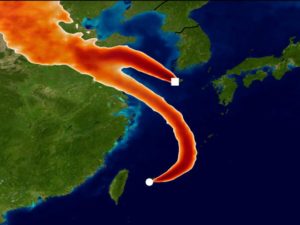
Scientists found that between 40 and 60 per cent of the total global CFC-11 emissions originated from eastern China

A chemical banned around the globe for the last 30 years has made an unfortunate resurgence. And all signs, in a new study, point to China as the culprit.

In the 1980s, countries came together to sign The Montreal Protocol on Substances that Deplete the Ozone Layer, a landmark treaty designed to halt and reduce the production of chlorofluorocarbons (CFC), chemicals used in fridges and foams that had the side effect of tearing through the Earth’s ozone layer.

 
In this graphic, monitoring stations in Japan and Korea designed to track unwanted emissions in the atmosphere attempt to pinpoint the origin of an increase in CFC-11 emissions. Tracking the gas’ presence and weather conditions, scientists concluded it originated from eastern mainland China. A new study published May 22, 2019, found that 40 to 60 per cent of global CFC-11 emissions originated from the region. UNIVERSITY OF BRISTOL

India’s thermal coal output seen growing 4.3% annually till 2028: Report

by Energy World, May 22, 2019


New Delhi: Fitch Solutions Tuesday said India’s thermal coal output is projected to grow at an average annual rate of 4.3 per cent by 2028. “In absolute volume terms, China and India will have the largest impact on the global coal market balance,” Fitch Solutions Macro Research said in a report.

It further said the surge in Chinese imports that occurred over 2015-2017 as a result of dramatic domestic production curbs was a temporary phenomenon.

“We forecast thermal coal production in China to stagnate at 0.5 per cent growth per annum from 2019 onwards, but not decline, as new coal mines in Inner Mongolia, Shaanxi and Shanxi provinces offset mine closures in the rest of the country,” it said.

Aussie Leaders Bow To Change In Political Climate And Back Coal

by Charles the moderator, May 24, 2019 in WUWT


Climate change was supposed to have won the party the Australian election. But yesterday, routed in the polls, panicking Labor Party leaders backed the opening of a coal field bigger than the UK to mining.

Fearing a wipeout in state elections next year amid a rising tide of pro-coal workers and a rebellion against its plans to halve Australia’s carbon emissions, the Labor state government in Queensland accelerated its decision on 105,000 square miles of coal-rich outback land known as the Galilee Basin.

It came days after the party lost what was dubbed as the “climate election” to the incumbent centre-right, pro-coal government of Scott Morrison, suffering the most damage with swings of up to 20 per cent in the coal country of central Queensland and the Hunter Valley of New South Wales.

Queensland’s premier, Annastacia Palaszczuk, announced she was overturning all attempts to block mining and all outstanding approvals would be resolved within three weeks. She said she was “fed up” with her own government’s processes, and that the election had been a “wake-up call” on mining the basin. The move was welcomed by the federal resources minister, Matt Canavan, who told The Times yesterday that the Galilee Basin represented a victory for the “hi-vis workers’ revolution” — a reference to the armies of mine workers, dressed in high-visibility shirts, who make Australia the world’s biggest coal exporter, and seemingly a reference to the “yellow vest” movement in France which battled President Macron on his climate policies.

NOAA predicts near-normal 2019 Atlantic hurricane season

by Anthony Watts, May 23, 2019 in WUWT


El Nino and warmer-than-average Atlantic help shape this season’s intensity

From NOAA press release:

NOAA’s Climate Prediction Center is predicting that a near-normal Atlantic hurricane season is most likely this year. This outlook forecasts a 40% chance of a near-normal season, a 30% chance of an above-normal season and a 30% chance of a below-normal season. The hurricane season officially extends from June 1 to November 30.

For 2019, NOAA predicts a likely range of 9 to 15 named storms (winds of 39 mph or higher), of which 4 to 8 could become hurricanes (winds of 74 mph or higher), including 2 to 4 major hurricanes (category 3, 4 or 5; with winds of 111 mph or higher). NOAA provides these ranges with a 70% confidence. An average hurricane season produces 12 named storms, of which 6 become hurricanes, including 3 major hurricanes.

La géologie, une science plus que passionnante … et diverse