Archives de catégorie : better to know…?

Most countries miss UN deadline for new climate targets

by P. Homewood, Feb 10, 2025 in NotaLotofPeopleKnowThat


BRUSSELS, Feb 10 (Reuters) – Many of the world’s biggest polluter nations have missed a U.N. deadline to set new climate targets as efforts to curb global warming come under pressure following U.S. President Donald Trump’s election.

The nearly 200 countries signed up to the Paris Agreement faced a Monday deadline to submit new national climate plans to the U.N., setting out how they plan to cut emissions by 2035.

As of Monday morning, many of the world’s biggest polluters – including China, India and the European Union – had not done so.

“The public is entitled to expect a strong reaction from their governments to the fact that global warming has now reached 1.5 degrees Celsius for an entire year, but we have seen virtually nothing of real substance,” said Bill Hare, CEO of science and policy institute Climate Analytics.

https://www.reuters.com/business/environment/most-countries-miss-un-deadline-new-climate-targets-2025-02-10/

As we know, some countries who have submitted new plans, such as Brazil and Mexico have actually reduced their ambitions.

It is yet more evidence that most of the world does not see climate change as a threat.

New Study: Sea Levels Around Japan Are ‘Not Rising, Nor Accelerating’ Since The 1800s

by K. Richard, Feb 4, 2025 in NoTricksZone

In a region of the world where tide gauges are not compromised by land subsidence or uplift, sea levels have not been observed to be rising since measurements began in 1894.

According to a new study, when sea levels rise it usually has more to do with declining land movement (subsidence) or 20- to 60-year oscillations than it has to do with thermostatic sea level change.

“In Japan, there are many long-term trend tide gauges recording the sea levels since 1894. The tide gauges of Hosojima, Wajima, Tonoura, and Oshoro, not suffering from subsidence or isostasy, show multi-decadal fluctuations of periodicity quasi-20 and quasi-60 years, but not rising, nor accelerating, relative sea levels.”

Another study published earlier in the year by the same author (Boretti, 2024) indicates the sea level pattern around Japan is similarly occurring around the Polynesian island of Tuvalu.

Sea level changes are said to be influenced more by multi-decadal oscillations and land subsidence than by a global change in the amount of water stored in ocean basins.

“The significant increase in sea level observed at Tuvalu’s current tide gauge is attributed more to multidecadal oscillations, significantly affecting short-term records, and the subsidence of the tide gauge, rather than the global thermosteric contribution.”

“The suggested analysis aligns with prior research, reinforcing the perspective that the sea levels are gently rising and the surfaced area of Pacific islands and atolls is not diminishing, contrary to inaccuracies found in selective studies that emphasize certain data while disregarding others.”

California Blows It Again

by W. Eschenbach, Fab 3, 2025 in WUWT


Encouraged by the reception of my previous post “Eight Ten-Thousandths Of A Degree Per Gigaton“, which ranged from warm acceptance through amused contempt to outright hostility, I’ve expanded my research to analyze the CO2 emissions of the late great State of California.

In my post linked above, I found that IF the IPCC is correct (which is a big “IF”), for each gigaton (Gt) of avoided CO2 emissions, there is an avoided global warming of 0.0008°C. Please read that post for the detailed calculations.

And utilizing that relationship, here are the past and projected future California CO2 emissions.

WOW! For all of our sacrifices here in California, for all the money we’ve spent and are projected to spend, we MIGHT cool the world twenty years from now by 0.006°C … be still, my beating heart …

Now, as to how much that has cost and will cost, the numbers are hard to come by. Here are some major costs:

• The California solar mandate is estimated to increase the cost of newly constructed single-family homes by approximately $8,400 each. There are ~ 60,000 new single-family homes built each year in California. That’s about half a billion dollars per year for the next 20 years until 2045, or $10 billion total.

• The “Renewable Mandates” and rooftop solar subsidies have made current California electricity about $0.15 per kWh more expensive than its neighbors. Average since 2004 is about $0.10 per kWh more expensive. California’s annual electricity consumption in 2023 was approximately 287,220,000,000 kWh. That’s a cost of $35 billion per year times 20 years (2025-2045) equals $700 billion, plus $29 billion times 20 years (2004-2024) gives a total of $1.3 TRILLION. And that’s with the totally unrealistic assumption of no increase in either consumption or electricity costs.

The Green Deal in the light of geology

by A. Préat, Jan 31, 2025 in ScienceClimatEnergie


The Green Deal, an extension of the Paris Agreement (COP21, 2015), concerns three simultaneous transitions: ecological, energy and digital. Its aim is to develop a totally carbon-free economy in Europe by 2050, i.e. to achieve the Net Zero objective set by the European Commission.  How will this be achieved? By developing an electricity grid, a car fleet made up of 100% electric vehicles equipped with batteries (NMC) and an energy mix that is more than 80% (from 2030) supplied by wind turbines and photovoltaic panels. Intermittent renewable energies will be used for the most part. This also means replacing the fossil fuels used for transport and heat (‘flames’) with electricity from renewable sources.

To achieve this goal, which will require gigantic quantities of critical metals, the European Commission has no other solution than to revive mining activity by re-exploiting old mines, opening new ones and extending or deepening existing mines. The required quantities of critical metals are enormous and Europe, our continent, doesn’t have them. For lack of a favorable geological context, Europe is a ‘mining dwarf’ on a global scale. We account for 6% of the world’s population, we consume 25 to 30% of the worldwide production and produce only 5% to meet our needs. Since the 1990s, we have been at the bottom of the list in terms of exploration efforts, with just 3%. We are far behind the Anglo-Saxon and Asian companies, which dominate not only exploration but also the production of minerals. Our reserves are small in relation to what is at stake. Only 2% of the metals we need for the energy transition are available on the European continent (CDS, 2023).

So, how can we achieve the energy transition if we don’t have the materials to do it? The Commission has laid down 4 rules to remedy our shortcomings: (i) to product 10% of our annual consumption (in other words, we will always be 90% dependent on the outside world!); (ii) to process at least 40% of our annual consumption on site; (iii) to recycle at least 15% of metals for our annual consumption; and (iv) not to depend on any one country for more than 65% of our annual consumption in order to avoid excessive criticality. To date, none of these recommendations has been met. Europe also favors the development of a circular economy at a rate of 75%, which currently stands at just under 12% and has fallen in recent years.

EU is faced with a challenge. Has it considered the short-term agenda it has set itself for Net Zero? This agenda must include the long-term dimension of mining: exploration and prospecting are long phases. It takes an average of 17 years and very large budgets to open a new mine, in the hope that it will fully meet expectations. What’s more, because of the tense global economic and geopolitical situation, exploration efforts in non-ferrous metals have recently fallen by a few percent… According to the UN (2024), there is a shortfall of 225 billion dollars in investment in projects to extract essential minerals. What’s more, unlike in the past, to open a mine you will have to face determined opposition from environmental NGOs and citizens, who will lodge numerous legal appeals, which will delay the opening for a long time.

Ultimately, this transition will replace dependence on fossil fuels with dependence on metals. This was the case with forests: wood had been the exclusive fuel for metallurgy for several centuries and was replaced by coal in the 19th century to preserve the forests. Coal was then replaced by oil and gas (less polluting) and today fossil fuels will be replaced by metals to achieve decarbonation, as requested by the European Commission.

Programs to identify our mining potential have already been launched in 2018. They tell us, for example, that we have limited potential in rare earths, which are ultra-dominated by China and are a central pillar of so-called ‘high-tech’ technologies. We have no rare earth mines. However, a deposit of rare earths was discovered in January 2023 in Lapland (Sweden). It is thought to contain 1% of the world’s reserves, and production is planned within 10 to 15 years. Yes, mine time is a long time…

Doesn’t this decarbonation seem like a forced march? Many think so… others go further and question it…


Climate Whiplash and California Wildfires

by R. Caiazza, Feb 2, 2025 in WUWT


The difference between weather and climate is constantly mistaken by climate change advocates Recently Southern California wildfires have been blamed on climate change.  Patrick Brown addressed the question how much did “Climate Whiplash” impact the Los Angeles fires.  His excellent analysis raises concerns that I want to highlight.

Weather vs. Climate

Every time there is an extreme weather event proponents for eliminating fossil fuels confuse weather and climatewhen they claim the effects of GHG emissions on global warming are obvious today. According to the National Oceanic and Atmospheric Administration’s National Ocean Service “Weather reflects short-term conditions of the atmosphere while climate is the average daily weather for an extended period of time at a certain location.”  It goes on to explain “Climate is what you expect, weather is what you get.”

Hydroclimate Volatility

Patrick Brown described the Swain et al. (2025): Hydroclimate Volatility on a Warming Earth Nature review paper. He quoted the first line of the UCLA Press Release for the paper: “Los Angeles is burning, and accelerating hydroclimate whiplash is the key climate connection”  and remarked: “Thanks in no small part to the huge journalistic audience that lead author Dr. Daniel Swain commands, the “climate whiplash” vernacular was immediately adopted in international headlines covering the recent Los Angeles fires.”  This is a classic example of an extreme weather event that is linked to climate change by organizations and individuals that have a vested interest in advancing the threat of climate change.

Climate Whiplash

I have never heard of the concept of climate whiplash before this story broke.  Brown explains:

Dangerous, intense wildfires require dry vegetation. The idea behind the climate whiplash connection to the Los Angeles fires is that very wet winters in Southern California in 2022-2023 and 2023-2024 enabled a great deal of vegetation growth but that the very dry beginning of the 2024-2025 winter allowed that vegetation to dry out, resulting in a landscape primed for uncontrollable wildfires. Swain explains the mechanism in interviews with Adam Conover and Neil deGrasse Tyson.

In order for this to be a climate change problem, we need to know whether these events are increasing.  Brown noted that:

The idea being conveyed is that these climate whiplash events are dramatically increasing not just in Southern California, but globally.  “Every fraction of a degree of warming speeds the growing destructive power of the transitions” Swain said.

Brown described background for this concept:

Conclusion

Patrick Brown does an excellent job eviscerating the climate whiplash headlined stories based on Swain et al. (2025)’s recent paper.  It is frustrating that biased analyses that confirm pre-conceived get so much attention.  It will require many evaluations like Brown’s to address the misinformation.

How the Green Energy Narrative confuses things

by R. Schussler, Feb 2, 2025 in WUWT


Prequel to “Unravelling the narrative supporting a green energy transition.”

There is a powerful but misleading narrative supporting a green energy transition. A follow up piece will look more broadly at the general narrative supporting a transition to net zero.  This prequel will provide some detail on a few  components of the energy narrative and how this misleading narrative was established. The green energy narrative works somewhat like a magician’s patter, overemphasizing many things of irrelevance and distracting the audience from the important things going on. Misdirection ensures small truths are misinterpreted and magnified, leading to completely unrealistic hopes and expectations.

Conclusion

It is becoming increasingly apparent that wind, solar and batteries when pursued at high penetration levels result in high costs, lower reliability and poorer operational outcomes. Expectations from the green energy narrative and real-world results are not consistent and this gulf will continue to widen as long as policy makers continue to reflexively buy into the green energy narrative. This  piece has attempted to illuminate some of the mechanisms that served to produce and sustain the exceedingly  and overly high expectations for a green transition.  The narrative was built upon these and other various deceptions to provide disinformation and hide the  real-world challenges. Such methods continue to be employed with increasing frequency. The follow to this piece up will more systemically examine the components of the green energy narrative and raise many items of critical importance considerations that the green energy narrative ignores.

U.N. Confirms Notification Of America’s Exit From Paris Climate Deal

by S. Kent, Jan 29, 2025 in ClimateChangeDispatch


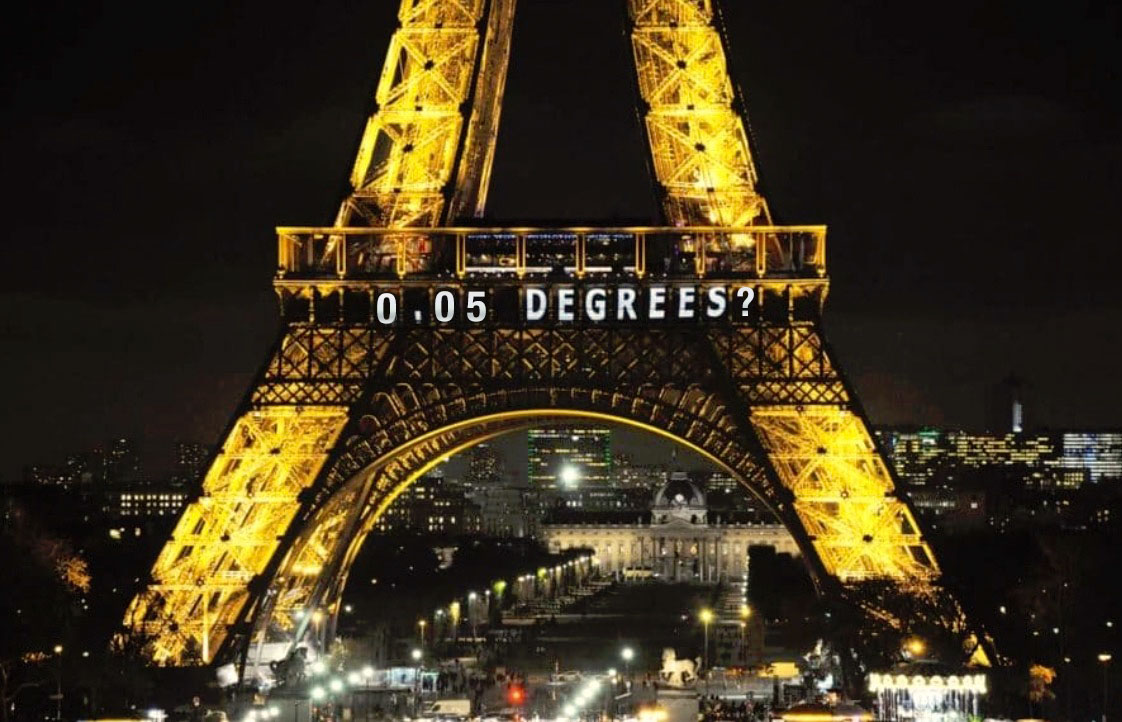
paris eiffel tower
Washington notified the United Nations on Tuesday to confirm it is delivering on a key campaign pledge of President Donald Trump and withdrawing from the Paris Climate Agreement to put U.S. energy and job growth first. [emphasis, links added]

On his first day back in the White House, Trump announced America would leave the accord, which is managed by the U.N. climate change body.

“In recent years, the United States has purported to join international agreements and initiatives that do not reflect our country’s values or our contributions to the pursuit of economic and environmental objectives,” Trump’s executive order reads.

“Moreover, these agreements steer American taxpayer dollars to countries that do not require, or merit, financial assistance in the interests of the American people.”

Now that moment has moved a step closer, AFP reports.

“I can confirm to you that the United States has notified the secretary-general, in his capacity as a depository, of its withdrawal on January 27 of this year from the Paris agreement,” said Stephane Dujarric, spokesman for U.N. chief Antonio Guterres.

“According to Article 28, paragraph two, of the Paris Agreement, the withdrawal of the United States will take effect on January 27, 2026.

Trump previously withdrew the United States from the Paris Accord during his first term, as Breitbart News reported.

See also :  Time To Purge The Climate Scam From Federal Websites

Inconvenient Climate Study Censored

by P. Homewood, Jan 14, 2025 in NotaLotofPeopleKnowThat


Another important paper taking issue with the ‘settled’ climate narrative has been cancelled following a report in the Daily Sceptic and subsequent reposts that went viral across social media. The paper discussed the atmospheric ‘saturation’ of greenhouse gases such as carbon dioxide and argued that higher levels will not cause temperatures to rise. The work was led by the widely-published Polish scientist Dr. Jan Kubicki and appeared on Elsevier’s ScienceDirect website in December 2023. The paper has been widely discussed on social media since April 2024 when the Daily Sceptic reported on the findings. Interest is growing in the saturation hypothesis not least because it provides a coherent explanation for why life and the biosphere grew and often thrived for 600 million years despite much higher atmospheric levels of greenhouse gases. Alas for control freaks, it also destroys the science backing for the Net Zero fantasy.

Read the full story here.

3 More New Drought And Temperature Reconstructions Do Not Support The Climate Alarm Narrative

by K. Richard, Jan 13, 2025 in NoTricksZone


Studies from Central China, Russia, and Central Europe indicate there was just as much (0r more) warming and drought prior to 1900, or when CO2 concentrations were under 300 ppm.

A new 1606 to 2016 Central China winter (minimum) temperature reconstruction (Jiang et al., 2024) reveals cold periods only occurred in 9 years of the 1600s (1663-1672), but there were 71 years of cold periods during the 20th century (1900-1942, 1959-1979, 1985-1994).

Notably, CO2 hovered around 278 ppm during the 1600s and 1700s, but it rose from 290 ppm to 370 ppm during the 1900s.

From 1650-1750 the winter temperatures in Central China were 0.44°C warmer than they were during the 20th century. The authors were surprised by this temperature result, as 1650-1750 falls within the timing of the Little Ice Age.

“Surprisingly, during 1650–1750, the lowest winter temperature within the research area was about 0.44 °C higher than that in the 20th century, which differs significantly from the concept of the ‘cooler’ Little Ice Age during this period. This result is validated by the temperature results reconstructed from other tree-ring data from nearby areas, confirming the credibility of the reconstruction.”

Finally, it should be noted that the year 1719 was 1.4°C warmer (-3.17°C) than the 1961-2016 average (-4.57°C).

A new 1803-2020 Central Europe precipitation reconstruction (Nagavciuc et al., 2025) determines droughts were more prolonged and pronounced during the 1800s than in the 1900s, as the 1900s were relatively wet. Only one recent period (2007-2020) endured extreme drought, but it did not exceed the severity of the 1818–1835, 1845–1854, 1882–1890 drought years.


Met Office Try To Shut Down Debate On Junk Temperature Measurements

by P. Homewood, Jan 7, 2025 in NotaLotofPeopleKnowThat


hris Morrison has the latest on how the Met Office, in league with the green blob, are trying to shut down debate on the junk weather station scandal:

image

After a year of damaging revelations about the state of the Met Office’s temperature measuring network, the Green Blob-funded ‘fact-checker’ Science Feedback has sprung to the defence of the state-funded U.K. weather service. It has published a long ‘fact check’ seeking to exonerate practices that have recently come to light including the locating of stations with huge heat corrupted ‘uncertainties’ and the publication of invented data from 103 non-existent sites. Inept is a word that springs to mind. At one point, Science Feedback justifies the estimation of data at the non-existent stations by referring to the hastily changed Met Office explanation for station/location long-term averages. The original and now deleted Met Office webpage referenced station names and provided single location coordinates including one improbable siting next to the sea on Dover beach. This would appear to be a new low in the world of so-called fact-checking – designating copy as ‘misleading’ based on an explanation changed after the article was published.

Full story here.

England & Wales Rainfall Trends

by P. Homewood, Jan 8, 2025 in NotaLotofPeopleKnowThat


image

https://www.metoffice.gov.uk/hadobs/hadukp/data/monthly/HadEWP_monthly_totals.txt

It does not need me to tell you that it was quite wet last year. It was in fact ninth wettest in England & Wales since 1766, though nowhere near the two wettest years in 1872 and 1768.

For the last decade or so, we have been going through the same sort of weather as in the 1870s and 80s, as well as the 1920s.

But averages and trends are not particularly meaningful – nature does not do averages and straight lines! You could have ten years all with the same rainfall, or you could have five years with high rainfall and five years of drought, and you could get the same average.

If you just look at the distribution of wet years, there is no obvious pattern:

Climate Bombshell: New Evidence Reveals 30 Year Global Drop in Hurricane Frequency and Power

by C. Morrison, Jan 4, 2025 in DailySceptic


Last month a small but powerful cyclone named Chido made landfall in Mayotte before sweeping into Mozambique, causing considerable damage and leading to the loss of around 100 lives. Days after the tragedy, the Green Blob-funded Carbon Brief noted that scientists have “long suggested” that climate change is making cyclones worse in the region, while Blob-funded World Weather Attribution (WWA) at Imperial College London made a near-instant and curiously precise estimate that a Chido-like cyclone was about 40% more likely to happen in 2024 than during the pre-industrial age. Not to be outdone, Green Blob-funded cheerleader the Guardian chipped in with the obligatory “cyclones are getting worse because of the climate emergency”. Almost unnoticed, it seems, among all the Net Zero dooming and grooming was a science paper published during December by Nature that found no increase in the destructive power of cyclones – the generic term for typhoons and hurricanes – in any ocean basin over the last 30 years. In the South Indian basin, the location of cyclone Chido, there was a dramatic decrease in both frequency and duration in recent times.

Reality rarely gets much of a look-in these days when fanatical Net Zero activism is afoot, but the paper, written by a group of Chinese meteorologists, makes its case by considering the facts and the data. The scientists apply a “power dissipation index” (PDI) which they consider superior to single measure indicators since it combines storm intensity, duration and frequency. The graphs below show the cumulative index for tropical cyclones across all ocean basins along with a global indication.

UK Temperatures In 2024

by P. Homewood, Jan 5, 2025 in NotaLotofPeopleKnowThat


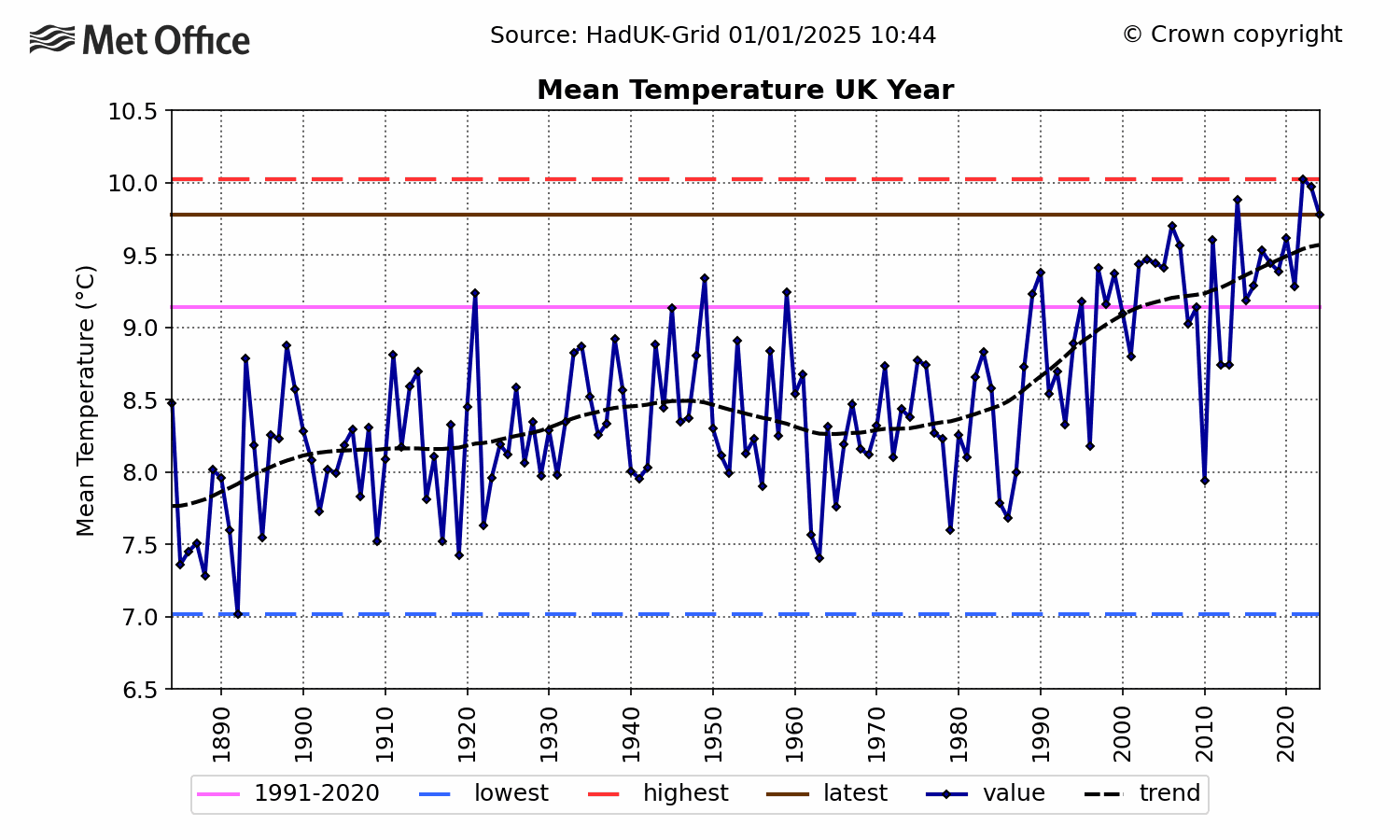
UK annual temperatures have dropped for the second year running, though the Met Office will emphasise what they claim is a remorseless upwards trend. However they don’t show error margins in their graphs, and as we know, nine out of ten of the weather stations used for their UK temperature dataset are junk or near junk sites, where poor siting can mean temperatures may be overstated by as much as five degrees for Class 5 and two degrees for Class 4:

Central Greenland Was Recently Ice-Free And Covered With Plants When CO2 Was Under 300 ppm

by K. Richard, Jan 3, 2025 in NoTricksZone


Today, with CO2 levels supposedly in the “dangerously high” range, Central Greenland has 3 kilometers of ice piled atop it.

Scientists have known since the GISP2 borehole was drilled in 1993 that Central Greenland deglaciated at least once in the late Pleistocene (Bierman et al., 2024). Indeed, the Summit of the modern Greenland ice sheet was actually ice-free at some point between 250,000 and 1.1 million years ago – which is relatively recent from a geological perspective.

Plants, wood, insects, fungi and other remnants suggestive of vegetation were recovered from the bottom of the boring site. This is quite a contrast to today’s 3000-meters-high ice sheet at this same location.

“The presence of poppy, spike-moss, fungal sclerotia, woody tissue, and insect parts in the GISP2 till shows that tundra vegetation once covered central Greenland, mandating that the island was largely ice-free.”

The atmospheric CO2 concentration is presumed to have ranged between 275 and 290 ppm during the Late Pleistocene, or during this same period when Greenland was ice-free. These sub-300 ppm CO2 levels are thought to be the same as they were from 1700 to 1900 (the Little Ice Age), when, as today, Central Greenland has remained buried in kilometers of ice.

The authors of this study use existing knowledge of Greenland’s climate (for example, Summit’s mean July temperature is -7°C) to calculate how much warmer Central Greenland was “when the ice was gone” during the last 1.1 million years. Controlling for lapse rate, Central Greenland’s average surface air temperatures were likely +3 to 7°C in July when it had no ice sheet.

The atmospheric CO2 concentration thus appears to be largely unrelated to either Greenland’s climate or its state of glaciation.

2025 Looks Bleak For Germany…Energy The Most Expensive In Europe …Growing Speech Tyranny

by P. Gosselin, Jan 1, 2025 in NoTricksZone


2025 in Germany will be a year more energy inflation and loss a free speech rights

Effective today, Germany’s CO2 surcharge will rise from 45 euros a tonne to 55 euros, which will further fan inflation and social discontent.

Already Germany’s electricity prices are among the highest in the world, and the most expensive in Europe:

Chart: strom-report.com/ 

Germany clamps down on dissenters, free speech

But 2025 will not be an easy year for dissenters and critics of the government, as this is increasingly being criminalized in Germany thanks to recently passed laws and acts that aim to suppress free speech.

The former head Germany’s Constitution Protection Authority (Bundesverfassungsschutz), Thomas Haldenwang (CDU Party), suggested last February when presenting measures to fight right-wing extremism, that human thoughts and speech patterns need to be under surveillance and become the business of the government: “It’s also about shifting verbal and mental boundaries. We have to be careful that thought and language patterns don’t become embedded in our language.”

Wind And Solar: The Hidden Truth Behind Those Rising Electric Bills

by Bjorn Borg, Jan 2, 2025 in ClimateChangeDispatch


Green Electricity Really Does Cost A Bundle

As nations use more and more supposedly cheap solar and wind power, a strange thing happens: Our power bills get more expensive. [emphasis, links added]

This exposes the environmentalist lie that renewables have already outmatched fossil fuels and that the “green transition” is irreversible even under a second Trump administration.

The claim that green energy is cheaper relies on bogus math that measures the cost of electricity only when the sun is shining and the wind is blowing.

Modern societies need around-the-clock power, requiring backup, often powered by fossil fuels. That means we’re paying for two power systems: renewables and backup.

Moreover, as fossil fuels are used less, those power sources need to earn their capital costs back in fewer hours, leading to even more expensive power.

This means the real energy costs of solar and wind are far higher than what green campaigners claim. One study shows that in China the real cost of solar power on average is twice as high as that of coal.

Similarly, a peer-reviewed study of Germany and Texas shows that solar and wind are many times more expensive than fossil fuels.

Germany, the U.K., Spain, and Denmark, all of which increasingly rely on solar and wind power, have some of the world’s most expensive electricity.

The International Energy Agency’s latest data (from 2022) on solar and wind power generation costs and consumption across nearly 70 countries shows a clear correlation between more solar and wind and higher average household and industry energy prices.

In a country with little or no solar and wind, the average electricity cost is about 12 cents a kilowatt-hour (in today’s money).

For every 10% increase in solar and wind share, the electricity cost increases by more than 5 cents a kilowatt-hour.

This isn’t an outlier; these results are substantially similar to 2019, before the effects of the pandemic and the war in Ukraine.

For every 10% increase in solar and wind share, the electricity cost increases by more than 5 cents a kilowatt-hour.

Trump Wants Greenland and the Panama Canal. It’s About Climate.

by L. Friedman, Dec 31, 2024 in TheNewYorkTimes


To imagine the kind of future a hotter, dryer climate may bring, and the geopolitical challenges it will create, look no farther than two parts of the world that Donald Trump wants America to control: Greenland and the Panama Canal.

The president-elect in recent days has insisted that both places are critical to United States national security. He’s called to reclaim control the Panama Canal from Panama and acquire Greenland from Denmark, both sovereign territories with their own governments.

They have something else in common as well: Both are significantly affected by climate change in ways that present looming challenges to global shipping and trade.

Because of warming temperatures, an estimated 11,000 square miles of Greenland’s ice sheets and glaciers have melted over the past three decades, an area roughly equivalent to the size of Massachusetts. That has huge implications for the entire world. If the ice melts completely, Greenland could cause sea levels to rise as much as 23 feet, according to NASA.

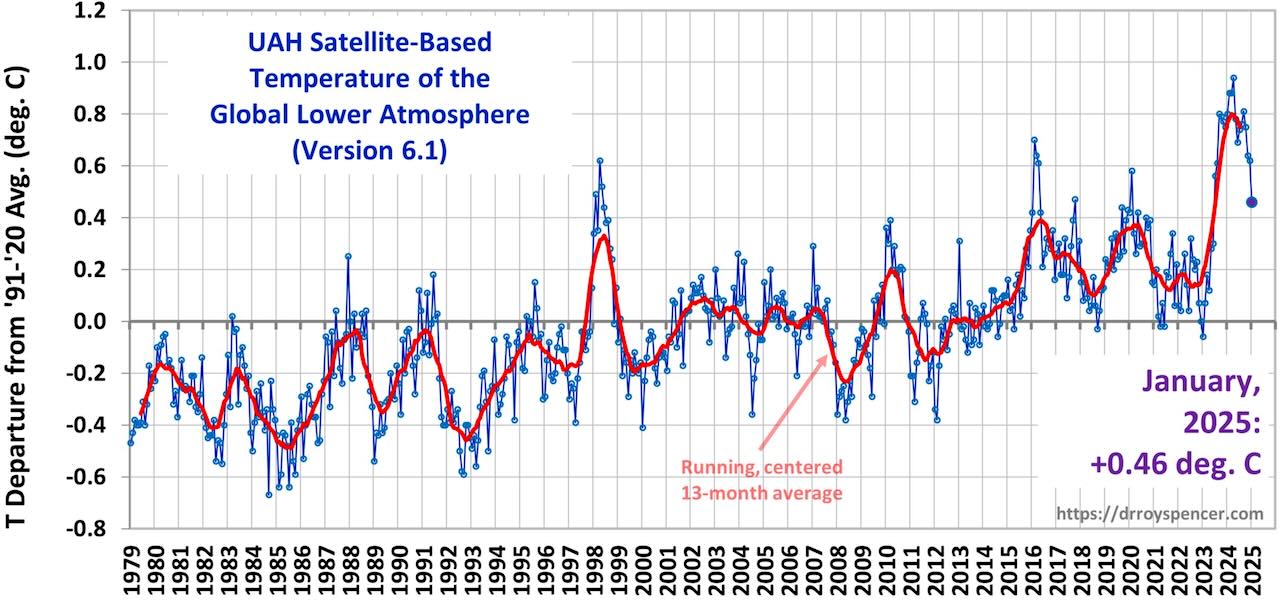
Recent Temperature Falls Likely to Put a Dampener on ‘Hottest Year Evah’ Stories

by C. Morrison, Dec 28, 2024 in TheDailySceptic


Stand by for another bout of ‘Hottest Year Evah’ stories as the mainstream media pursues its campaign to induce mass climate psychosis and prepare the ground for the oncoming Net Zero catastrophe. Alas, enjoy it only a little while longer since this story may have to be retired after putting in such a sterling propaganda shift. Global temperatures are falling like a stone, while the oceans are cooling at a remarkably rapid rate. In the U.K., the year is likely to show a second annual temperature fall since the alleged ‘record’ year in 2022.

Only last May, Matt McGrath and Justin Rowlatt at the BBC were claiming that “fuelled by climate change” the world’s oceans had broken temperature records every single day over the past year. Planet-warming gases were said to be “mostly to blame”. Three days were singled out when the previous highs were beaten by 0.34°C. Inexplicably, the story, a matter it might be thought of some ongoing concern, was not followed up. The graph below, compiled from data supplied by the U.S. weather service NOAA, might help explain why.

Habitat Destruction Offsets for “Renewables” are just Indulgences

by D. Wojick, Dec 28, 2024 in WUWT


A bad idea is emerging in the “renewables” world, namely that projects can buy their way out of destroying natural habitats. The wind and solar projects still destroy the natural habitats they are built on but they fund a magic wand that somehow supposedly creates new compensating habitat someplace else. Not really.

The fallacy here is that every acre in America already has a habitat. You can change an acre’s habitat from one form to another but not create one. It is a zero sum game.

There is a long standing, highly specialized development offset program that helps make the point. This is wetlands protection under section 404 of the Clean Water Act. Wetlands are deemed to be so special that filling one in for development can be offset by creating one someplace else.

But if you convert dry land to wetland you have destroyed the dry land habitat. So the amount of habitat destruction is not reduced, just the amount of wetland destruction.

The supposed renewables habitat destruction offset does nothing like the 404 program. The renewables developer simply pays to have habitat created someplace else which is impossible. For reference these programs are often called Biodiversity Offsetting which sounds nice.

Such a program might create habitat somewhere that matches that destroyed by the renewables project but that requires destroying the present habitat of the offset site. For example creating a woodland by destroying a grassland. Or vice versa, bulldozing a forest to create a grassland. This might even mean destroying farmland.

Clearly this is nonsense. It is a form of indulgences, which means paying for sin, in this case the sin of habitat destruction. Because solar and wind certainly destroy the habitat they are developed on.

Merry Christmas! And Though We’ve Seen Some Brutal Years, Things Are Really Looking Up For 2025

by  P. Gosselin, Dec 24, 2024 in WUWT


There’s no question that Germans and Europeans are much worse off than they’ve been in a very long time.

This has been due to incompetent, ideological leadership shadowy and global puppeteers. Fortunately their days may soon be numbered, as 2025 offers many rays of hope. 

I’ve actually found myself longing for the days when climate change was one of the biggest issues we supposedly were facing – before Corona.

Since then, things has deteriorated markedly in Germany, causing concerns about climate to fade. Now nobody even cares about it. Germans and Europeans have long since been redirected to real, undeniable threats:

  • economic woes
  • falling living standards
  • inflation
  • energy supply bottlenecks
  • deindustrialization
  • loss of democracy
  • growing restrictions
  • curtailment of freedom of expression
  • heightening war in Ukraine
  • uncontrolled immigration
  • skyrocketing crime rates
  • elevated terror threat
  • state-propaganda media

The Fairy Tale Of The CO2 Paradise Before 1850…A Look At The Real Science

by P. Gosselin, Dec 15, 2024 in NoTricksZone


Was the Earth’s biosphere really in a largely stable CO2 balance before 1850? (Almost) all politicians, scientists from all climate disciplines, the media and international big business are telling us in unison that we are destroying the global climate and that the world is on the brink of extinction. By burning fossil fuels such as coal, oil and natural gas, we are supposedly emitting too much CO2. This gas is blamed to act as a “greenhouse gas” that traps heat in the atmosphere. We supposedly face the threat of runaway global warming if we do not completely stop burning fossil fuels within the next 25 years.

The IPCC’s CO2 hypothesis is scientifically untenable

The entire climate catastrophe construct of the IPCC and its representatives stands and falls with the assertion that the “greenhouse gas” CO2 accumulates in the atmosphere for a long time and thus endangers the earth’s thermal balance. This is why those responsible are trying to conceal the fact that considerable quantities of CO2 are permanently stored away as lime in the ocean through natural processes – for many millions of years. They are particularly embarrassed by the fact that these mechanisms have been taking place in the ocean for eons and that large quantities of CO2 are stored in rocks. There must therefore also be correspondingly large sources of CO2 replenishment in nature. This means that the IPCC’s entire CO2 cycle model collapses. This is probably the reason why oceanic calcification is not correctly represented in official and authoritative documents such as the IPCC report on “The Physical Science Base” or the Global Carbon Project. Also, Henry’s Law is not even mentioned in either of the publications cited here. This blatant suppression of essential scientifically proven facts is the Achilles heel of the entire green climate catastrophe ideology. In commercial terms, one could also speak of balance fraud. Anyone who has doubts about the IPCC’s point of view should ask for these facts to be thoroughly questioned.

Sources:

Ocean Temperatures and Climate Hysteria: A Lesson in Perspective

by C. Rotter, Dec 20, 2024 in WUWT


For the past two years, headlines, policy statements, and social media feeds have been flooded with dire warnings about rising ocean temperatures. Every uptick in the graphs was treated as irrefutable proof of humanity’s march toward ecological collapse. The news cycle offered little room for nuance, and as usual, the loudest voices declared the end was nigh. But a recent tweet from Javier Viños, supported by a graph of global sea surface temperatures (SST), reminds us how quickly climate “emergencies” dissolve when confronted with even the faintest hint of natural variability.

Study Debunks Media’s Iceberg Alarmism: Antarctic Calving ‘Statistically Unexceptional’

by A. Watt,  Dec 20, 2024 in ClimateChangeDispatch


The climate chicken littles of the media blamed it on climate change then, but today, it looks like an Emily Litella moment has just occurred, as a new peer-reviewed scientific study says it wasn’t anything abnormal, nor should we worry about it.

The new study published in Geophysical Research Letters tosses ice-cold water on those overhyped media claims.

In the study, MacKie et al. (2024) analyzed 47 years of observational satellite data from Antarcticaand found that there has been no trend in annual Antarctic maximum calving size between 1976 and 2023.

The key findings of the study are:

  • There has been no detectable upward trend in the annual maximum iceberg area in Antarctica since 1973, based on satellite measurements.
  • The break-off of Iceberg A-68 from the Larsen C Ice Shelf was not statistically notable.
  • Calving events several times larger than anything observed in the modern record could occur, and still, it would not necessarily be due to climate change.

To be clear, the calving of the A-68 iceberg was “statistically unexceptional” in the historical satellite record. Let that sink in. The authors write:

This finding suggests that extreme calving events such as the recent 2017 Larsen C iceberg, A-68, are statistically unexceptional and that extreme calving events are not necessarily a consequence of climate change.

Rising Seas? No, 3 Dozen S. Florida High-Rises Sinking From Land Subsidence

by Geology, New Science, Dec 18, 2024 in ClimatChangeDispatch


miami beach high rises

Top photo by Ryan Parker on Unsplash

Almost three dozen high-rise condos and luxury hotels along the beach in South Florida are sinking or settling in unexpected ways, in some cases because of nearby construction, according to a new study. [emphasis, links added]

The 35 buildings surveyed along an almost 12-mile (19-kilometer) stretch from Miami Beach to Sunny Isles Beach have sunk or settled by 0.8 to 3.1 inches (2 to 8 cm).

About half of the buildings are less than a decade old, according to scientists at the University of Miami Rosenstiel School of Marine, Atmospheric, and Earth Science.

The study was published on Friday.

“The discovery of the extent of subsidence hotspots along the South Florida coastline was unexpected,” Farzaneh Aziz Zanjani, the lead author, said in a statement. “The study underscores the need for ongoing monitoring and a deeper understanding of the long-term implications for these structures.”

It’s not uncommon for buildings to sink a little during and soon after construction, but the scientists called their discovery surprising because some of the changes took place several years later.

Limestone under the South Florida beach is interspersed with layers of sand, which can shift under the weight of high-rises and as a result of vibrations from foundation construction.Tidal flows also play a role.

The study used satellite images to capture the changes, with settling most noticeable in buildings in Sunny Isles Beach.

The scientists said preliminary data also suggests sinking or settling further north, along the beaches of Broward and Palm Beach counties.

The stretch of South Florida communities surveyed included Surfside, where the Champlain Towers South building collapsed in June 2021, killing 98 people.

However, that collapse is thought to have been caused by reinforced concrete that deteriorated due to poor maintenance and flawed design.

IEA Report: Global Coal Demand To Hit Record High In 2024, Defying Predictions Of Decline

by  R. Bryce , Dec 18, 2024 in ClimateChangeDispatch


The International Energy Agency has been consistent — and consistently wrong — about global coal demand. [emphasis, links added]

In 2015, the Paris-based agency declared, “The golden age of coal in China seems to be over.” That year, it predicted global coal demand would fall to 5.5 billion tons by 2020.

In its 2017 World Energy Outlook, the IEA said, “China remains a towering presence in coal markets, but our projections suggest that coal use peaked in 2013 and is set to decline by almost 15% over the period to 2040.”

In 2020, the agency said, “Looking ahead to 2025, coal demand is expected to flatten.” It continued,

“Unless there are unforeseen developments that significantly boost coal demand in emerging Asian economies and China, it is likely that global coal demand peaked in 2013 at just over 8B tons.”

Wrong. Wrong. And wrong again.

Today, the IEA released its Coal 2024 report, which says global coal use will grow by another 1% this year to an all-time high of 8.77 billion tons.

The agency also reports that:

“coal demand, production, coal-fired generation, and international coal trade will surpass records reached in 2023 to set new all-time records.”

And here’s the key line:

“The power sector has been the main driver of coal demand growth, with electricity generation from coal set to reach an all-time high of 10,700 terawatt-hours (TWh) in 2024.”

Why does this matter? Electricity is the form of energy we crave more than any other. Electricity drives modernity and economic growth.

Primary trade flows in the thermal coal market in 2022 and 2023. Note that most of the arrows point to China and India. Source IEA Coal 2024.