Archives de catégorie : better to know…?

Rising Maximum Temperatures

by K. Hansen, Jan5, 2024 in WUWT


Roger Pielke Jr. recently posted a piece at The Honest Broker titled:  “U.S. Climate Extremes: 2023 Year in Review   – A Very Normal Year” – which was subsequently reposted at WUWT.

In that post, he uses this graphic:

(I have increased the size of the titles for clarity – kh)

It is easy to see that the trends of both the Maximum January temperatures and the Maximum July temperatures have been rising — more so for January temperatures than July — though this is somewhat obscured by the different scales of the two graphs.   [Caveat:  The temperature record on which this graph is based is not scientifically reliable before about 1940.] Also, one has to be careful to note what exactly they are really measuring.

CET Daily Temperatures

by P. Homewood, Jan 4, 2023 in NotaLotofPeople KnowThat


https://www.metoffice.gov.uk/hadobs/hadcet/cet_info_max2023.html

I want to focus on the end of year CET graph, which gives the lie to the extreme temperature myth often bandied around.

The graph plots daily max CET temperatures, against the background of the percentiles of the 1961-90 climatology. The Met Office should of course be using 1991-2020 as the baseline, so the climatology should be shifted upwards by a half a degree or so. But we’ll leave that aside.

We can legitimately regard anything between the 5% and 95% bands as being “weather”. Only days outside this might be regarded as “extreme”. (I would actually argue anything outside 1% and 99%).

We see that apart from a handful of days, every day was within that “normal weather” band.

In a year there will be 36 days outside of that band on average. The Met Office do not supply the data for these percentiles to enable the number of days to be calculated, but this year it does not look to be excessive in terms of that average.

Moreover, although there were a few days in September which set record highs for that particularly day, none were records for the month as a whole. The highest temperature last September was 28.9C, but the record for September stands at 31.5C in 1906:


Of course most of the year had temperatures above the average. But we have a wide range of weather in Britain. We can have mild, wet winters, and cold, snowy ones; we can have cool, wet summers and sunny hot ones. But these are weather events, not climate, and they are dependent on weather patterns, the jet stream and so on.

A predominance of warmer weather is not climate change.

No Trends In Extratropical Cyclones – IPCC

by  P. Homewood, Jan 2, 2024 in NotaLotofPeopleKnowThat


image

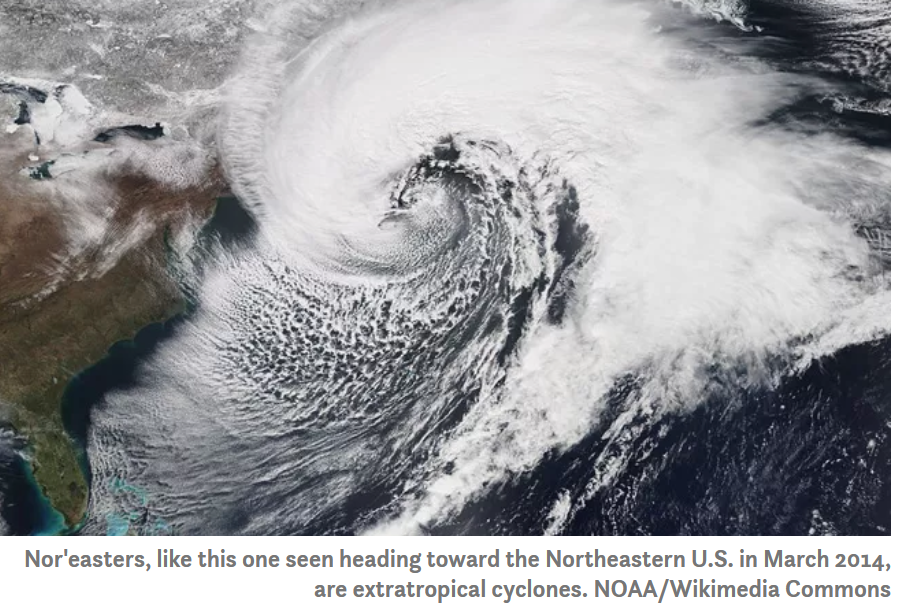
We constantly hear that storms are getting worse because of global warming. These claims are not referring to hurricanes and tropical storms, but the sort of storm which hits the UK several times every winter.

These are known as Extratropical Storms. The clown Jim Dale made this very claim again this week after Strom Gerrit. According to him, it is all to do with warm oceans, which pep up these storms. If this was correct, there would never be any storms in the Arctic. But claims such as this show a basic misunderstanding of meteorology; astonishing for somebody who claims to be a meteorologist!

NOAA explain the difference between tropical and extratropical cyclones (ETCs):

Climate Science Double-Speak

by K. Hansen, 2017 in WUWT


A quick note for the amusement of the bored but curious.

While in search of something else, I ran across this enlightening page from the folks at UCAR/NCAR [The University Corporation for Atmospheric Research/The National Center for Atmospheric Research — see pdf here for more information]:

What is the average global temperature now?

We are first reminded that “Climate scientists prefer to combine short-term weather records into long-term periods (typically 30 years) when they analyze climate, including global averages.”  As we know,  these 30-year periods are referred to as “base periods” and different climate groups producing data sets and graphics of Global Average Temperatures often use differing base periods, something that has to be carefully watched for when comparing results between groups.

Then things get more interesting, in that we get an actual number for Global Average Surface Temperature:

“Today’s global temperature is typically measured by how it compares to one of these past long-term periods. For example, the average annual temperature for the globe between 1951 and 1980 was around 57.2 degrees Fahrenheit (14 degrees Celsius). In 2015, the hottest year on record, the temperature was about 1.8 degrees F (1 degree C) warmer than the 1951–1980 base period.

Quick minds see immediately that 1.8°F warmer than 57.2°F is actually 59°F [or 15° C]  which they simply could have said.

UCAR/NCAR goes on to “clarify”:

“Since there is no universally accepted definition for Earth’s average temperature, several different groups around the world use slightly different methods for tracking the global average over time, including:

NASA Goddard Institute for Space Studies

    NOAA National Climatic Data Center

    UK Met Office Hadley Centre”

We are told, in plain language, that there is no accepted definition for Earth’s average temperature, but assured that it is scientifically tracked by the several groups listed.

2 More New Studies Undermine Alarmist Claims That Corals Are Harmed By Warming

by K. Richard, Dec 21, 2023 in NotricksZone


Warmer sea surface temperatures are associated with coral growth, not decline.

According to a new study, coral growth was slow during the ~1°C colder Little Ice Age (LIA), but grew rapidly as sea surface temperatures (SSTs) warmed after 1850. Warmth is associated with coral growth, whereas colder SSTs are linked to growth rate decline.

“The average growth rate of four colonies living in the LIA is 0.87 ± 0.11 cm/yr, which is significantly (t-test, p < 0.0001) lower than the colonies in the 20th century [1.23 ± 0.22 cm/yr].”

“The observed low average growth rates during the LIA can be explained by the ~1°C lower temperature.”

Ocean pH levels were as low or lower (more “acidified”) than recent decades during the LIA (e.g., 1500s to 1700s CE), suggesting that the atmospheric CO2 levels are not an ocean pH variability determinant. In fact, the authors point out that anthropogenic CO2 can only ever affect pH variability by 0.05 of a unit over centuries, whereas natural variations in pH units can reach 0.1 to 0.3 within a decade or less.

Antarctic Sea Ice Volume Greater Than The Early 1980s

by P. Homewood, Dec 21, 2023 in NotaLotof PeopleKnowThat


There was much scaremongering from the alarmist community when Antarctic sea ice extent fell earlier in the year. As the Antarctic summer begins, the melt has slowed down, to the extent that extent is not even the lowest since 1979, and it is higher than in 2017:


https://zacklabe.files.wordpress.com/2023/12/nsidc_sie_ant_lines-5.png

https://zacklabe.com/antarctic-sea-ice-extentconcentration/

But much more important is the fact that sea ice volume remains higher than the early 1980s, thanks to the fact that it is much thicker than normal around the peninsula:

More coal burned on Earth in 2023 than ever before in human history

by Jo Nova, Dec19, 2023 in JoNova


The best kept secret in the world is that humans are using more coal than ever

So much for the “stranded dead asset”. In 2022 the world set a new all-time record for coal use — reaching 8.4 billion tons. In 2023, despite all the Net Zero billions in spending, despite the boom in windmills and solar panels, global demand for coal will top 8.54 billion tons.

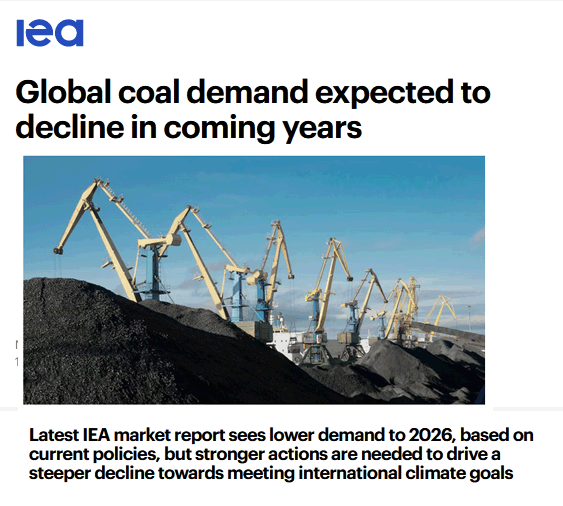
The IEA is the “International Energy Agency” — supposedly, the impartial servant of 31 nations worth of taxpayers. Yet they decided to ignore the world record and instead tell us how coal is set to decline. It’s what they think the taxpayers need to hear.  Their press release:

Global coal demand expected to decline in coming years

New Study Now Claims We Humans Heat The Atmosphere Just By Exhaling

by K. Richard, Dec 18, 2023 in NoTricksZone


“Where hydrocarbon chains (food types) are consumed by humans and turned into CH4 [methane] … global warming potential is no longer neutral, and human respiration has a net warming effect on the atmosphere.”  – Prada et al., 2023

Image Source pexels.com (stock photo)

According to a new study, humans “contribute to global warming” by exhaling greenhouse gases like methane and carbon dioxide 16 times per minute.

“Exhaled human breath can contain small, elevated concentrations of methane (CH4) and nitrous oxide (N2O), both of which contribute to global warming. These emissions from humans are not well understood and are rarely quantified in global greenhouse gas inventories.”

Like bovine populations, humans are referred to as “methane producers” (MPs), respiring and burping this potent greenhouse gas simply by existing. (Concerns about methane’s global warming potential are so significant that New Zealand is imposing a “methane tax” on the nation’s cows, as these MP animals are heating up the planet with their burps.)

Measurements of methane and nitrous oxide in human breath and the development of UK scale emissions

by C. Rotter, Dec 16, 2023 in WUWT/PlosOne


In a recent study published in PLOS ONE, titled “Measurements of methane and nitrous oxide in human breath and the development of UK scale emissions,” researchers have embarked on a quest that epitomizes the absurdity of current climate change discourse. This study, focusing on the emissions of methane (CH4) and nitrous oxide (N2O) from human breath, is not only a glaring example of scientific overreach but also a worrying indicator of the lengths to which climate alarmism is willing to go.

The study’s objective to investigate emissions from human breath in the UK population is fundamentally flawed. It operates under the assumption that these emissions are significant enough to warrant detailed analysis and inclusion in national greenhouse gas inventories. This premise is laughable at best, considering the minuscule percentage these emissions contribute to the overall greenhouse gas emissions.

The methodology employed in the study is questionable. Collecting 328 breath samples from 104 volunteers hardly constitutes a representative sample of the UK population. Furthermore, the study’s reliance on such a small sample size to draw conclusions about national-scale emissions is a classic case of over-extrapolation.

The study’s findings that 31% of participants were methane producers and that all participants emitted nitrous oxide are presented without adequate context. These results are portrayed as significant, yet they fail to consider the broader environmental impact. The fact that these emissions are stated contribute a mere 0.05% and 0.1% to the UK’s total emissions of CH4 and N2O, respectively, well below any margin of error in “national inventories” renders these findings insignificant.

Claim: Global Warming is Reducing Maximum Temperatures in the Himalayas

by E. Worrall, Dec 15, 2023 in WUWT


Nature Geoscience volume 16, pages 1120–1127 (2023)Cite this article

Abstract

Understanding the response of Himalayan glaciers to global warming is vital because of their role as a water source for the Asian subcontinent. However, great uncertainties still exist on the climate drivers of past and present glacier changes across scales. Here, we analyse continuous hourly climate station data from a glacierized elevation (Pyramid station, Mount Everest) since 1994 together with other ground observations and climate reanalysis. We show that a decrease in maximum air temperature and precipitation occurred during the last three decades at Pyramid in response to global warming. Reanalysis data suggest a broader occurrence of this effect in the glacierized areas of the Himalaya. We hypothesize that the counterintuitive cooling is caused by enhanced sensible heat exchange and the associated increase in glacier katabatic wind, which draws cool air downward from higher elevations. The stronger katabatic winds have also lowered the elevation of local wind convergence, thereby diminishing precipitation in glacial areas and negatively affecting glacier mass balance. This local cooling may have partially preserved glaciers from melting and could help protect the periglacial environment.

Read more: https://www.nature.com/articles/s41561-023-01331-y

The maximum temperature trend may be cooling at -0.26C per decade at some stations, according to the study.

Evolution of the world fuel intensities

by S. Furfari, Dec 15, 2023 in ScienceClimatEnergie


A benchmark that explains why green NGOs want to promote energy sobriety

The fashion for saving energy, which assumes that human behaviour can compensate for the inelasticity of energy demand, is not new. Only the name is. In 1924, when US President Calvin Coolidge proposed saving oil because he had been told that reserves would soon be exhausted, he devised a strategy called energy conservation. Though compassionate and generous, these methods failed to reverse the continuing growth in energy demand. Energy consumption, and oil consumption in particular, continues to rise as the world’s population grows and more people need to eat and work, i.e. consume energy. It is the task of industry and engineers to make processes and products more efficient. It has always been an ongoing quest. The Romans used massive stones to build their bridges, creating amazing monuments. Today, a similar function is performed with much lighter materials. Efficiency is normal behaviour in human activities, including the production, conversion and consumption of energy.

Global CO2 emissions rise through 2050 in most IEO2023 cases

by EIA_ Today in Energy, Nov 30, 2023


We project that global energy-related CO2 emissions from consumption of coal, liquid fuels, and natural gas will increase over the next 30 years across most of the cases we analyzed in our International Energy Outlook 2023(IEO2023).

By 2050, energy-related CO2 emissions vary between a 2% decrease and a 34% increase compared with 2022 in all cases we modeled. Growing populations and incomes increase fossil fuel consumption and emissions, particularly in the industrial and electric power sectors. These trends offset emissions reductions from improved energy efficiency, lower carbon intensity of fuel mix, and growth in non-fossil fuel energy.

IEO2023 analyzes long-term world energy markets in 16 regions through 2050. We studied seven cases that explore differing assumptions of economic growth, crude oil prices, and technology costs. These cases consider only the international laws and regulations adopted through March 2023 and rely on the U.S. projections published in the Annual Energy Outlook 2023 (AEO2023), which assumed U.S. laws and regulations as of November 2022.

Coal
Across sectors, the highest growth in global coal consumption through 2050 occurs in the electric power sector. Although zero-carbon technologies account for the most growth in electricity capacity and generation, we expect coal-fired generators to continue to operate. Across all cases, China and India account for about two-thirds of the world’s coal consumption between 2022 and 2050. Although China is currently the largest coal consumer, we project its coal consumption to decline by 18% between 2022 and 2050. Coal consumption in India nearly doubles over the same projection period.

Liquid fuels
We project global consumption of liquid fuels—which include gasoline, diesel, and biofuels—will increase through 2050. Across all sectors, the largest share and the fastest growth in liquid fuels consumption is in industrial applications, such as chemical production. Increased liquid fuels consumption in the industrial sector is partially offset by declining liquid fuels consumption in the transportation sector as adoption of electric vehicles (EV) grows. Regionally, we project the United States, China, and Western Europe to remain the top liquid fuels consumers, even though fuel consumption in these regions either declines or plateaus by the mid-2030s due to government policies and growing EV adoption. India has the fastest projected growth in liquid fuels consumption, more than doubling across all cases.

Natural gas
We project natural gas consumption will increase in the electric power and industrial sectors through 2050. In the cases we modeled, the electric power sector continues to rely on existing natural gas-fired plants despite growth in zero-carbon electricity generation. In the industrial sector, increased production of basic chemicals in countries such as the United States propels an increase in natural gas consumption, both as fuel and petrochemical feedstock. Natural gas demand also grows in the Middle East because of the fuel’s role in producing and processing natural gas and oil for export. The United States is projected to remain the world’s top natural gas consumer throughout the projection horizon, but the Middle East shows significant growth during that timeframe and approaches U.S. consumption by 2050, ranging from a 29% to 54% growth rate from 2022 to 2050 in the IEO2023 cases.

Principal contributors: Kevin Nakolan, Michelle Bowman

Robust evidence for reversal of the trend in aerosol effective climate forcing

by J. Quass et al., 2022 in EurGeoscUnion


Abstract

Anthropogenic aerosols exert a cooling influence that offsets part of the greenhouse gas warming. Due to their short tropospheric lifetime of only several days, the aerosol forcing responds quickly to emissions. Here, we present and discuss the evolution of the aerosol forcing since 2000. There are multiple lines of evidence that allow us to robustly conclude that the anthropogenic aerosol effective radiative forcing (ERF) – both aerosol–radiation interactions (ERFari) and aerosol–cloud interactions (ERFaci) – has become less negative globally, i.e. the trend in aerosol effective radiative forcing changed sign from negative to positive. Bottom-up inventories show that anthropogenic primary aerosol and aerosol precursor emissions declined in most regions of the world; observations related to aerosol burden show declining trends, in particular of the fine-mode particles that make up most of the anthropogenic aerosols; satellite retrievals of cloud droplet numbers show trends in regions with aerosol declines that are consistent with these in sign, as do observations of top-of-atmosphere radiation. Climate model results, including a revised set that is constrained by observations of the ocean heat content evolution show a consistent sign and magnitude for a positive forcing relative to the year 2000 due to reduced aerosol effects. This reduction leads to an acceleration of the forcing of climate change, i.e. an increase in forcing by 0.1 to 0.3 W m−2, up to 12 % of the total climate forcing in 2019 compared to 1750 according to the Intergovernmental Panel on Climate Change (IPCC).

Recycling Eco-Myths Is the Existential Threat

by  P. Zane, Nov 17, 2023 in WUWT


The recycling myth – Save the planet by separating paper and plastic! – is a foundational falsity of the green movement.

By promising a relatively simple solution to an alleged problem, it has enabled the left to control behavior through a made-up morality that stigmatized dissent – Only bad people refuse to recycle.

Like most progressive interventions – from welfare policies that destroyed families while increasing dependency, to drug use reforms that have filled city streets with desperate addicts – recycling plans that sound good on paper (and plastic) have continuously collided with reality so that even liberal outlets such as the New York Times (“Your Recycling Gets Recycled, Right? Maybe, or Maybe Not”), NPR(“Recycling plastic is practically impossible — and the problem is getting worse”) and the Atlantic magazine (“Plastic Recycling Doesn’t Work and Will Never Work”) have finally admitted its failures.

The same dynamic is now at work regrading a far more significant green fantasy: the left’s push to decarbonize the U.S. and other Western industrial economies during the next few decades and attain an eco-purity calculus known as Net Zero. While brandishing the moral cudgel with full force – President Biden describes climate change as “an existential crisis,” i.e., every person and puppy will die if we don’t submit to his agenda – the left also suggests the transition will be easy-peasy: Just build some windmills, install some solar panels, and swap out your car, stove, and lightbulbs for cleaner and cheaper alternatives.

Though much of the cheerleading media downplays this fact, it is already clear that Biden’s enormously expensive, massively disruptive goal is a pipe dream. In a recent series of articles, my colleagues at RealClearInvestigations have reported on several of the seemingly intractable problems that the administration and its eco-allies are trying to wish away.

The dishonesty begins with the engine of the green economy – the vast array of wind and solar farms that must be constructed to replace the coal and gas facilities that power our economy. James Varney reported for RCI that the Department of Energy’s official line is that the installations required to meet Biden’s goal of “100% clean electricity” by 2035 will require “less than one-half of one percent of the contiguous U.S. land area” – or roughly 15,000 of the lower 48’s roughly 3 million square miles. However, Varney noted, “the government report that furnished those estimates also notes that the wind farm footprint alone could require an expanse nine times as large: 134,000 square miles. That is equivalent to the land mass of Ohio, Indiana, and Kentucky combined – plus all of New England.

While Media Obsess About Some Warmth, Globe Seeing Plenty Of Unusual Cold Events

by P. Gosselin, Nov 17, 2023 in WUWT


Surface temperatures measured where people live show there’s as much cold as there ‘s warmth, see temperature.global.com.

Christian Freuer’s Cold Report (EIKE)

and Electroverse.com

Snowpack extent in US reaches record levels!

America’s first Arctic air blast of the season broke hundreds of low temperature records and led to the largest snowpack extent there in early November in NOAA records.

A high snowpack blanketed the Rocky Mountains, northern Plains, Great Lakes and northern New England, resulting in 17.9% of the Lower 48 under a blanket of snow as the calendar turned to November – a new record in the books dating back to 2003.

Many places recorded their snowiest Halloweens ever.

At 22 inches, Muskegon, MI, not only recorded the snowiest Halloween ever, but also the snowiest October day and month. Glasgow, MT, recorded the snowiest start to the season with 36 inches.

The cold broke hundreds of low temperature records across the country, from Texas to Maine, dropping the average temperature in the Lower 48 to -0.5°C – more than 5 degrees Celsius below normal.

Historic November cold grips Argentina, Australia

A late cold spell has hit large parts of South America, especially Argentina. The country recorded the lowest November temperatures since records began.

A number of records for highs and lows have fallen. New lows include the 0.1°C at Córdoba Airport, which broke the record of 2°C set on November 4, 1992, the 1.6°C in Chamical, which broke the record of 4.5°C set on November 9, 2010, and the 2.8°C in Mendova, which beat the 3.2°C set in 1992.

New lows include Gualeguaychú’s 13.8°C, which broke the old record set in 1992, and Paraná’s 13.5°C, which beat the record set in 1936.

The cold was severe, up to 24 degrees Celsius below normal, and it was also widespread, affecting most of Argentina:

The Climatic Odyssey of Homo sapiens

by A. Préat, Nov 3, 2023 in ScienceClimatEnergie


At a time of climate change (or disruption for some), it’s high time to read Olivier Postel- Vinay’s excellent French book, ‘Sapiens and the climate, a turbulent history’ (original in French: Sapiens et le climat, une histoire bien chahutée (2022)which looks at the climate changes our species has undergone since Homo became sapiens, i.e. over the past 233,000 years. What does this book tell us?

It shows us that our species has been confronted throughout its history and evolution with brutal climatic changes of durations and intensities that have no comparison with those of our own time.

This unusually meticulous essay is supported by well-documented historical accounts and facts, supplemented wherever possible by scientific data drawn mainly from archaeology, biology, chemistry, physics, geography, and geology. This perspective paints a detailed picture of the climatic changes faced by the first humans (hunter-gatherers), then by the first civilizations and finally by our modern societies.

See the .pdf The Climatic Odyssey of Homo sapiens

Shellenberger: Why Everything They’ve Said About The Environment Is Wrong

by M. Schellenberger, Nov 1, 2023 in ClimateChangeDispatch


By now, almost everyone knows the conventional wisdom: climate change is an existential threat to human civilization.

Fires, floods, and hurricanes are worsening; the coral on the Great Barrier Reef is dying; we’re in a Sixth Mass Extinction; the only way to turn things around is with inexpensive renewables, and no longer eating meat; and we don’t need nuclear energy, which is too dangerous. [emphasis, links added]

It’s a powerful story, one that has motivated millions of people to march in the streets and governments to spend $1 trillion annually on green energy.

There’s only one problem with it: practically everything you’ve heard about climate change is wrong.Here’s a set of facts you won’t read in The New York Times:

Mark Lynas ‘99% Consensus’ on Climate Change – Busted in Peer Review.

by  A. Watts, Nov 1, 2023 in WUWT


My name is Yonatan Dubi, I am a professor of chemistry and physics at Ben Gurion University, Israel. I am also one of Israel’s leading advocates for rational environmentalism and climate realism. Together with a few colleagues we have conducted a very nice research, detailing and quantifying the flaws in the famous consensus study by Lynas et al, which (falsely) claimed the ridiculous 99% consensus. After a year long journey, our paper was finally published in the peer reviewed journal Climate, the link is https://www.mdpi.com/2225-1154/11/11/215.

Scientific Method Restored to Science Education in North Carolina

by G. Wrightstone, Oct 27, 2023 in CO2Coalition


As a physicist, John Droz holds in high regard the Scientific Method, a 400-year-old approach to investigating reality.

Rooted in Isaac Newton’s work, which included creation of the calculus, the Scientific Method has long underpinned examination of the physical world and technological advancement.

Image: CK-12 Foundation, via Wikimedia Commons // CC BY-SA 3.0


Do Human Greenhouse Gas Emissions Cause Significant Climate Change?

by F. Menton, Oct 25, 2023 in ClimateChangeDispatch


It’s by far the most important scientific question of our age: Do human emissions of CO2 and other such “greenhouse gases” cause significant global warming, aka “climate change”?

Based on the belief that an affirmative answer to that question is a universally accepted truth, our government has embarked on a multi-trillion dollar campaign to transform our economy by, among other things, eliminating hydrocarbon fuels from electricity generation (without any demonstrated workable plan for the replacement), outlawing the kinds of vehicles we currently drive, suppressing fossil fuel extraction, banning pipeline construction, making all your appliances work less well, and much more. [emphasis, links added]

Express any doubt about the causal connection between human activities and climate change, and you could very well get labeled as a “climate denier,” fired from your academic job, demonetized by Google or Facebook, or even completely ostracized from polite society.

But is there actually any real proof of the proposition at issue? In fact, there is not.

I had two important posts on this subject back in 2021: one from January 2, titled: “Causation Of Climate Change, And The Scientific Method,” and the other from October 28, titled: “ ‘The Climate Is Changing And Human Activities Are The Cause’: How, Exactly, Do We Know That?”

See also: To what extent are temperature levels changing due to greenhouse gas emissions?

Do The Met Office Know What Extreme Weather Really Looks Like?

by P. Homewood, Oct 5, 2023 in NotaLotofPeopleKnowThat


I have a prediction!

At the end of the year, the Met Office’s State of the Climate report will declare 2023 as a “Year of Extremes”.

It will highlight September as a particularly extreme month, with a heatwave (which peaked at temperatures several degrees lower than in 1906 and 1911); a monthly temperature no higher than in September 2006; and Storm Agnes.

I doubt whether anybody with any experience would find anything extreme about the weather last month. On the contrary, they will all be able to recall genuinely extreme autumn weather in the past.

For example, let;s look back to the 1960s, courtesy of Weatherweb:

….

Climate Alarmists’ New Normal: Catastrophizing Every Weather Event

by Dr. M.  Wielicki, Oct 2, 2023 in ClimateChangeDispatch


Catastrophizing the weather…

“Catastrophizing” the weather refers to the exaggerated portrayal or emphasis on the severity, frequency, or implications of weather events beyond what scientific data and historical context might suggest.

In essence, it involves making a weather event seem more disastrous or exceptional than it truly is. [emphasis, links added]

Over time, consistent exaggeration can erode public trust in weather forecasts and warnings. If people believe that threats are frequently overblown, they may become complacent and fail to take necessary precautions during genuinely severe events.

If authorities act on exaggerated weather forecasts, it could lead to the unnecessary allocation of resources, diverting them from regions or times where they might be genuinely needed.

The constant exposure to exaggerated disaster threats can induce unnecessary fear and anxiety among the public, potentially affecting mental well-being.

If every weather event is portrayed as a catastrophe, it becomes challenging for the public to discern which events pose genuine threats. This can dilute the urgency of actual severe weather warnings.

In the context of climate change, while it’s important to communicate the real risks associated with a warming planet, it’s equally essential to avoid undue alarmism.

Balanced, accurate communication ensures that the public remains informed, however, that is not what we commonly see.

For example, the recent rains in NYC have been noted as evidence of significant climatic shifts.

Meet The Alarmists:

How ‘Preapproved Narratives’ Have Corrupted Science

by A. Finley, Oct 2, 2023 in ClimateChangeDispatch


Scientists were aghast last month when Patrick Brown, climate director at the Breakthrough Institute in Berkeley, Calif., acknowledged that he’d censored one of his studies to increase his odds of getting published.

Credit to him for being honest about something his peers also do but are loath to admit. [emphasis, links added]

In an essay for the Free Press, Mr. Brown explained that he omitted “key aspects other than climate change” from a paper on California wildfires because such details would “dilute the story that prestigious journals like Nature and its rival, Science, want to tell.

Editors of scientific journals, he wrote, “have made it abundantly clear, both by what they publish and what they reject, that they want climate papers that support certain preapproved narratives.

Nature’s editor, Magdalena Skipper, denied that the journal has “a preferred narrative.” No doubt the editors at the New York Times and ProPublica would say the same of their own pages.

Mr. Brown’s criticisms aren’t new. In 2005 Stanford epidemiologist John Ioannidis wrote an essay titled “Why Most Published Research Findings Are False.

He contended that scientists “may be prejudiced purely because of their belief in a scientific theory or commitment to their own findings.”

The greater the financial and other interests and prejudices in a scientific field, the less likely the research findings are to be true,” Dr. Ioannidis argued.

“Many otherwise seemingly independent, university-based studies may be conducted for no other reason than to give physicians and researchers qualifications for promotion or tenure.

In addition, many scientists use the peer-review process to suppress findings that challenge their own beliefs, which perpetuates “false dogma.”

As Dr. Ioannidis explained, the more scientists there are in a field, the more competition there is to get published and the more likely they are to produce “impressive ‘positive’ results” and “extreme research claims.” …snip…

The peer-review process is supposed to flag problems in studies that get submitted to journals. But as Dr. Ioannidis explained in a Sept. 22 JAMA editorial, the process is failing: