by Judith Curry, March 9, 2018 inClimateEtc.
This post is motivated by a twitter thread from Andrew Dessler that responds to a recent ruling in the Northern California versus the oil companies lawsuit (discussed previously here) (…)
by Judith Curry, March 9, 2018 inClimateEtc.
This post is motivated by a twitter thread from Andrew Dessler that responds to a recent ruling in the Northern California versus the oil companies lawsuit (discussed previously here) (…)
by P Gosselin, March 6, 2018 in NoTricksZone
I couldn’t possibly recommend the following new book enough: The Politically Incorrect Guide to Climate Change.
It is authored by the person whom leading German center-left “intellectual” weekly Die Zeit once portrayed (black vs white) as the Godfather of the global warming denial and doubt syndicate: Marc Morano of CFACT’s Climate Depot.
by B. Friedlander, January 25, 2018 in CornellChronicle
“Plastics make ideal vessels for colonizing microscopic organisms that could trigger disease if they come into contact with corals,” Lamb said. “Plastic items – commonly made of polypropylene, such as bottle caps and toothbrushes – have been shown to become heavily inhabited by bacteria. This is associated with the globally devastating group of coral diseases known as white syndromes.”
When plastic debris meets coral, the authors say, the likelihood of disease increases from 4 to 89 percent – a 20-fold change. The scientists estimate that about 11.1 billion plastic items are entangled on reefs across the Asia-Pacific region, and that this will likely increase 40 percent over the next seven years.
by David Archibald, March 10, 2018 on WUWT
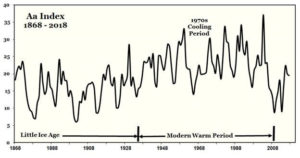
This recent post discussed the end of the Modern Warm Period and the year that global cooling began. That post was inspired by a comment to a post on WUWT six to eight years ago to the effect that climate is controlled by the Sun’s magnetic flux – no need to worry about much else. The comment seemed to come from a warmer scientist – they are well funded, have plenty of time on their hands, some are smart and idle curiosity would get a few looking into what controls climate. The results would not be published of course. To paraphrase Mussolini, everything within the narrative, nothing outside the narrative, nothing against the narrative. If the Sun’s magnetic flux controls climate, you don’t have to worry about what goes on under the hood – the effect of EUV on the NAO, the GCR flux, the F10.7 flux, any other flux apart from the magnetic flux (…)
by Jo Moreau, 9 mars 2018, in Belgotopia
Complémentairement à l’article de Donna Laframboise, il semblerait que les différents groupes de travail du GIEC n’aient pas la même définition d’un conflit d’intérêt. On peut identifier deux formes principales de conflit d’intérêt : soit l’utilisation d’une étude rédigée par un auteur ou coauteur du GIEC, ce qui revient à publier des études qu’on utilisera ensuite dans une auto-justification, (voir aussi à ce sujet un billet précédent : http://belgotopia.blogs.lalibre.be/archive/2013/01/03/methodes-interpellantes-au-sein-du-giec.html ), soit la présence en ses rangs d’un salarié de l’industrie ou d’un membre ou d’un proche d’une ONG militant dans le domaine idéologico-politique.
On se rappelle que des contributeurs du GIEC, salariés de l’industrie chimique, avaient été accusés par diverses sources de conflit d’intérêt en 2016, que dire alors de membres ou proches d’ONG militantes, qui semblent de plus en plus se substituer aux organes démocratiques dans la direction de nos sociétés…
by Tony Heller, March 10, 2018 in TheDeplorableClimateScience
Global warming is no longer about imaginary global warming. It is now about an imaginary increase in extreme weather.
March of 2012 was very mild in the Eastern US, and NOAA’s Climate Extremes Index counted that as “extreme weather” – declaring 2012 to be the most extreme year on record.
by University of Nevada, March 9, 2018 in ScienceDaily
A UNLV scientist has discovered the first direct evidence that fluid water pockets may exist as far as 500 miles deep into the Earth’s mantle.
Groundbreaking research by UNLV geoscientist Oliver Tschauner and colleagues found diamonds pushed up from the Earth’s interior had traces of unique crystallized water called Ice-VII.
See alos here
by BP Global, March 2018
The Energy Outlook explores the forces shaping the global energy transition out to 2040 and the key uncertainties surrounding that transition. It shows how rising prosperity drives an increase in global energy demand and how that demand will be met over the coming decades through a diverse range of supplies including oil, gas, coal and renewables.
Looking forward to 2040
Extending the Energy Outlook by five years to 2040, compared with previous editions, highlights several key trends.
For example, in the ET scenario, there are nearly 190 million electric cars by 2035, higher than the base case in last year’s Outlook of 100 million. The stock of electric cars is projected to increase by a further 130 million in the subsequent five years, reaching around 320 million by 2040.
Another trend that comes into sharper focus by moving out to 2040 is the shift from China to India as the primary driver of global energy demand. The progressively smaller increments in China’s energy demand – as its economic growth slows and energy intensity declines – contrasts with the continuing growth in India, such that between 2035 and 2040, India’s demand growth is more than 2.5 times that of China, representing more than a third of the global increase.
Africa’s contribution to global energy consumption also becomes more material towards the end of the Outlook, with Africa accounting for around 20% of the global increase during 2035-2040; greater than that of China.
by Douglas Fox, February 16, 2018 in NationalGeographic
Scientists have peered into one of the least-explored swaths of ocean on Earth, a vast region located off the coast of West Antarctica. It is locked beneath a crust of ice larger than Spain and more than 1,000 feet thick, making its waters perpetually dark—and extremely difficult for humans to access. Now, a team of researchers has bored a hole through the ice and sampled the ocean beneath it. Their work could shed light on a poorly understood, but ominous episode in Antarctica’s recent past… (…)
by W. Eschenbach, March 9, 2018 in WUWT
I’m sure you can see the problem with Dr. Judith’s question—temperatures can rise without ANY new sources of heat or ANY change in existing sources of heat.
For example, regarding the climate system, every year there is more and more oil that goes into the ocean. This oil floats on the surface in a monomolecular layer, and it reduces both conduction and evaporation. As a result, the oceans end up slightly warmer than they would be without the oil … where is Dr. Judith’s mysterious “source of heat” supposedly driving that change?
Here’s another example … (…)
by P. Gosselin, March 9, 2018 in NoTricksZone
Schellnhuber is often worshipped by the fringe-element climate alarmists as a sort of Climate Pope, whose every uttered word is to be regarded as infallible. Now he may be paying the price for his entrenched, radical positions on climate change.
“We now seriously need a Schellnhuber timeout. […] We do hope the new PIK leadership will correct the extreme direction the institute is currently on and rapidly puts an end to the flow of climate-alarmist press releases.“
by D. Laframboise, January 29, 2018 in BigPicturesNews…
BIG PICTURE: In November 1995, the Intergovernmental Panel on Climate Change (IPCC) declared for the first time that humans were changing the climate. Its verdict turned on a single piece of then-unpublished research. Four months after the fact, the research was submitted to a prominent journal. Three months later it was published.
The world then learned that 25% of the IPCC personnel tasked with making its most crucial determination were involved with this research. In a naked a conflict-of-interest, these nine people, led by IPCC chapter head Ben Santer, had evaluated the persuasiveness of their own fledgling scientific work – and had judged it sound enough to change history.
See also here (in French)
by A. Watts, March 8, 2018 in WUWT
From the “Snowfalls are now just a thing of the past” by climate scientist Dr. David Vinerdepartment comes this news from NOAA/NWS:
With 156 inches between December 2017 and February 2018, Erie, Pennsylvania, set a new record for most winter snowfall (…)
by D. Middleton, March 8, 2018 in WUWT
Not quite a year ago (April 18, 2017) I authored a post on the completion of the Petra Nova carbon capture project at the W. A. Parrish coal-fired power plant in Fort Bend County, Texas. Petra Nova was billed as “the largest post-combustion carbon capture project in the world.” In addition to capturing CO2 from a very large coal-fired power plant, Petra Nova was also designed to serve a useful purpose: Deliver CO2 for enhanced oil recovery to West Ranch Oil Field in Jackson County, Texas. The ultimate goal is to boost production in the field from around 500 barrels of oil per day (BOPD) to 15,000 BOPD and recover about 60 million barrels that would otherwise have been left in the ground.
EIA had an update on the carbon capture aspect back in October…
by J. Worland, March 6, 2018 in Time
The widespread adoption of fracking in the U.S. opened billions of barrels of oil and trillions of cubic feet of natural gas to production and transformed the global energy sector in a matter of a few years. Now, a leading global energy agency says U.S. natural gas is about to do it again.
The International Energy Agency (IEA) said in a new forecast this week that growth in U.S. oil production will cover 80% of new global demand for oil in the next three years. U.S. oil production is expected to increase nearly 30% to 17 million barrels a day by 2023 with much of that growth coming from oil produced through fracking in West Texas.
by W. Mahdi and B. Stanley, March 7, 2018 in Bloomberg
Saudi Aramco, the world’s largest oil exporter, is set to join the shale revolution with plans to start producing unconventional natural gas this month and exploit a deposit that could rival the Eagle Ford formation in Texas.
Saudi Arabia’s gas resources from shale and other alternative supplies are “huge,” Khalid Al Abdulqader, general manager of unconventional resources at Aramco, said Wednesday in Manama, Bahrain. Production at the kingdom’s North Arabia basin will start by the end of March and reach its target by the end of this year, he said, without giving details.
by Tony Heller, March 8, 2018 in TheDeplorableClimateScience
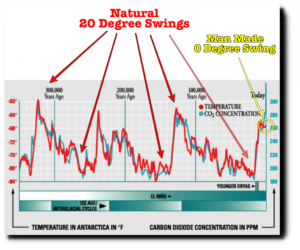
Antarctic ice cores show regular swings in temperature of more than 20 degrees. These were all natural, but the recent zero degree swing was caused by your SUV (…)
See also The Biggest Control Knob: CO2 in Earth’s Climate History
by R. Heinberg, March 6, 2018 in Resilience.org
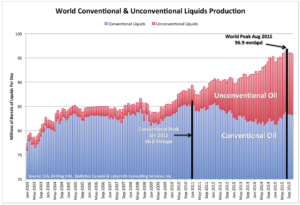
Well, I’m amazed and impressed. Tight oil production has pushed total United States petroleum output to more than 10 million barrels a day, a rate last seen almost a half-century ago. It’s a new U.S. record. Fifteen years ago I was traveling the world with a Powerpoint presentation featuring a graph of U.S. oil production history. That graph showed a clear peak in 1970 and a long bumpy decline thereafter. (…)
by M. Bastach, March 3, 2018 in DailyCaller
A group of prominent scientists are calling for a global network of advanced weather stations that don’t need to go through controversial data adjustments, and it’s vindication for global warming skeptics.
Seventeen climate scientists co-authored a research article published in the International Journal of Climatology calling for a global climate station network modeled after the United States Climate Reference Network (USCRN) to use as a baseline for data quality.
by R.F. Cronin, March 5, 2018 in ClimateChangeDispatch
Actually, the glaciers of Antarctica form in a very different way than Arctic or mountain glaciers. Steam and meltwater feed the glaciers from below. It is the steam from multiple subglacial volcanoes, rifts, and trenches. Antarctica is very seismically active.
(…)
by Brigitte Lanoë in MythesManciesMathématiques
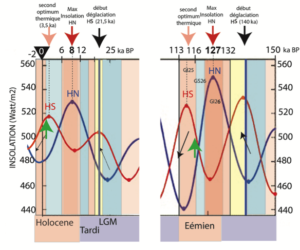
Le forçage climatique principal est l’énergie apportée par le soleil sous la forme primaire de rayonnement visible et UV, l’insolation. Son lieu de stockage principal est l’océan, le thermostat de notre planète. Le gaz le plus abondant à côté de l’azote et de l’oxygène est la vapeur d’eau dont la teneur est éminemment variable dans l’atmosphère (de 0,2 % à 7,6 %). John Tyndall conclut dès 1861 que l’effet de serre est dû essentiellement à cette dernière. Il faut rappeler que le potentiel diffusif thermique induit par la vapeur d’eau est 8 fois supérieur à celui du CO2 à concentration égale (0,04 %). L’immense majorité des articles traitant du changement climatique ne prennent en compte que l’hémisphère nord et l’Antarctique. Or, dans l’hémisphère sud (…)
by Alan Carlin, February 20, 2018 in CarlinEconomicsandScience
Climate alarmists are constantly trying to justify their misguided goal of decreasing emissions of carbon dioxide (CO2), one of the basic molecules that makes possible life on Earth, by making various claims as to the alleged adverse effects of increasing emissions of CO2. To date these claims have either been shown to be false or better explained by natural causes.
(…)
by Francis Menton, February 25, 2018 in ManhattanContrarian
Every day you read about the crisis of climate change and fossil fuel usage and CO2 emissions, and commitments from politicians around the world to “act” to “save the planet.” Surely then, CO2 emissions are in steep decline and headed for zero.
The truth is of course the opposite. In the developed world, rapidly increasing use of “renewables” like intermittent wind and solar energy only serves to drive electricity prices through the roof, while having only the most marginal effect on reducing emissions.
by Dartmouth College, March 1, 2018 in ScienceDaily
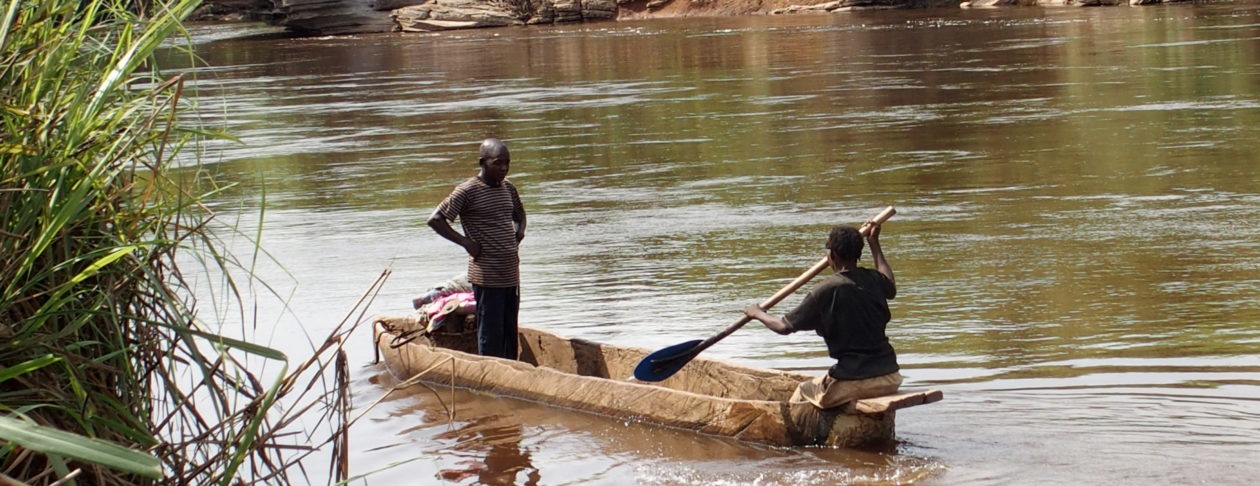
In Africa, food abundance may be driving violent conflict rather than food scarcity, according to a new study. The study refutes the notion that climate change will increase the frequency of civil war in Africa as a result of food scarcity triggered by rising temperatures and drought.
by J. Hodges and K. Gilblom, March 2, 2018 in BusinessDay
London — Britain’s natural gas fracking industry is using a cold snap that’s gripped large swathes of Europe this week and laid bare weaknesses in the UK’s energy supply to make its pitch.
Britain’s natural gas market has been stretched to its limits as the coldest spell since 2010 tests the nation’s energy and transport network. UK pipeline manager National Grid Plc even urged industry to curb its gas usage while the cold weather persisted. (…)