When you put the claims of the Intergovernmental Panel on Climate Change (IPCC) in perspective, you get a very different picture that defies logic. I decided to do this because of their recent hysterical claims in Special Report 15 (SR-15) designed to frighten and bully the world into completely unnecessary and enormously expensive environmental and energy policies. Charles Steele summarized their claims and proposed policies in his article, “Climate Doom Ahead? Think Twice,”
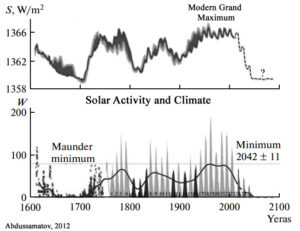
The sun was much less active in November than normal, comparing all solar cycles 1-23 up to month no. 120 since the beginning of the systematic survey in 1755, the first year of solar cycle 1.
The latest observed SSN (sunspot number) was a meager 5.9 for the monthly average.
On 16 days the sun was completely “spotless.” The maximum number over the days of November was 15, which does not mean that there were 15 spots – no, the number indicates that 5 spots were observed in a maximum of 1 spot group.
So there was very low spot activity, only 20% of the average value.
When it comes to the Sun’s influence on climate, one conclusion is certain: there is no widespread scientific agreement as to how and to what extent solar activity and its related parameters (i.e., galactic cosmic rays, geomagnetic activity, solar wind flux) impact changes in the Earth’s temperature and precipitation.
The disagreement is so chasmic and the mechanisms are so poorly understood that scientists’ estimates of the influence of direct solar irradiance forcing between the 17th century and today can range between a negligible +0.1 W m-2 to a very robust +6 W m-2 (Egorova et al., 2018; Mazzarella and Scafetta, 2018).
“There is no consensus on the amplitude of the historical solar forcing. The estimated magnitude of the total solar irradiance difference between Maunder minimum and present time ranges from0.1 to 6 W/m2 making uncertain the simulation of the past and future climate.” (Egorova et al., 2018)
In the whirlwind that is 2018, there has been a notable lack of high-end twisters.
We’re now days away from this becoming the first year in the modern record with no violent tornadoes touching down in the United States. Violent tornadoes are the strongest on a 0 to 5 scale, or those ranked EF4 or EF5.
It was a quiet year for tornadoes overall, with below normal numbers most months. Unless you’re a storm chaser, this is not bad news. The low tornado count is undoubtedly a big part of the reason the 10 tornado deaths in 2018 is also vying to be a record low.
While we still have several days to go in 2018, and some severe weather is likely across the South to close it out, odds favor the country making it the rest of the way without a violent tornado.
If and when that happens, it will be the first time since the modern record began in 1950.
Along the US East Coast, the Earth’s continued response to the end of the last ice age explains variances in relative sea level rates
Chestnut Hill, Mass. (12/20/2018) – Along the East Coast of the United States, relative sea level change does not happen uniformly between Maine and Florida.
Data have shown that sea level rise in the Mid-Atlantic region surpassed changes in relative sea level along the coastlines of the South Atlantic and the Gulf of Maine. A team of researchers took a look back at historical data through new analytical methods to pinpoint the reason behind the different rates of sea level change.
Assessing data from a range of sources and previous studies, the team concluded that the movement of the earth – referred to as vertical land motion – is the dominant force behind variations in rates of sea level rise up and down the East Coast, the team reports today in the journal Nature.
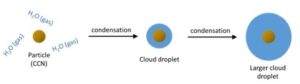
Comme tout le monde le sait, pour expliquer la légère hausse des températures de l’atmosphère observée au 20e siècle, le GIEC invoque un seul responsable : le taux de CO2 atmosphérique, et donc l’activité humaine. Les médias, bien entendu, suivent le GIEC et le monde entier diabolise le CO2. Cependant, n’existe-t-il pas d’autres hypothèses? Les lecteurs attentifs de ce site (SCE) savent que l’hypothèse du GIEC est mise à mal par toute une série d’observations (voir par exemple ici, ici et ici) et que certains problèmes théoriques existent dans la théorie même de l’effet de serre (voir ici et ici). Quelle est donc l’explication pour le réchauffement si ce n’est pas le taux de CO2? Bien qu’il y ait probablement des causes multiples, nous allons voir qu’une équipe de chercheurs du CERN propose une hypothèse alternative en se basant sur les résultats du projet CLOUD. Une vidéo récente (octobre 2018) présentant les résultats de cette expérience sera d’ailleurs présentée en fin d’article. Avant de regarder cette vidéo, faisons d’abord le point.
Figure 1. Formation de nuages en présence de noyaux de condensation (CCN : Cloud Condensation Nuclei).
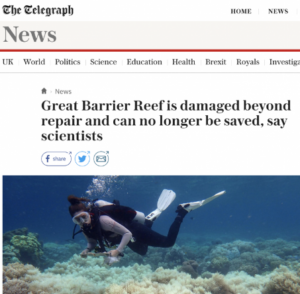
Scientists from James Cook University have just published a paper on the bleaching and death of corals on the Great Barrier Reef and were surprised that the death rate was less than they expected, because of the adaptability of corals to changing temperatures.
It appears as though they exaggerated their original claims and are quietly backtracking.
To misquote Oscar Wilde, to exaggerate once is a misfortune, to do it twice looks careless, but to do it repeatedly looks like unforgivable systemic unreliability by some of our major science organisations.
The very rapid adaptation of corals to high temperatures is a well-known phenomenon; besides, if you heat corals in a given year, they tend to be less susceptible in the future to overheating. This is why corals are one of the least likely species to be affected by climate change, irrespective of whether you believe the climate is changing by natural fluctuations or because of human influence.
Corals have a unique way of dealing with changing temperature, by changing the microscopic plants that live inside them. These microscopic plants, called zooxanthellae, give the coral energy from the sun through photosynthesis in exchange for a comfortable home inside the coral. When the water gets hot, these little plants effectively become poisonous to the coral and the coral throws them out, which turns the coral white — that is, it bleaches.
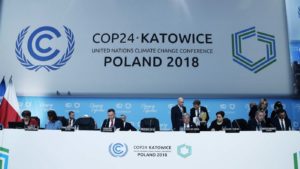
The climate summit in Poland has been given a boost in recent weeks by well-timed climate change reports shaping the news agenda. But if we dig deeper than most of the media did, these reports demonstrate what is wrong with global warming policy discussion.
In this post, we’re going to present monthly mean TMIN and TMAX Near-Land Surface Air Temperatures (not in anomaly form) for a group of ten (10) Countries in an effort to add a little perspective to global warming. The list of countries, which follows, will, hopefully, reflect the home countries of recent visitors to WattsUpWithThat. The list is based on the number of visitors per country to my blog ClimateObservations during my peak year of 2014.
And, as always with my posts, as part of the text, there are hyperlinks to the data that were used to prepare the graphs. Just click on the links if you’re looking for the data.
This series of posts are logged under the Category of “Global Warming in Perspective” at WattsUpWithThat, with the link to that category here. The category link at my blog ClimateObservations is here.
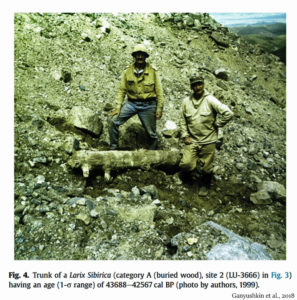
Between 60 and 40 thousand years ago, during the middle of the last glacial, atmospheric CO2 levels hovered around 200 ppm – half of today’s concentration.
Tree remains dated to this period have been discovered 600-700 meters atop the modern treeline in the Russian Altai mountains. This suggests surface air temperatures were between 2°C and 3°C warmer than today during this glacial period.
Tree trunks dating to the Early Holocene (between 10.6 and 6.2 thousand years ago) have been found about 350 meters higher than the modern treeline edge. This suggests summer temperatures were between 2°C and 2.5°C warmer than today during the Early Holocene, when CO2 concentrations ranged between about 250 and 270 ppm.
None of this paleoclimate treeline or temperature evidence correlates with a CO2-driven climate.
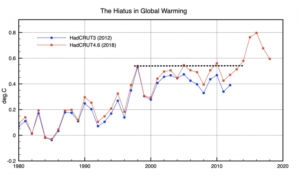
Using simple statistics it looked at and dismissed over 200 peer-reviewed papers that analysed the pause and concluded it was a real phenomenon. How did they, and the IPCC, get it all so wrong?
Nobody who keeps an eye on climate research will be at all surprised by this “new” paper. Its conclusions were well aired in April 2018 at a meeting of the European Geophysical Union.
The authors must have been rather frustrated at the time as the paper describing their work had been submitted to the journal Environmental Research Letters over a year earlier, in February 2017 in fact, still had not been published. This was remedied a few days ago when it was finally published — one year and nine months after its submission!
Obiter dictum. We acknowledge that seawater is basic and cannot truly acidify (pH<7). But that is a losing semantic quibble, not a winning skeptical argument. The generally accepted linguistic convention—for better or worse–is that lowering seawater pH means ‘acidification’. There is no doubt that adding dissolved CO2 does lower pH. The relevant questions are how much and whether that amount matters. This post answers both questions (a little, not much) without the two specific false alarms that motivated the ebook version.
There are certainly some ocean related AGW consequences beyond any scientific doubt. Henry’s Law requires that the partial pressures of atmospheric and dissolved ocean CO2equilibrate. Rising atmospheric CO2 must increase dissolved seawater CO2. That is long established simple physical chemistry.
This lowers pH by increasing carbonic acid. NOAA PMEL has documented this in the central Pacific at Station Aloha off Mauna Loa where sea surface pH has declined from 8.11 to 8.07 since 1991, as dissolved pCO2 increased from ≈325 to ≈360μatm while atmospheric CO2 increased from about 355 to 395 ppm. That is Δ0.04 pH in 24 years.
Liberal MP and climate sceptic Craig Kelly made headlines in November when he was caught on tape mocking “lefties” for exaggerating the effects of climate change.
Speaking at a local party event, audio of which was leaked to the Guardian, Mr Kelly set out to debunk several justifications for climate change action, including the argument that Tuvalu, the Pacific island nation, was slipping beneath the sea.
“The science tells us that Tuvalu, which I often hear about, is actually growing not sinking,” he told colleagues.
Is Tuvalu growing? RMIT ABC Fact Check investigates.
The verdict
Mr Kelly’s claim checks out.
In the four decades to 2014, Tuvalu’s total land area grew by 73 hectares, or 2.9 per cent.
By Dr. Dietrich E. Koelle
(German text translated/edited by P Gosselin)
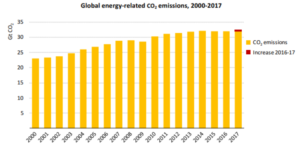
Once again – for the 24th time – a mass climate conference with over 20,000 participants (400 of them from Guinea alone) has come to an end and the politicians and climate officials involved praised its success: “Once again the earth was saved”. It’s all actually quite simple: you only need to reduce CO2 emissions and global temperature drops.
“Strongly decelerated warming”
Reductions have been decided at every conference for 24 years – and emissions have always risen the following year, and done so for 24 years now.
Source: IEA-Report für 2017
But nobody is interested in the fact that despite this, there has hardly been a global rise in temperature in 16 years (since 2002) and record emissions of 500 billion tons of CO2 in this period. Instead there has been a strongly decelerated warming, sometimes even called a “hiatus”. But acknowledging this would possibly jeopardize next year’s planned climate conference.
More people are finally beginning to realize that supplying the world with sufficient, stable energy solely from sun and wind power will be impossible.
Germany took on that challenge, to show the world how to build a society based entirely on “green, renewable” energy. It has now hit a brick wall. Despite huge investments in wind, solar and biofuel energy production capacity, Germany has not reduced CO2 emissions over the last ten years. However, during the same period, its electricity prices have risen dramatically, significantly impacting factories, employment and poor families.
Germany has installed solar and wind power to such an extent that it should theoretically be able to satisfy the power requirement on any day that provides sufficient sunshine and wind. However, since sun and wind are often lacking – in Germany even more so than in other countries like Italy or Greece – the country only manages to produce around 27% of its annual electric power needs from these sources.
The truth about climate change is nuanced: it is real, and in the long term it will be a problem, but its impact is less than we might believe. And yet we are too eager to believe the problem is far worse than science shows, and – conversely – that our solutions are far easier than reality dictates.
BRUSSELS – The latest global climate summit in Poland has generated familiar predictions of doom and disaster from environmental activists. Climate change seems to freeze our capacity for critical thinking: we are too eager to believe the problem is far worse than science shows, and – conversely – that our solutions are far easier than reality dictates.
For those still blindly banging the ‘97%’ drum, here is a in-no-way-comprehensive list of the SCIENTISTS who publicly disagree with the current consensus on climate change –namely the IPCC’s catastrophic conclusions.
There are currently 85 names on the list. Though it is embryonic and dynamic.
Suggestions for omissions and/or additions can be added to the comment section below and, if validated, will serve to update the list.
SCIENTISTS ARGUING THAT GLOBAL WARMING IS PRIMARILY CAUSED BY NATURAL PROCESSES
— scientists that have called the observed warming attributable to natural causes, i.e. the high solar activity witnessed over the last few decades.
Cet article est le résultat d’une recherche multi-disciplinaire entre géologues et biologistes. Une synthèse de cette recherche vient d’être publiée en décembre 2018 sur le site de Geologica Belgica. Un article déjà publié dans SCE peut également être consulté.
Contrairement à ce que l’on peut penser, une question simple nécessite parfois des années de recherches avec des équipes diverses et des moyens sophistiqués. La question simple concerne ici la géologie et plus particulièrement la couleur des roches sédimentaires.
The ‘urban heat island’ arises because air temperatures measured in urban cities can be different to those of the rural city surroundings. Thermometers were and still are more often found in cities than surroundings. City temperatures have a synthetic, man-made component that needs to be subtracted to match the surrounding rural temperatures, which are the items of interest for climate studies.
Failure to subtract the UHI effect will lead to false results for temperature trends such as those used to claim global warming. The question arises whether rural and urban temperatures have adequate accuracy to provide reasonable results after the subtraction. This essay argues that historic Australian rural temperature records are unfit for this purpose; that global temperature records are likely to be similarly inadequate; and that as a consequence, all past estimates of UHI derived from land surface temperatures by thermometry are invalid or questionable.
In short, all past estimates of UHI magnitude before the satellite era are incorrect for reasons given. The actual rates of global temperature changes over the past century are likely to be wrong by a significant amount, of similar magnitude to the global warming claimed at about 1°C per century.
More recent estimates are being made with temperatures from instruments on satellites, which help the future path to better understanding.
La COP24 est enfin terminée et, comme à chaque fois, sans aucun résultat concret pour la diminution des émissions de CO2 malgré les cris d’alarmes des ONG environnementales, du Secrétaire général des Nations Unies et des foules de citoyens. Et pourtant dans un an, on va de nouveau nous bassiner les oreilles avec la 25ème COP tandis qu’on observera encore une fois l’augmentation des émissions. Comme à chaque fois, par l’entremise des media, on nous rappelle que notre planète va devenir un enfer comme Vénus, que le niveau de la mer va nous engloutir et que la biodiversité va disparaître.
Rappelons tout d’abord ce fait : aujourd’hui l’Union Européenne ne représente que 11 % des émissions mondiales de CO2, la Chine 28 %, les États-Unis 15 %, l’Inde 7 %, la France 1 % et la Belgique 0,4 %.
The significance of this new GWPF report by Prof Ray Bates of the Meteorology and Climate Centre at University College Dublin cannot really be overstated:
London, 20 December: One of Europe’s most eminent climate scientists has documented the main scientific reasons why the recent UN climate summit failed to welcome the IPCC’s report on global warming of 1.5°C.
In a paper published today by the Global Warming Policy Foundation Professor Ray Bates of University College Dublin explains the main reasons for the significant controversy about the latest IPCC report within the international community.
The IPCC’s Special Report on a Global Warming of 1.5°C (SR1.5) was released by the Intergovernmental Panel on Climate Change (IPCC) in advance of the recent COP24 meeting in Katowice, Poland, but was not adopted by the meeting due to objections by a number of governments.
by P. Homewood, December 18, 2018 in NotaLotofPeopleKnowThat
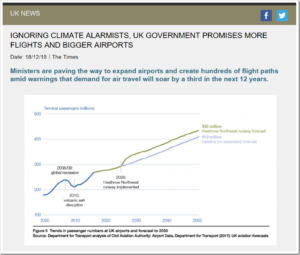
The Department for Transport publishes a long-awaited aviation strategy today that pledges to deliver “greater capacity at UK airports”.
It raises the prospect of airports other than Heathrow growing and accepting more flights if tough environmental and noise restrictions are met.
The strategy also outlines plans for the biggest overhaul of Britain’s airspace in more than 50 years to create new flight paths into the biggest airports. GPS-style technology will allow aircraft to fly along more accurate paths below 30,000ft instead of being led by ground beacons, which space planes out over a wide arc several miles across.
It will mean a considerable increase to the 600 or so dedicated flight paths that are in operation today
Jochem Marotzke, director of Germany’s Max Planck Institute for Meteorology (MPIM), wondered whether CO2 savings could really have a direct influence on the temperature in the near future. In a new paper (Marotzke 2018), the Hamburg-based climate researcher simulates the temperature profile of the 2030s predicted by climate models and uses once again a conventional emission profile (Scenario RCP 4.5), and once a politically reduced emission scenario.
Conclusion: Most likely, there would probably be no difference as natural climate variability prevails over these time scales. The paper was published in WIRE’s Climate Change and can be downloaded free of charge as a pdf:
Scientists have described a fossil plant species that suggests flowers bloomed in the Early Jurassic, more than 174 million years ago, according to new research in the open-access journal eLife.
Before now, angiosperms (flowering plants) were thought to have a history of no more than 130 million years. The discovery of the novel flower species, which the study authors named Nanjinganthus dendrostyla, throws widely accepted theories of plant evolution into question, by suggesting that they existed around 50 million years earlier. Nanjinganthus also has a variety of ‘unexpected’ characteristics according to almost all of these theories.
…
La géologie, une science plus que passionnante … et diverse