MAGMATIC MOVEMENTS REGISTERED UNDER FAGRADALSFJALL VOLCANO, ICELAND — 34,000 QUAKES IN TWO WEEKS, ERUPTION LIKELY

by Cap Allon, March 11, 2021 in Electroverse


A “seismic crisis” has been occurring in the area near Fagradalsfjall since late Feb 2021. This activity has been interpreted as intrusion of magma at shallow depths, which could lead to a new eruption.

Fadradalsfjall is a Pleistocene table mountain in the Reykjanes Peninsula, NE of Grindavik, Iceland.

Of today’s reawakening volcanoes, those located in Iceland are perhaps the most concerning.

It is this highly-volcanic region that will likely be home to the next “big one” (a repeat of the 536 AD eruption that took out the Roman Republic…?) — the one that will return Earth to another volcanic winter.

Volcanic eruptions are one of the key forcings driving Earth into its next bout of global cooling.

Volcanic ash (particulates) fired above 10km –and so into the stratosphere– shade sunlight and reduce terrestrial temperatures. The smaller particulates from an eruption can linger in the upper atmosphere for years, or even decades+ at a time.

Today’s worldwide volcanic uptick is thought to be tied to low solar activity, coronal holes, a waning magnetosphere, and the influx of Cosmic Rays penetrating silica-rich magma.

The COLD TIMES are returning, the mid-latitudes are REFREEZING in line with the great conjunction, historically low solar activitycloud-nucleating Cosmic Rays, and a meridional jet stream flow (among other forcings).

Both NOAA and NASA appear to agree, if you read between the lines, with NOAA saying we’re entering a ‘full-blown’ Grand Solar Minimum in the late-2020s, and NASA seeing this upcoming solar cycle (25) as “the weakest of the past 200 years”, with the agency correlating previous solar shutdowns to prolonged periods of global cooling here.

Furthermore, we can’t ignore the slew of new scientific papers stating the immense impact The Beaufort Gyre could have on the Gulf Stream, and therefore the climate overall.
Molecular and isotopic evidence reveals the end-Triassic carbon isotope excursion is not from massive exogenous light carbon

by C.P. Fox et al., Dec 1, 2020 in PNAS


Significance

The end-Triassic mass extinction that occurred ∼202 Ma is one of the “Big Five” biotic crises of the Phanerozoic Eon. It is also accompanied by an organic carbon isotopic excursion that has long been interpreted as the result of a global-scale carbon-cycle disruption. Rather than being due to massive inputs of exogenous light carbon into the ocean–atmosphere system, the isotopic excursion is shown here to reflect regional sea-level change that caused a transition from a marine ecosystem to a less saline, shallow-water, microbial-mat environment and resultant changes in the sources of organic matter. The mass extinction that occurred slightly later, caused by abrupt injection of volcanogenic CO2, is accompanied by only modest changes in organic carbon isotopic composition.

Abstract

The negative organic carbon isotope excursion (CIE) associated with the end-Triassic mass extinction (ETE) is conventionally interpreted as the result of a massive flux of isotopically light carbon from exogenous sources into the atmosphere (e.g., thermogenic methane and/or methane clathrate dissociation linked to the Central Atlantic Magmatic Province [CAMP]). Instead, we demonstrate that at its type locality in the Bristol Channel Basin (UK), the CIE was caused by a marine to nonmarine transition resulting from an abrupt relative sea level drop. Our biomarker and compound-specific carbon isotopic data show that the emergence of microbial mats, influenced by an influx of fresh to brackish water, provided isotopically light carbon to both organic and inorganic carbon pools in centimeter-scale water depths, leading to the negative CIE. Thus, the iconic CIE and the disappearance of marine biota at the type locality are the result of local environmental change and do not mark either the global extinction event or input of exogenous light carbon into the atmosphere. Instead, the main extinction phase occurs slightly later in marine strata, where it is coeval with terrestrial extinctions and ocean acidification driven by CAMP-induced increases in PCO2; these effects should not be conflated with the CIE. An abrupt sea-level fall observed in the Central European basins reflects the tectonic consequences of the initial CAMP emplacement, with broad implications for all extinction events related to large igneous provinces.

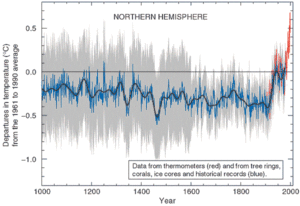
Michael Mann “Hockey Stick” Update: Now Definitively Established To Be Fraud

by F. Menton, Aug 26, 2021 in ManhattanContrarian


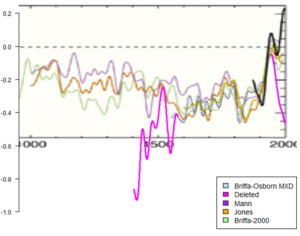
The Michael Mann “Hockey Stick” is suddenly back in the news. It’s been so long since we have heard from it, do you even remember what it is?

The “Hockey Stick” is the graph that took the world of climate science by storm back in 1998. That’s when Mann and co-authors Raymond Bradley and Malcolm Hughes published in Nature their seminal paper “Global-scale temperature patterns and climate forcing over the past six centuries.” A subsequent 1999 update by the same authors, also in Nature (“Northern Hemisphere Temperatures During the Past Millennium: Inferences, Uncertainties, and Limitations”) extended their reconstructions of “temperature patterns and climate forcing” back another 400 years to about the year 1000. The authors claimed (in the first paragraph of the 1998 article) to “take a new statistical approach to reconstructing global patterns of annual temperature . . . , based on the calibration of multiproxy data networks by the dominant patterns of temperature variability in the instrumental record.” The claimed “new statistical approach,” when applied to a group of temperature “proxies” that included tree ring samples and lake bed sediments, yielded a graph — quickly labeled the “Hockey Stick” — that was the perfect icon to sell global warming fear to the public. The graph showed world temperatures essentially flat or slightly declining for 900+ years (the shaft of the hockey stick), and then shooting up dramatically during the 20th century era of human carbon dioxide emissions (the blade of the stick).

Major February global temperature drop reveals the real climate control knob

by J. Bastardi, March 7, 2021 in CFACT


By now all of you know my belief ( bias) that it’s the oceans, and more so the tropical oceans, that are the biggest control knob of the weather and climate. If you really wanted to make this a controlled classroom experiment (nature is not a classroom with easy controls)  then I venture to say that the real way to know man’s influence is to have SST’s return to where they were in the 1970s, give it a couple of years for the water vapor adjustment, ( and if I am right. co2 will adjust as warmer oceans outsource it, so the outsourcing to the air will decrease) and see the difference there. And there you may be able to make an irrefutable argument for man’s contribution, Unfortunately for those who will not look at anything else,  that is likely to be quite small, but on the other hand, unlike the warming we have had which is really in the coldest driest places and more so at their coldest driest time of the year, you would likely find the lions share of what warming would be where life thrives.. As small as that has been, less than .25C of the numbers we see all the time that tell us that at. a bit over 59 degrees the planet is overheating, it is liable to be even less detectable and certainly as or more adaptable than what we seemed to have adapted to nicely here.

But the fear of course is runaway warming which is interesting since it counters Le Chateliers,  which I never hear anyone bring up, most likely because it’s a simple explanation. And a simple explanation would impact a lot of things relying on a done deal, complex explanation that the public must accept because they could never understand.

Danish Institute Data: Greenland Ice Melt Has Slowed Down Significantly Over Past Decade

by P. Gosselin, March 10, 2021 in NoTricksZone


The media and activists, among them a number of “Climate scientists”, have been declaring that Greenland ice melt has been accelerating.

Today the German Klimaschau climate news video reports, however, that this has not been the case over the recent years. All the recent talk about accelerating Greenland ice loss over the past years is false.

SMB on the rise

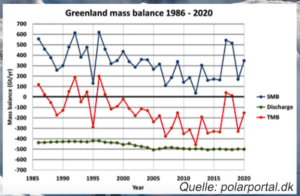
First a plot of Greenland’s surface mass balance SMB (blue curve below) shows that snow accumulation has occurred faster than snow and ice have melted over the past 35 years:

Chart: cropped from Klimaschau here

Though the annual SMB values declined from 1985 to 2012, the trend has rebounded since.

Loss through coastal discharge steady over the past 15 years

UAH Global Temperature Update for February 2021: +0.20 deg. C

by Roy Spencer, March. 3rd, 2021 in Global Warming


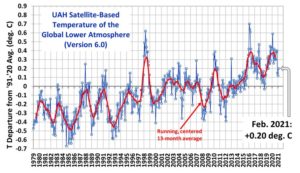
The Version 6.0 global average lower tropospheric temperature (LT) anomaly for February, 2021 was +0.20 deg. C, up from the January, 2021 value of +0.12 deg. C.

REMINDER: We have changed the 30-year averaging period from which we compute anomalies to 1991-2020, from the old period 1981-2010. This change does not affect the temperature trends.

The linear warming trend since January, 1979 remains at +0.14 C/decade (+0.12 C/decade over the global-averaged oceans, and +0.18 C/decade over global-averaged land).

Various regional LT departures from the 30-year (1991-2020) average for the last 14 months are:

California’s Energy Scorecard Fails On The World Stage – OpEd

by R. Stein, Sept 21, 2021 in EurasiaReview


California, with 0.5 percent of the world’s population (40 million vs 8 billion) professes to be the leader of everything and through its dysfunctional energy policies imports more electricity than any other state – currently at 32 percent from the Northwest and Southwest – and has forced California to be the only state in contiguous America thatimports most of its crude oil energy demands from foreign country suppliers to meet the energy demands of the state.

State energy policies have made California electricity and fuel prices among the highest in the nation which have been contributory to the rapid growth of “energy poverty” for the 18 million (45 percent of the 40 million Californians) that represent the Hispanic and African American populations of the state.

Access to electricity is now an afterthought in most parts of the world, so it may come as a surprise to learn that 16 percent of the world’s population — an estimated 1.2 billion people — are still living without this basic necessity. Lack of access to electricity, or “energy poverty”, is the ultimate economic hindrance as it prevents people from participating in the modern economy.

Almost half the world — over three billion people — live on less than $2.50 a day. At least 80 percent of humanity, or almost 6 billion, lives on less than $10 a day. Other nations and continents living in abject poverty without electricity realize California, and large parts of the U.S. buying into green new deals, renewable futures, and zero-carbon societies are left with the dystopic reality of mass homelessness, filth and rampant inequality that increasingly characterize the GND core values.

Shock News–China 5-Year Plan Will Increase Emissions

by P. Homewood, March 6, 2021 in NotaLotofPeopleKnowThat


China has set out an economic blueprint for the next five years that could lead to a strong rise in greenhouse gas emissions if further action is not taken to meet the country’s long-term goals.

The 14th five-year plan, published in Beijing on Friday, gave few details on how the world’s biggest emitter would meet its target of reaching net zero emissions by 2060, set out by President Xi Jinping last year, and of ensuring that carbon dioxide output peaks before 2030.

China will reduce its “emissions intensity” – the amount of CO2 produced per unit of GDP – by 18% over the period 2021 to 2025, but this target is in line with previous trends, and could lead to emissions continuing to increase by 1% a year or more. Non-fossil fuel energy is targeted to make up 20% of China’s energy mix, leaving plenty of room for further expansion of the country’s coal industry.

Swithin Lui, of the Climate Action Tracker and NewClimate Institute, said: “[This is] underwhelming and shows little sign of a concerted switch away from a future coal lock-in. There is little sign of the change needed [to meet net zero].”

Zhang Shuwei, chief economist at Draworld Environment Research Centre, said: “As the first five-year plan after China committed to reach carbon neutrality by 2060, the 14th five-year plan was expected to demonstrate strong climate ambition. However, the draft plan presented does not seem to meet the expectations. The international community expected China’s climate policy to ‘jump’, but in reality it is still crawling.”

Unusually, this five-year plan did not set out GDP targets for the whole five-year period, but allowed for annual targets, with the first for this year a target of 6% growth. The Centre for Research on Energy and Clean Air said that coupled with the emissions intensity target, this could allow the growth rate of China’s emissions to speed up even further, rather than slow down, as is needed.

https://www.theguardian.com/world/2021/mar/05/china-five-year-plan-emissions

From the non-sense of carbon neutrality

by Jeanne Marcq, March 5, 2021 in ScienceClimatEnergie


Carbon neutrality aiming to limit the rise in global temperature is a lure from the economic points of view and humanity. It is also the weakness of environmentalists, vegans and the “green” provided people of the northern hemisphere advocating worldly decay.

However, the food and energy resources exist in sufficiency  on earth but are poorly dispatched (see FAO data). Developing countries cannot be selfishly prevented from using fossil fuels to build their own economies instead of being plundered by new colonizers. No political regime has ever managed to erase socio-economic inequalities in society. With a world population currently growing until 2050 (FAO), any limitation of food production and economic development would be damaging to humanity.


Continuer la lecture de From the non-sense of carbon neutrality

Study: Medieval Climate Change Existed in Africa

by A. Watts, Feb 24, 2018 in WUWT


Mapping Medieval Climate Change in Africa:

Continental warming, coastal cooling and shifting rainbelts 1000 years ago

Global climate is currently undergoing major change. Experts agree that this change is driven by a combination of man-made and natural factors. However, full quantification of the anthropogenic and natural components is still a matter of debate. In order to better understand the contribution of natural climate variability and distinguish this from man-made influence, researchers worldwide have gone out to the field to study Earth’s pre-industrial climate history. Of particular interest are the past thousand years, which in Europe and North America have seen the transition from a rather warm medieval period to major cooling of the Little Ice Age, followed by the temperature rebound of the Current Warm Period which was further intensified by human greenhouse gas emissions. Our understanding of medieval climate outside this well-studied North Atlantic region is unfortunately still poor.

An international team led by geoscientist Sebastian Lüning wants to change this. Lüning is a professional resources geologist who in his sparetime works on paleoclimatological studies with the Switzerland-based Institute for Hydrography, Geoecology and Climate Sciences. Together with colleagues from Poland, Nigeria, Turkey and Germany they embarked on a journey through the scientific literature to shed light on the so-called ‘Medieval Climate Anomaly’, a period comprising of the years 1000-1200 AD. The initial focus region of their study was Africa. Lüning and his team crawled through hundreds of publications and mosaiced together a fascinating picture of African medieval climate change that tracks ancient heat waves, local cooling, drought and phases of amplified rainfall. Using modern database and visualization technology, the team managed to synthesize astonishing trends from the large amount of filtered data. Lüning explains the challenge:

….

No Mention Of CO2: New Study Shows African Climate Variability Strongly Linked To Natural Cycles

by C. Rotter, March 5, 2021 in WUWT


Africa climate variability linked to natural oceanic and solar cycles, a new study affirms. No mention of CO2. 

Understanding natural cycles the key to model projections

Sufficient rainfall is the basic condition for high-yield agriculture and food security for the population. Until recently, however, it was not possible to reliably predict rainfall several months in advance, which repeatedly led to unexpected crop failures. For some years now, however, progress has been emerging. The literature has repeatedly reported exciting correlations between temperature and air pressure patterns on the world’s oceans with rainfall and droughts in Africa and on other continents.

A group of researchers led by Horst-Joachim Lüdecke wanted to know more and meticulously searched for patterns in the monthly rainfall data of 49 African countries for the period 1901 to 2017 using statistical methods.

“Large number of robust correlations”

The scientists compared the rainfall fluctuations with five oceanic indices of natural origin that are firmly established in science, as well as with solar activity. The evaluation revealed a large number of robust correlations across the African continent with characteristic seasonal patterns. It has been known for some time that the Atlantic Ocean influences precipitation in Morocco and the Sahel via the so-called Atlantic Multidecadal Oscillation (AMO) and North Atlantic Oscillation (NAO). In East Africa, influences from the Indian and Pacific Oceans have been reported so far.

STATE OF THE POLAR BEAR REPORT 2020

by S. J. Crocfkord, Report 2020 in GWPF


Report 40, The Global Warming Policy Foundation

Preface v Executive summary vi

ISBN 978-1-9160700-7-3
© Copyright 2020, The Global Warming Policy Foundation

  1. Introduction 1
  2. Conservation status 1
  3. Population size 2
  4. Population trends 10
  5. Habitat status 11
  6. Prey base 15
  7. Health and survival 17
  8. Evidence of flexibility 22
  9. Human/bear interactions 23
  10. Discussion 28

Bibliography 30 About the Global Warming Policy Foundation

…Temperature Records…

by Donn Dears, March 2, 2021


There has been an unending stream of media reports about how the last few years have been the warmest on record.

They gloss over that they are only referring to the last 150 years, because temperatures have been higher than today on several occasions over the past 10,000 years, a period between glaciations know as the Holocene.

Recently, a presentation by Tony Heller caught my attention, in which he had facts, coupled with evidence, that shed light on the media’s hypocrisy. 

What follows uses some of the materials from Mr. Heller’s presentation, coupled with additional information. (Relevant links are itemized below.)

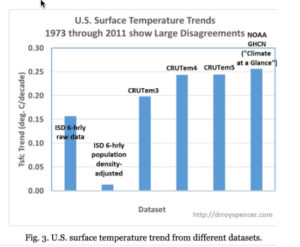
The first chart is Figure 3, from Dr. Roy Spencer’s evaluation of the heat island effect.

It shows that the urban heat island effect has skewed reported temperatures higher than where population density is low. Areas with low population density are representative of the vast majority of land surface areas.


Today’s temperatures are not the highest, or second highest, on record: Not for the past one-hundred-fifty years, or for the past 10,0000 years.

Links

Heller: https://bit.ly/2LrkLXf

Spencer:http://bit.ly/2N4fmpf

Real Climate Science:https://bit.ly/3cVlDhU

The first organism to use oxygen may have appeared surprisingly early

by R.F. Service, Feb 25, 2021 in ScienceAAAS


The first organisms to “breathe” oxygen—or at least use it—appeared 3.1 billion years ago, according to a new genetic analysis of dozens of families of microbes. The find is surprising because the Great Oxidation Event, which filled Earth’s atmosphere with the precious gas, didn’t occur until some 500 million years later.

“I was pretty thrilled to see this paper,” says Patrick Shih, an evolutionary biologist at the University of California (UC), Davis. The advent of proteins that can use oxygen, Shih and others say, marks a key step in the emergence of aerobic microbes, which are those able to harness oxygen. “The transition from a world that was mostly anaerobic to one that was mostly aerobic was one of the major innovations in life,” says Tim Lyons, a biogeochemist at UC Riverside.

Scientists broadly agree that Earth’s early atmosphere and oceans were all but devoid of oxygen gas. But there are signs that there was some oxygen around. Geochemists, for example, have found mineral deposits dated to about 3 billion years ago that they argue could only have formed in the presence of oxygen. And some evidence suggests cyanobacteria, the earliest photosynthetic organisms to release oxygen gas as a waste product—although not use it—may have arisen as early as 3.5 billion years ago.

“Acceleration” in Sea-Level Rise Found to Be False – An artifact of Switching Satellites

by P. Homewood, Feb 27, 2021 in NotaLotofPeopleKnwoThat


One of the most common arguments climate alarmists make is that rate of sea-level rise is “accelerating” or rising faster every year.

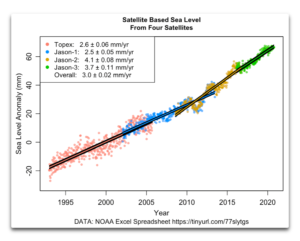
Sea-level data reported from satellites indicate seas are rising approximately of 3.3 mm/year (See Figure 1). By contrast, tidal stations have recorded a rise of approximately 1 to 2 mm annually, a rate which is little changed over the century or so for which we have adequate records. Indeed, as reported in Climate at a Glance: Sea Level Rise,  the oldest tide gauge in the USA, in New York City, shows no acceleration at all going back to 1850.

Why the large difference?

The answer it turns out is simple. When NASA and NOAA launched new satellites, the data they produced wasn’t the same as the data recorded by earlier satellites.

Figure 2. NOAA sea level data, showing the trend of each of the full individual satellite records and the overall trend. SOURCE: NOAA Excel Spreadsheet

Full post here.

The risks of communicating extreme climate forecasts

by COLLEGE OF ENGINEERING, CARNEGIE MELLON UNIVERSITY, Feb 24, 2021 in EurekaAlert!/AAAS


For decades, climate change researchers and activists have used dramatic forecasts to attempt to influence public perception of the problem and as a call to action on climate change. These forecasts have frequently been for events that might be called “apocalyptic,” because they predict cataclysmic events resulting from climate change.

In a new paper published in the International Journal of Global Warming, Carnegie Mellon University’s David Rode and Paul Fischbeck argue that making such forecasts can be counterproductive. “Truly apocalyptic forecasts can only ever be observed in their failure–that is the world did not end as predicted,” says Rode, adjunct research faculty with the Carnegie Mellon Electricity Industry Center, “and observing a string of repeated apocalyptic forecast failures can undermine the public’s trust in the underlying science.”

Rode and Fischbeck, professor of Social & Decision Sciences and Engineering & Public Policy, collected 79 predictions of climate-caused apocalypse going back to the first Earth Day in 1970. With the passage of time, many of these forecasts have since expired; the dates have come and gone uneventfully. In fact, 48 (61%) of the predictions have already expired as of the end of 2020.

Fischbeck noted, “from a forecasting perspective, the ‘problem’ is not only that all of the expired forecasts were wrong, but also that so many of them never admitted to any uncertainty about the date. About 43% of the forecasts in our dataset made no mention of uncertainty.”

Not a myth: State of the Polar Bear Report shows 2020 was another good year for polar bears

by C. Rotter Feb 27, 2021 in WUWT


The ‘State of the Polar Bear Report 2020’ is now available. Forget hand-wringing about what might happen fifty years from now – celebrate the fabulous news that polar bears had yet another good year.

Press release from the Global Warming Policy Forum


Cite as:

Crockford, S.J. 2021. The State of the Polar Bear Report 2020. Global Warming Policy Foundation Report 48, London.

London, 27 February: A prominent Canadian zoologist says that Facebook’s information is gravely out of date and 2020 was another good year for polar bears.

In the State of the Polar Bear Report 2020, published by the Global Warming Policy Foundation (GWPF) on International Polar Bear Day, zoologist Dr. Susan Crockford explains that while the climate change narrative insists that polar bear populations are declining due to reduced sea ice, the scientific literature doesn’t support such a conclusion.

Crockford clarifies that the IUCN’s 2015 Red List assessment for polar bears, which Facebook uses as an authority for ‘fact checking’, is seriously out of date. New and compelling evidence shows bears that in regions with profound summer ice loss are doing well.

Included in that evidence are survey results for 8 of the 19 polar bear subpopulations, only two of which showed insignificant declines after very modest ice loss. The rest were either stable or increasing, and some despite major reductions in sea ice. As a result, the global population size is now almost 30,000 – up from about 26,000 in 2015.

Dr. Crockford points out that in 2020, even though summer sea ice declined to the second lowest levels since 1979, there were no reports of widespread starvation of bears, acts of cannibalism, or drowning deaths that might suggest bears were having trouble surviving the ice-free season.

Yet Another Model-Based Claim Of Anthropogenic Climate Forcing Collapses

by K. Richard, Feb 25 2021 in NoTricksZone


High-resolution climate models have projected a “decline of the Atlantic Meridional Overturning Circulation (AMOC) under the influence of anthropogenic warming” for decades (Lobelle et al., 2020). New research that assesses changes in the deeper layers of the ocean (instead of “ignoring” these layers like past models have) shows instead that the AMOC hasn’t declined for over 30 years.

The North Atlantic has been rapidly cooling in recent decades (Bryden et al., 2020, Fröb et al., 2019). A cooling of “more than 2°C” in just 8 years (2008-2016) and a cooling rate of -0.78°C per decade between 2004 and 2017 has been reported for nearly the entire ocean region just south of Iceland. The cooling persists year-round and extends from the “surface down to 800 m depth”

Mexico was once a climate leader – now it’s betting big on coal

by D. Agren, Feb 15 2021 in TheGuardian


As the climate crisis worsens, Andrés Manuel López Obrador plans to buy nearly 2m tons of thermal coal from small producers

The men on the midnight shift smoked cigarettes and cracked jokes in the glow of their helmet lights as they prepared to go underground. They were loading safety equipment and coils of pipe on to wheelbarrows, in readiness for a second shift due to start working later that week.

“We’re reactivating the industry,” said Arturo Rivera Wong, who had just taken on 40 more workers at the mine he owns in the scrublands of the border state of Coahuila.


“Four furnaces at the big thermoelectric plant are going to be reactivated,” he explained. “This is going to kickstart coal sales.”

As the climate crisis worsens and clean energy prices plunge, governments around the world have been weaning their economies of coal and other fossil fuels.

Mexico is moving in the opposite direction.

President Andrés Manuel López Obrador, popularly known as Amlo, has unveiled plans to buy nearly 2m tons of thermal coal from small producers like Rivera. He also plans to reactivate a pair of coal-fired plants on the Texas border, which were being wound down as natural gas and renewables took a more prominent role in Mexico’s energy mix.

Not only is López Obradorbetting big on fossil fuels, he is also curtailing clean energy.

UN Security Council hears of climate threat, does nothing

by K. Mathiesen, Feb 23 2021 in Politico


When it comes to climate change, bombs don’t work, so the United Nations Security Council prefers words to action.

Tuesday saw the highest profile discussion of climate change in the U.N.’s central body for promoting global peace. But Russia, which holds a veto as a permanent member of the Council, warned against any move to recognize warming as a threat to global security.

Moscow’s stance left the Security Council’s U.K. presidency stabbing at a broken panic button.

Total CEO sees ‘little sense’ in shareholder divestment from oil majors over climate concerns

by A. Fawthrop,  Feb 23, 2021 in NSEnergy


Divesting from major oil and gas producers on grounds of climate change makes “little sense”, says Total chief executive Patrick Pouyanné, because other companies will simply pick up the excess production.

The boss of the French energy firm urged investors and shareholders to support “big players with large balance sheets and financial capacity” because without them the low-carbon energy transition will not “become a reality”.

Stakeholder pressure on the world’s top oil companies is increasing amid heightened concerns over their contribution to climate change and demands for decisive action to reduce emissions across the energy industry.

Many oil and gas firms, including Total, have outlined recent ambitions to gradually pivot away from fossil energy in favour of electrification and alternative fuels.

But public scrutiny remains strong, with warnings of divesting if shareholders do not feel these plans are going far or fast enough, or the business risks associated with climate change are not being adequately addressed.


Oil and gas demand won’t disappear soon, and divesting would leave production for others to take up

Speaking at the IP Week conference today (23 February), Pouyanné called for patience from investors while making a pitch for the role companies like Total have to play in the low-carbon energy transition.


Belgium To Shut All Nuclear Plants

by P. Homewood, Feb 23, 2021 in NotaLotofPeopleKnowThat


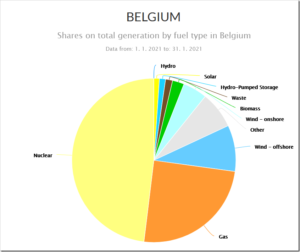
BELGIUM’s decision to shut down several of its nuclear power plants has been branded “delusional” and pinned on the EU’s plot to annihilate member states’ independence.

Belgium will shut seven nuclear power plants between 2022 and 2025. The decision was confirmed at the end of 2020 by Alexander De Croo’s coalition government. But the plan would see the country reliant on its neighbours for the supply of electricity – something that was blamed on the increasing integration of the European Union.

http://energodock.com/belgium/electricity-shares

https://www.express.co.uk/news/politics/1401127/Eu-news-Belgium-nuclear-power-plants-closure-France-energy-frexit-florian-Philippot

Wind Power Did Cause The Texas Blackouts!

by P. Homewood, Feb 22, 2021 in NotaLotofPeopleKnowThat


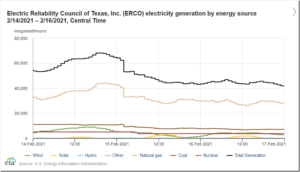
There has been a marked lack of data made public about last week’s blackouts in Texas, which has allowed all sorts of misinformation to fly around. I suspect this is quite deliberate.

I have however found hourly data on the US EIA website. This is what happened on those crucial couple of days:

https://www.eia.gov/beta/electricity/gridmonitor/expanded-view/electric_overview/US48/US48/GenerationByEnergySource-4/edit

Munging The Sea Level Data

by W. Eschenbach, Feb 21, 2021 in WUWT


For more than a decade now, I’ve been wondering about a couple of questions.

First, why does the satellite-based sea-level data show that the sea level is rising so much faster than the rise measured at tidal stations on the coastlines around the world? Records from tidal stations show a rise on the order of a couple of mm per year, a rate which is little changed over the century or so for which we have adequate records. But the satellite record (Figure 1) shows a rise of 3.3 mm/year. Why the large difference?

Second, why does the satellite-based sea-level show such significant acceleration? As mentioned above, the sea-level records from tidal stations, which are much longer, show little or no acceleration. But the satellite record claims that the rate of sea-level rise is increasing by about a tenth of an mm per year. That amount of acceleration would double the rate of sea-level rise in about thirty years. Again, why the large difference?

To start with, here’s what the satellite data says, according to the University of Colorado Sea Level Research Group.

..

La géologie, une science plus que passionnante … et diverse